This large format book (8 ½ x 11) has over 400 pages, is blessed with around 300 photographs and is fully indexed. This book of stories about the Orlando area and its people of by-gone years includes stories of murder and mayhem, fun and frolic, railroading and farming, and the trials and tribulations of the hard working people who pioneered and populated the hills and valleys around this former railroad town. This book preserves Orlando's story for those of us who seek America's roots and our own. Wednesday, September 05, 2012
Books about Orlando
This large format book (8 ½ x 11) has over 400 pages, is blessed with around 300 photographs and is fully indexed. This book of stories about the Orlando area and its people of by-gone years includes stories of murder and mayhem, fun and frolic, railroading and farming, and the trials and tribulations of the hard working people who pioneered and populated the hills and valleys around this former railroad town. This book preserves Orlando's story for those of us who seek America's roots and our own. Sunday, May 27, 2012
William O. Skinner Went West
William O. Skinner was was born in 1849 to Alexander & Phoebe (Conrad) Skinner1. He was, to the best of our research to date, the only
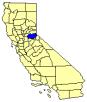
one of their 14 children to leave central West Virgina. It was shortly after the Civil War that he joined his aunt and uncle, Matthias and Elizabeth (Conrad) Nail, in the migration to California. He lived in ElDorado, California (see map at left) for 20-some years. He married a California girl, Belle Nichols around 1880. They had three daughters and one son, Bertha Barto, Velma Etzenhouser, Arden O. Skinner and Ruth Price.A blacksmith by trade, he was ordained a priest in the Reorganized Church of Jesus Christ of Latter Day Saints2 in 1887 and ten years later he relocated to Independence, Missouri where the denomination is headquartered. Shortly after that he began making annual trips back to Orlando, where he began a congregation known as "Mission Number 1930." About 1930 the Orlando congregation had a church building near the mouth of Posey Run. The tiny congregation lasted into the early 1960s.
William O. Skinner died in Independence, Missouri in 1923 and was buried in the Mound
Grove Cemetery in Independence.
A few years later, she was released to the care of and adoption by a Mrs. Nichols. Family lore is that she had to go to bars to buy buckets of beer for Mrs. Nichols. (A younger brother, Ben, was adopted by a family named Fertig.) I heard somewhere that she married William Skinner because he was religious and she thought he would be good to her. He was a blacksmith. Their first two children, Bertha and Arden, were born in Grizzly Flats, California. Bertha Mabel Skinner was born on November 25, 1882 and died in Independence, Missouri in December 1941. Arden O. Skinner was born on March 11, 1884 and died on March 17th, 1982 in Lombard, Illinois, a suburb of Chicago. Ruth Emma Skinner was born on May 9, 1888 in Roseville, California and died on May 6, 1972 in Independence, Missouri. The youngest child, Velma Matthias Nail, a Comment by David Parmer
In the late 1960’s or early 1970’s, I visited Margaret (Henline) Nixon who lived in Weston. Mrs. Nixon, who died in January 1981, was the daughter of Beham Henline and Samantha (Skinner) Conrad, the latter of whom was the daughter of Alexander Skinner and Phoebe (Conrad) Skinner of Orlando.
Mrs. Nixon had a number of old photographic images which had belonged to her mother, Samantha (Skinner) Henline, and presumably they had originally belonged to Phoebe Conrad Skinner, grandmother of Mrs. Nixon. Three of the photographic images were tin types, one of Alexander Skinner, one of Phoebe (Conrad) Skinner, and another of Matthias Nail.
Mrs. Nixon graciously allowed me to borrow the tin types for copying. About a dozen copies of each of the tin types were made, and then distributed by me to various descendants of Alexander and Phoebe Skinner. These photographs have been copied and re-copied many times over the years by the original recipients of the first copies and are now very familiar to Skinner genealogists.
The third tin type of Matthias Nail was an interesting image. I inquired of Mrs. Nixon about the relationship of Matthias Nail to the Skinner family. Mrs. Nixon advised me that Mr. Nail’s wife was the sister of Phoebe (Conrad) Skinner. She believed that the Nail family had lived in the Randolph County neighborhood and that shortly before the Civil War, Mr. Nail had contracted “gold fever” and set his sights on going to California in order to find the “cure.” The entire Nail family planned to make this trek across the wild West to California and reinforcements were needed because of the dangers which lay to the west. Mrs. Nixon advised me that according to family lore, Mr. Nail solicited volunteers from the family of his brother-in-law, Alexander Skinner, to join in the expedition. William Skinner, the youngest son of Alexander and Phoebe (Conrad) Skinner, and only around twelve years of age or so, also was struck by the “gold fever wanderlust” and begged his parents to go to the West with his aunt and uncle to California. Permission was granted and William Skinner joined the Nail wagon train for the journey.
Right: Matthias Nail
Mrs. Nixon also recalled that George Nail, a son of Matthias Nail, drowned in the Missouri River during the adventure.
As is well-known to Skinner family genealogists, the Nail Expedition was successful in reaching California. Whether a “cure” for the “gold fever” was found is unknown. The subsequent history of William Skinner is also well-known and needs no repeating in this comment.
On the back-side Matthias Nail tin type, the name of the photographer was stamped. The information given was “William Shew’s Photographic Est., San Francisco, California # 33925.” The address of the photographic studio was given as 115 Kearney Street.
1. More about William's parents: Alexander Skinner's will & photo can be found in the April 19, '06 entry and the March 23, '06 entry about Phoebe (Conrad) Skinner contains her photo.
2. a denomination which is a cousin to the Mormans, the LDS. More information on the Reorganized Church of Jesus Christ of Latter Day Saints, now know as The Community of Christ, can be found at http://cofchrist.org/history/intro.asp
Wednesday, December 21, 2011
Miss Thomas
After I completed my trying third grade experience at Burnsville Grade School in 1951, I thought that the rest of elementary school would be a piece of cake. Miss Georgia Haymond, my venerable third grade teacher, would brook no nonsense or senseless chatter from the roomful of testy students, and had a thick maple paddle to back up her short stature. I came to know the business-end of that well-worn paddle on quite a few occasions, as did most of the boys in her class, and a few of the girls as well.
I was hoping to be able to sit in the same fourth grade chair that Sue Knight, a cute blonde haired girl on whom I had a secret crush, had sat in. The only problem was- I didn’t know what chair she had sat in. But, being only a fourth grader, a school-boy crush only lasted until the next cute girl passed by. So, in the fall of 1951, I moved on to the fourth grade, only one year to go before I could enter the fifth grade and move to the second floor of the Burnsville school building. What an accomplishment that would be! But first, I had the fourth grade to contend with.The fourth grade room at Burnsville Grade School was a large room, filled with stationary desks, securely fastened to the floor. A large gas burning stove stood in the middle of the room, entirely adequate to heat the room beyond need during the months of winter. Approximately 42 desks surrounded the stove and most all of the desks were filled with urchins, still rambunctious from summer vacation. It took all of about sixty seconds for this wild bunch to be broken, tamed, and put securely in their place, never again to act the rogue, or to test the patience of Miss Thomas. Only once did this writer test her resolve to be the absolute ruler of her domain. A math test containing fifty division problems involving dollars and cents was distributed during the first weeks of class. Since I was a fair math student, I finished the assignment quickly and with the utmost confidence that I had gotten all fifty of the questions correctly answered. I strode to the teacher’s desk, the first to finish the test, and handed it to the unblinking, unimpressed and stoic Miss Thomas. Smugness, you might say, quickly changed to doom when Miss Thomas just as confidently strode to my desk and handed me my test, marked with a big red “O.” No, that was not for “Outstanding” but rather because out of fifty questions, I had gotten zero correct. Her admonition was that if I were dividing dollars and cents, the quotient must include a dollar sign, and, in forgetting this important detail, all of my answers were incorrect. I quickly learned that when Miss Thomas acted, there was to be no reaction other than to express remorse in a silent, non-demonstrative way. I forget just exactly what my ill-timed response was, but I do remember that it was followed by a quick trip to the cloak room and a painful introduction to the fourth grade paddle. After school that day, I sullenly made my way home, thinking about the story I was going to tell my mother about my unjust punishment. After relating to her my tale of woe, much to my surprise, I received another paddling because I had received a paddling at school. Thus, I learned the moral of the story. If you get a paddling at school, don’t say a thing about it at home, because there is always more of that where that came from.

Right: Marshal and Virginia (Thomas) Funkhouser at their home in Florida.
Sadly, I was informed a few days ago that Virginia (Thomas) Funkhouser had passed away. Not only had she


Wednesday, January 05, 2011
From Ireland to Tulley Ridge: The Tulley Family
by David Parmer
Bridget Flyn Tulley came to America around 1848 with her husband John Tulley, her sons, Patrick and John, and her daughter, Bridget. She brought fifteen more children into life after her arrival in America. She had weathered the travails of famine in her native country, the raging waters of the north Atlantic, and the uncertainties of a new land, including Civil War. She had seen illness and some of her children, grandchildren and great-grandchildren die while young. She had seen daughters marry and sons leave home for other, more promising parts of the country, never to be seen again. She had lived a full and productive life and a life of faith.
Right: the gravestone of Bridget (Flyn) and John Tulley.
Father Thomas Quirk sprinkled the holy water at the door of the church the evening before the vigil and reception of her mortal remains. At her funeral service the following morning the venerable parish priest offered up his prayer for the dead, as he had for her husband John, fifteen years before. Bridget Flyn Tulley, born on the soil of Ireland, was laid to rest in St. Bridget’s, the quiet Goosepen cemetery of her namesake, on a cold day in November 1911, joining her husband who had died in 1896.
This story is about how the Tulley family came to Lewis County and the Orlando area. A second installment of the story, to come later, will discuss the venerable life of Martin P. “Sandy” Tulley of Tulley Ridge.
The Western Maryland Hills
Because the well-watered steep, hilly terrain was in many ways similar to the land they had left in Ireland, Irish immigrants who arrived in summer to this land felt at home and immediately began clearing the steep hills of the virgin timber. However, not all of the immigrant Irishmen chose farming. Many found work building the Baltimore & Ohio Railroad which was snaking westward from Baltimore or digging the great canal being built from Washington, D. C. to the west.
The stay of many Irish immigrants in western Maryland was brief. One feature of western Maryland quite unlike Ireland was the long, harsh winter climate. Deep snows, sub-zero temperatures and freezing rains were for the most part unknown in Ireland and the Irish immigrants had trouble adjusting to those unforgiving conditions. As a result, many Irish families began to look for opportunities in other areas.
The Trans-Allegheny Lunatic Asylum
the Tulley and closely- associated Moran families, as well as other Irish families, to abandon their farms in the Old Line State and move to the New Dominion. The lure of jobs which would last for several years in the building of a gigantic sandstone building led many of the Irish of Garrett County, Maryland to change their professions from farming to stonemasonry and leave for Lewis County, Virginia. Also, land was as cheap in Lewis County as it was in Garrett County, and perhaps, most importantly, large land speculators were willing to sell to the industrious Irish on a payment plan.
Left, above: the Trans Allegheny Lunatic Asylum in Weston.
Left, below: George Jackson Arnold
prominent settlers in Lewis County. Astute politicians with political connections in Richmond, the Arnold and Jackson families were granted thousands of acres in Lewis County by the politicians in the Virginia legislature. At the time, the Commonwealth was still land rich in terms of acreage, especially in the western counties which settlers were passing over on their way to the more fertile and tillable soils of Ohio, Indiana, Illinois and Iowa.
Left: George Jackson Arnold
George Jackson Arnold was born of wealthy parents in 1816 in Collins Settlement District. An early teacher, Arnold soon became acutely aware that the law was the profession which promised greater financial rewards. By 1848, Arnold had become a lawyer and was serving as the Prosecuting Attorney of Lewis County and would later become a legislator in Richmond. With his political connections, Arnold acquired numerous land grants in his home county but the only problem was to find buyers for the hilly lands. The authorization of the construction of the Lunatic Asylum in Weston was heaven-sent as far as the sale of parcels from the land grants was concerned. Poor Irish immigrants flocked to Weston to work on the construction of the Asylum and were in need of land to resume farming when the stonemasonry work on the Asylum was finished. Many Irish immigrants were also employed in the construction of the Staunton and Parkersburg Turnpike and were similarly interested in owning land which could be bought cheaply. Since the Irish were without ready money to buy land outright, Arnold astutely sold parcels from his land grants to the Irish on a contract calling for a down payment and periodic payments thereafter. As soon as the purchase price for the land was completely paid, Arnold would then issue a deed for the land. If the payments were not completely made, Arnold could keep what had been paid without obligation to the original purchaser, and then sell the land to someone else. Although his methods may be seen as somewhat exploitative, Arnold had what the Irish wanted, and was willing to sell the land on terms the buyers could afford to pay.
The Tulley Family of Lewis County
Michael Tulley and Sarah “Sally” Tulley,
Their Other Sons, Michael and Martin, and
Their Daughters Margaret and Catherine
The records of immigration to America are replete with immigrants by the name of Tulley (also spelled Tully) and it is therefore difficult to determine the exact date of the arrival of Orlando’s Tulley family to America. Tulley is a common Irish surname as are the Christian names of John, Michael, Martin, Catherine and Sarah.
The earliest official record of a Tulley living in Lewis County which could be found by this writer was a record of marriage in 1852 of Margaret Tulley (the sister-in-law of Bridget (Flyn) Tulley) to Michael Feeney. Other records indicate that in 1856 Michael Tulley married Bridget Broadrick and in 1857 Mary Tulley married Thomas Gafney.
Records also show that Michael and Sarah Tulley were living in the Westernport, Maryland area in the late 1840’s because they were enumerated there in the 1850 census and living next door to their daughter Catherine and her husband Patrick Moran. Also living in the Moran household was Margaret Tulley, the daughter of Michael and Sarah Tulley and sister of Catherine (Tulley) Moran. So, between 1850 and 1852, the year Margaret Tulley became betrothed to Michael Feeney, the Tulley family had relocated to Lewis County.
In 1867, George Jackson Arnold deeded 184 acres to John Tulley, husband of Bridget (Flyn) Tulley, and 43 acres to Martin Tulley on the head of Ben’s Run. John and Martin were both sons of Michael and Sarah Tulley. At the time John bought his land, he had been a resident of Lewis County for at least ten years because he had filed papers for citizenship in Lewis County in 1857. One might assume that he had been paying for his land by installments during this interim period before he acquired his deed. The Moran, Sweeney, and Feeney families, all allied with the Tulley family by marriage, also acquired land in the nearby countryside around this same time.
1860 Census
John’s older brother Michael, aged 45, and married to the former Bridget Broadrick, was also listed as a laborer in Weston. He lived close to his niece, Mary and her husband Thomas Gafney, and their daughter Ellen. Mary was the daughter of John Tulley. Thomas was also a laborer on the asylum construction.
Martin Tulley, the younger brother of John and Michael, could not be found in the 1860 census, and must have been overlooked by the census enumerator because we know he owned land on Tulley Ridge as early as 1857.
In 1860,John, Michael, and Martin’s widowed mother, Sarah, also known as “Sally,” were living on John’s farm on Tulley Ridge, near Sally’s daughter Margaret and her son-in-law Michael Feeney, and their three children Thomas, John and Patrick, all under the age of 7 and born in Virginia. Other Irish families living nearby were John Nestor, John Gallagher, Cecilia McNeal, James McNeal, Michael Nihan, Daniel Ford, Owen Mobely, Michael Loghan, Thomas Cuff, Michael McDonald, John Gallighan, Michael Rush, Michael Dolan, Stephen Cox, and James McLaughlin.
1870 Census
Abandonment of the Soil
As a consequence of the testy tribulations of farming, many of the second generation Tulley children who settled Tulley Ridge in the 1870’s abandoned rural life and tilling the soil as a means of earning a living. Of the large Tulley family who settled on Tulley Ridge, by the early 1900’s only Sandy Tulley remained, his male siblings having taken up city life as an alternative to the uncertain and back-breaking life of a farmer.
Right: M.P. (Sandy) Tulley, Elizabeth (Greene) Tulley, Marguerite and Mary, Charlie, Genevieve and Joe.
Wednesday, September 15, 2010
Port McLaughlin

His name was “Port McLaughlin,” no more do I know
A life of toil was his, it shows
In worn-out shoes and scruffy clothes.
A smile unused to cameras, gnarled hands, his life’s testament;
Stoic countenance on his deep-lined face, his feet from labor bent.
Newt Godfrey was a close, dear friend, but Newt is dead and gone.
No one is left to shed some light and tell us ‘til the dawn
An interesting yarn ‘bout Port McLaughlin.
Sunday, August 29, 2010
A Tragic End with Barely a Beginning
by David Parmer
Sam Marchio drove slowly along the Goosepen Road, gripping the steering wheel tightly with both hands, oblivious of the tranquil farm scenes which presented themselves around each curve in the road. The hardworking farmers of southern Lewis County kept their farms in tip-top condition but Mr. Marchio, a Physical Education teacher of Weston High School, wasn’t thinking about the haying which was going on, the cattle grazing along the hillsides, or the corn growing in the bottom-land. He did not notice the farmers standing in their fields looking at the strange car coming down their road. A sad duty was in store for him this September day in 1952. It was a duty he dreaded to fulfill. Just how do you tell a mother that her only child, a beautiful, seemingly healthy daughter, who left for school that morning without a care in the world, died suddenly at his school? The eighteen miles to Goosepen were the longest miles Mr. Marchio had ever driven, but the hardest part of the journey would not be begin until he reached the Clarence and Hetty (Nye) Finster home on Goosepen where Carolyn Sue and her mother, Mary Poffenbarger, made their home.
Mary (Beall) Poffenbarger was the daughter of Newton "N. H."
Beall and Clara (McCullough) Beall of Route 1, Orlando. For many years, Newton and Clara operated a country store and post office at Aspinall, a pick-up point on the Orlando mail route. Newton’s father, Charles Henderson Beall, had operated this store and a grist mill for many years before turning the business over to his son Newton.
Born in 1915, Mary was the only child of Newton and Clara Beall to survive to adulthood. She was quite familiar with tragic untimely deaths because her mother Clara died of tuberculosis in 1918 when Mary was just three years of age and her father Newton died four years later in 1924 when she was just seven. Orphaned at an early age in 1924, Mary was fortunate to have been a student of Edna Wiant, the teacher of the Ben’s Run School.
In 1937, when Mary was 22 years of age, she met and married Wade Poffenbarger of Tucker County. Unfortunately for Mary, her marriage was a brief because Mr. Poffenbarger was not the settling-down type and he soon flew the coop, never to be heard of again, when he was informed that Mary was with child. Mary, who had been orphaned at a young age, with a child on the way, now was abandoned by a faithless husband almost before the ink was dry on the
marriage certificate. Edna Wiant welcomed her foster daughter back to her home to await the birth of her child. A daughter, Carolyn Sue Poffenbarger was born on August 6, 1938.
oms, making sleepy students sleepier. On this September 10th, Carolyn was in a physical education class on the football field when she started feeling ill. Since it was a hot, muggy day, it was common for a student to be affected by the heat, so no one was alarmed. Allowed to sit on the bleachers while the class participated in physical activities, Carolyn began to feel worse and complained of a headache to her Phys Ed teacher, Sam Marchio. Thinking that a headache indicated the need of an aspirin, Carolyn was given aspirin, but soon was in greater distress. At 2:50 p.m. on September 10th, 1952, Carolyn Sue Poffenbarger collapsed and died.
stoical manner. She had suffered the loss of her own parents at an early age, had been abandoned by her husband and the father of her child, and now fate had given her another cruel blow.
Mary Poffenbarger died in 1989, thirty seven years after the death of her only child and the searing visit by Mr. Marchio. Those who knew Mary well say that she never talked about her daughter Carolyn Sue but
they all say her stoic silence about the loss of her only child masked an inner pain that lesser souls could not bear. Since Mary never mentioned her loss, others never broached the subject, and future condolences were never uttered. Some pain is best left in silence and best handled that way and that is the course Mary Poffenbarger followed with respect to her loss. When Carolyn Sue was laid to rest in the Pumphrey Cemetery, the matter was closed.
Given the great advances in medicine in recent years, the cause of death of Carolyn Sue Poffenbarger could probably now be made, but at best, it would be conjecture, and it now seems pointless to hypothesize. In the early 1950’s many death certificates were unclear regarding the cause of death of a decedent and this was just another of the many such cases. Her caring neighbors decided that Carolyn Sue must have succumbed to a cerebral hemorrhage. Whatever the cause, the mystery remains. The shining girl of promise was buried in the Pumphrey Cemetery, to be joined later by her dear friend, Edna Wiant McPherson in 1967 and her mother, Mary Poffenbarger in 1989.
To enlarge the above death certificate, please click on it.
. . . . .
Comment 1 Carolyn Sue and her mother lived north of the Oil Creek watershed but on Orlando's RFD Route 1 at both the Blake/Wiant home on Ben's Run and the Fenster home on Indian Run. School kids who lived north of Orlando, on Oil Creek, Three Lick, Grass Run, Indian Fork, etc. went to school in Weston.
Comment 2 by Bob Pumphrey
This story was great and brought back lots of memories. It is my recollection that Mary and Carolyn Sue Poffenbarger were living on Ben's Run when Carolyn Sue died. Her mother Mary was babysitting during the day for Clarence and Hettie Finster. Clarence was the school bus driver and drove the bus from the Ben's Run area up Goosepen into Weston. When Clarence got home in the evening, he would pick Mary Poffenbarger up at his house and continue to drive the bus to Ben's Run and then let Carolyn Sue and her mother off the bus. A few days after Carolyn Sue was buried, Clarence and Hettie asked Mary to live with them and continue babysitting. From that time Mary Poffenbarger lived with the Finsters.
I further recall that Clarence Finster told me that the morning Carolyn Sue died. she mentioned to Clarence when she got on the bus that she had a headache. Clarence offered to take her back home but Carlyn Sue declined the offer.
Carolyn Sue's wake was held at the house on Ben's Run and Mike Moran, the Orlando undertaker, was in charge. Many people were there.
Comment 3 by June Nixon Henry
I just finished reading the story of Sue Poffenbarger and tears are running down my face. It brought back the memory of that day that my Mom called me and asked me to go over to City Hospital to see Edna and Mary. There was no way I could describe the grief of those two. What comfort could I give them only just to be there? So glad you told their story. When Mary went to live with the Finsters she certainly channeled her grief into caring for their mentally disabled daughter. Thanks for telling the story.
Thursday, August 12, 2010
Sixty Years of Learning
to turn left at the intersection of the Indian Fork Road, a few minutes will take you past the locations of the former Pine Run School and the Butchers Fork School. One might say that these three school locations in the modern age are nothing but a “stone’s throw away” from each other. But today these schools are no more. There are no sounds of a hand bell ringing, games at recess on the
playground, or the sight of kids walking home from school.
author's father Coleman Heater. The next two photos are from the 1940s, the next appears to be from the 1950s and the last photo appears to be from the early 1960s.
ir desks as close to the stove as possible to take advantage of the heat. Occasionally, the stove would be overloaded with coal which resulted in a white hot stove. Fortunately, no accidents occurred when the stove was burning too hot. Of course, there was no state fire marshal in those days, or all of the schools would have been discontinued during the winter months because of the fire hazard.
student brought a drinking cup to school and the cups were stored in the cloak room.
their students to high school, many students who finished the 8th grade could continue attending the Ben’s Run School until they were 16 years of age, at which time they could legally quit school.
Bus transportation to Weston High School was not provided until the 1950’s. Perhaps, the earliest teacher of the school in present recollection is a Mrs. Mick. No first name of this teacher is known, nor would one hazard a guess as to the first name of a teacher named Mick. The numerous branches and generations of the Solomon and Mary (Lawman) Mick family of nearby Rocky Fork and the C. C. and Martha (Lawman) Mick family of nearby Dumpling Run provided many male and female teachers to the early one room schools of the southern Lewis County, northern Braxton County, and Gilmer County, anyone of whom could have been the Ben’s Run teacher.
Edna Wiant was the daughter of Perry Wiant and Mary (Henline) Wiant, residents of the Indian Fork area. Orphaned as a young girl, she became the foster daughter of John Thomas Blake and Mary Ellen (Thompson) Blake, a childless couple, farmers on Ben’s Run. Edna taught at the Ben’s Run School from 1920 to 1925. The author’s father, Coleman Heater, reminisced that he was a student of Miss Wiant and that there was not much difference in his age and her age. Coleman was somewhat smitten with his teacher and had a “crush” on her, but a teacher was the teacher and a student was the student. Helen Jeffries, a friend of Edna’s however, recalls that Edna was also smitten with “Coley” and but for the devotion of Edna to her foster parents, Edna and “Coley” might have married.
Giving instruction to students at the Ben’s Run School in 1931 was Abalene “Tib” Feeney. Named for her maternal grandmother, Abalene Rush, she was the daughter of Patrick Feeney and Bridget (Rush) Feeney of Orlando. Miss Feeney taught at the Ben’s Run School for three or four years. In 1944 she married Charles Harris. They resided in Richmond, Virginia at the time of her death around 1985. Velma Heath, who is aged 84 and lives in the former Rosie and Billy Riffle farm on Ben’s Run, recalls “Tib” Feeney as the most beloved of all the teachers at the Ben’s Run School. Miss Feeney was also the “teacher on horseback” since she saddled up her horse each morning and rode it to her Ben’s Run School.
Mildred Riley was another early teacher at the Ben’s Run School. Miss Riley taught at the Ben’s Run School during 1937-1938. Velma Heath recalls that the first paddling she ever got in school was administered by Miss Riley. The daughter of James Riley and Dora (Hutchinson) Riley, she was born in Weston in 1917. During World War II, she served in the
Women’s Army Corps. She married John Garton of Alum Bridge in 1948. She died in 1969 and was buried at St. Boniface. The daughter of Orlando residents Martin Tulley and Elizabeth (Green) Tulley, Miss Tulley was an early teacher of the Ben’s Run School which was located just across the hill from her home on Tulley’s Ridge. Mary was teaching at the Ben’s Run School in the early 1940’s when she became ill with tuberculosis. She died at the age of 44 in 1943 and was buried at St. Bridget’s on Goosepen.
Lloyd Smith is reported to have been a teacher at the Ben’s Run School during the mid-1930’s but little else is known about him. Velma Heath, a present-day resident of Ben’s Run, was a student of Mr. Smith. Velma recalls that Mr. Smith was a quiet man and that he did not participate in playground activities with his students. Velma believes that Mr. Smith was from Jane Lew or Lost Creek.
Zoe SweckerPerhaps the most prominent of all the teachers of the Ben’s Run School was Zoe Swecker, a native of Canoe Run. Miss Swecker also taught at the nearby Pine Run School. A teacher at Ben’s Run probably in the late 1930s, she returned to college and received both a Master’s and Doctor of Philosophy Degrees, the latter from the University of Chicago. Dr. Swecker was a career history teacher at Clarion University in Pennsylvania. She was quite well-known amongst the nation’s historians and was a member of several historical organizations.
Thomas Byrne
Residing for a while in Orlando in the former Mrs. Ollie Blake home on Flint Knob near the Orlando School, a teacher named Thomas Byrne taught at the Ben’s Run School prior to 1943. Described as being chronically in a hurry, he was also described as being chronically late. Apparently suffering from a sleep disorder, Mr. Byrne would often fall into a deep sleep during school time. Seizing a golden opportunity, some of his students would quietly gather their books and return to their homes during Mr. Byrne’s naps. Upon awakening from his untimely period of sleep he would find few, if any, students in the classroom. Mr. Byrne, the son of Joseph Byrne and Mary (Doonen) Bryne of Lewis County, was married to the former Mary Gissy. He lived for the most part in the Copley area.
Frank Stoneking taught for many years in country schools throughout Lewis County, including the Ben’s Run School from1943-1945. He is perhaps as well known for his restaurant, “Stoneking’s,” which was located across th
e old U. S. Route 19 at Roanoke from DeGarmo’s Skating Rink, later known as Rose’s Skating Rink. His son Billy was later a teacher and coach at Walkersville High School. Mary Walsh was a single lady and made her home with her sister in Weston. She commuted to the Ben’s Run School with her colleague, Ronald Farnsworth, who was the teacher at the nearby Pine Run School. Velma Heath recalls Miss Walsh as a “very nice lady.” Miss Walsh taught at the Ben’s Run School from 1945 to 1957. For many community children, Mary Walsh was the only teacher they ever had. During her tenure at Ben’s Run, the windows of the school on one side of the building were removed and boarded over. She also presided over the planting of pine trees around the school building which are now huge and over-grown in relation to their location to the former school building. Among the students who helped plant the pine trees were Erma Heater, Earl Heater, Brenda Heater, Orie Lee Heater, Jim Heater, Clarence Heath and Alton Heath Jr. Former students recall that Miss Walsh was not a great believer in testing and that she assessed the progress of her students by interaction with them in the classroom. Miss Walsh often walked with her students to neighboring Goosepen School for ball games. Occasionally during cold weather, Miss Walsh would arrange for a neighbor to make hot chocolate for her students. She retired from teaching after her years at Ben’s Run.
Mr. Farnsworth replaced Miss Walsh after her retirement. This writer recalls Mr. Farnsworth as a very quiet man who spoke so softly that his students often had difficulty hearing him. He was a very caring teacher who kept tabs on his former students long after he retired from teaching. He taught at Ben’s Run from 1957 to 1959. Velma Heath recalls random acts of kindness by Mr. Farnsworth who was known to buy clothing for needy students. He would also take the time to visit the homes of his students and talk to the parents about their children’s progress in school. Velma also recalls that Mr. Farnsworth had the peculiar habit of crossing his arms and slapping his shoulders during conversations with others.
Dorothy Wilfong
Dorothy (Persinger) Wilfong was a Burnsville native and graduated from Burnsville High School in 1930. Mrs. Wilfong was one of the many teachers in central West Virginia who taught school on a certificate for many years before getting an actual college degree. She graduated from Glenville State College in 1962. Mrs. Wilfong was married to Basil Wilfong of Linn in Gilmer County. Mrs. Wilfong replaced Mr. Farnsworth as t
he teacher of the Ben’s Run School. Rather than drive the long distance on country roads, in times of bad weather, she often spent the night with the Heater family. She taught the school for two years from 1959 to 1961. Left, below: Juanita (McClain) Warner
Mrs. Warner taught the Ben’s Run School during the 1961-1962 school year. A native of Crawford, Mrs. Warner was married to French Warner, a native of Knawl’s Creek. Mrs. Warner was later a teacher at Walkersville, and she also served as a substitute teacher after her retirement. The family moved to Morgantown while their son was a student at West Virginia University. Her son,
Gene, achieved a high executive position with the Exxon Corporation. Some years later, Mrs. Warner’s husband, French, operated a taxi service in Weston. In 1962, Helena McCudden became the final teacher of the Ben’s Run School. This veteran of the teaching profession had taught at many rural schools in Lewis County, including the nearby Pine Run School. A slight woman with firey hair, she was a strict disciplinarian, a magnificent teacher, and a wonderful friend to her students. She told them what she thought they could achieve in the future, and her expectations were high. Even after she sent them on to high school at Weston, she kept up with them.
with her wishes and I was off to Weston Junior High School for my 7th grade. I recall being embarrassed when my English teacher announced to the entire class that they would have to “make allowances for our friend from the country.” No allowances were necessary, however, because my teachers at Ben’s Run had given me an excellent education and it was soon apparent that I was more advanced academically than the other students in my class. Miss McCudden inspired me to become a teacher, and I use some of her techniques in my classroom today. Although some would call those methods outdated, they are just as effective as they were all those years ago.. . . . .
Bob Pumphrey recalls that when he attended the Three Lick School in the late 1940’s and early 1950’s, Christmas time was always a great occasion at his school. The Three Lick School was located just over the hill from the head of Ben’s Run, and by the way the crow flies it is but a short distance. The older boys in the Three Lick School were familiar with most everybody who lived on Three Lick, Ben’s Run, Goosepen, and Pine Run, as well as the entire Orlando area. On the final day of instruction at the Three Lick School prior to the Christmas vacation, the school children were all excited about the pending holiday and also in expectation that Santa Claus would pay the school a visit and perhaps leave a few treats for the kids. Bob recalls that Santa Claus did not come by sleigh pulled by reindeer, or even a pick-up truck, but came walking up the road to the school. Bob recalls that Santa had a bag-full of treats for the school children. Bob remembers that Mr. Claus did a great job convincing the younger children that he, in fact, was Santa Claus. Bob, however, was one of the older boys in the school, and together with the other older students, determined that Santa Claus was none other than Coley Heater of Ben’s Run, the father of the author of the story about the Ben’s Run School.
.jpg)


.jpg)