Showing posts with label Collection of Homer Heater. Show all posts

Sunday, January 24, 2010

I Wrestled a Gorilla


These memories by the Rev. Dr. Homer Heater, Jr. are from http://homerheater.com/ Homer grew up in the 1940s on Riffle Run, on Orlando's Rural Route #2. Riffle Run flowed south into the Little Kanawha at about the same place that McCauley Run flows north into Oil Creek. The area that was Riffle Run is now part of Burnsville Lake recreational area.

by Homer Heater

Sundays varied from lazy boredom to slightly interesting. World War II had brought most of the country out of the depression, but, as with so many other things, the message had not gotten to us yet. Money continued to be a scarce item so we had to use our ingenuity to come up with ways to amuse ourselves.
This particular Sunday, we had gotten wind of something going on in Falls Mill, a small town on the River, near, what was to us, an impressive water falls. Just above the falls was a swimming hole complete with cable swing. I do not remember what we had heard, but something prompted us to walk the six miles to see what was going on.
Left: Homer Heater in the 1930s
Right: A gorilla

My brother, John, and I promised Mom we would attend Sunday school, wrapped our swimming trunks in a towel, and started down the dirt road. The E.U.B. Church was a white frame building sitting on Route 5 next to the same little Kanawah River. We sat through the Sunday school hour not a little anxious to be on our way.

Left: Looking east from the lookout at Falls Mill,
1960s.

The Swimming Hole & A Show
A number of kids were already swimming when we got there. Some of them we knew from school, and we were soon enjoying ourselves. The swimming hole happened to be next to a level area used for a public gathering place. While we were swimming, a traveling country western show ­drove on the grounds and began to sell tickets for the afternoon performance. We argued, plausibly enough, that since we were in the area swimming long before the group arrived, we should not have to pay. Our argument was reinforced by the fact that we could not have paid the twenty-five cents anyway.

This postcard is from about the time young Homer took on the gorilla. People still talk about the country music concerts at Falls Mill. Many Grand Ole Opery perfomers performed there.

The Gorilla
That a treat! To be able to swim on a hot day and to enjoy the picking and singing of our favorite songs was enough, but what happened next was too much to believe. Two or three circus wagons were driven into the area, privacy fences were erected around them, and a man began to try to convince the crowd they should see the show. The country western program had concluded, so we all turned excitedly to this new attraction.

The huge posters advertised boxing and wrestling matches between two gorillas and any and all comers. In spite of the offer of one dollar per minute to wrestle with the gorilla, no one would volunteer. The hawker realized it was time to prove how harmless the gorilla was. He began to ask for two young boys to wrestle with the gorilla for a free ticket to the show. I whirled to look for my brother, but he had wandered off into the crowd. I grabbed another boy by the hand and convinced him to join me before others could get up the nerve and beat us to the opportunity.

I held my breath as the lady working with the hawker asked dubiously whether I might be too big. I was eleven and small even for that, but the gorilla had been trained to be gentle only with small fries. The hawker considered me to be small enough, and we entered the cage.

We soon discovered that the gorilla was not going to hurt us, and we began to push him around. We got him to the floor, and the hawker offered us fifty cents each if we could sit on his stomach. This proved to be an easy task, and we each walked out with a free ticket to the show and fifty cents cash.

Encouraged by the friendliness of the gorilla, a man volun­teered to join the fray. He was dressed with a football helmet and a pair of coveralls and ushered into the cage. The gorilla immedi­ately changed his tactics. He would hold to the top bars and swing into the man with both feet, knocking him across the cage.

When the show was over, I found my brother, and we started home. We stopped at the gas station and used part of our newly found wealth to buy a soft drink. If only John had been with me we would have had a dollar between us. It was otherwise a perfect day.
. . . . .

Note: Another diversion at Falls Mill's recreational area was baseball. Orlando's team played other local teams there. Also, several Orlando boys and men played for Falls Mill, including the Orlando postmaster and lanky first baseman Claud Mick and later John Allman, grandson of the B & O's telegrapher Gav Allman.

Claud Mick is the first player on the left in the back row.

Friday, January 08, 2010

A Kid in Winter

These memories of winter by the Rev. Dr. Homer Heater, Jr. are from http://homerheater.com/ Homer grew up in the 1940s on Riffle Run, on Orlando's Rural Route #2. Riffle Run flowed south into the Little Kanawha at about the same place that McCauley Run flows north into Oil Creek. The area that was Riffle Run is now part of Burnsville Lake recreational area.

About winter in the 1930s and '40s, David Parmer says, "Snow had usually blanketed the ground in Orlando by Thanksgiving, if not before. The Arctic chill swept out of the north and settled throughout West Virginia creating a crust of ice on the old snow, and on each new layer of snow which fell. Winters were much more severe then than they are today,"

by Homer Heater, Jr.


Ice Skating
Skating was not a very sophisticated process. We simply ran and slid on our boots. Coming home from school was made much more exciting by slipping and sliding down the creek. Usually nothing happened more serious than wet seats of pants, but once my sister Mary Jean took a serious fall and cut her temple open. It took several stitches, and she wore the scar to her death.

Many efforts were made to make wooden skates with metal run­ners, but as with so many of our makeshift products, they never worked well.

Above Left: Homer Heater Jr. from a school picture at the Riffle Run school.

Above Right: map of the Riffle Run's former location and the locations where the winter photos were taken.
1 former location of Riffle Run,
2 location of the Kilmarnock Farm,
3 where the Three Lick photos were taken,
4 Downtown Orlando.

Right: Homer and his wife Pat in a more recent photo.

Sleigh Riding
Winter sports always included riding down hills on home made wooden sleds. The person who had a manufactured sleigh with steel runners was considered fortunate indeed.

Above the school was a rather steep hill, though not a very long one. The entire recess would be spent dragging the sleds to the top of the hill, then sliding down to the bottom. Again there were seldom any problems, but once Wesley McCauley, on a very long and dangerous hill, slid right through a barb wire fence and broke his leg. That tended to take some of the steam out of the fun!

Left: Sheep on the Kilmarnock farm on Clover Fork in recent years.
Right: Three Lick, as it looks right now, January 2010. This color photo is from Marilyn Posey.

I had seen pictures of toboggans so I decided to make one out of a sheet of metal roofing. I simply cut it to the right length, rolled up the front, and bolted it to the body with a board in between. I tried it on the steepest hill we had, and it would really fly. The only problem was that there was no way to control it. My Dad came home from work for the week, found it, and cut off the front with the axe. I was always puzzled as to why he would do things like that when there was no advantage to be gained by doing it. Anyway my toboggan experiment was over.
Winter Evenings
Mom knew a lot of poetry. She always talked about the Peer­less Speaker, a book she had cherished as a child. During the long winter evenings when Dad worked away and she had all the responsi­bility alone, she used to quote us long poems called “Annie and Willie’s Prayer,” “I’s a Letter Mr. Postman,” and many more I no longer remember. Her stories of growing up in “Wildcat” entertained us by the hour. I later searched out a used copy of the Peerless Speaker and bought it.

Left: Forrest Allman, whose family lived in downtown Orlando, posing with the snow of 1940.
Trapping
Some of the kids farther up the hollow trapped for fur in the wintertime. We dabbled at it, but were never very successful. The Conrad boys caught fox, possum, and an occasional skunk. They got anything from five to twenty-five cents a pelt. The animal had to be skinned, the skin scraped, and stretched over a board. At the end of the season, they would take all their seasoned pelts and sell them to a dealer.

Periodically, someone would catch a skunk in their trap. The awful stench would cling to them like a coat. When they came to school and the warmth of the room began to bring out the skunk smell, the teacher would say, “All right, who has the skunk?” Someone would sheepishly admit to the guilt and would be immediately sent home. It often took two or three days to get rid of the smell. If a skunk sprayed you directly, the only thing you could do was burn the clothes.

Right: another color photo of Three Lick right now (January, 2010), from Marilyn (Cole) Posey.

Here is a poem Homer Heater mentioned above.

Papa's Letter
(I’s a Letter Mr. Postman)
author unknown
I was sitting in my study writing letters when I heard
"Please, dear Mama, Mary told me Mama mustn't be disturbed.
But I's tired of the kitty, want some ozzer fing to do,
Writing letters, is 'ou, Mama? Tan't I wite a letter, too?"
"Not now, darling, Mama's busy, run and play with kitty, now."
"No, no, Mama, me wite letter! Tan, if 'ou will show me how."
I would paint my darling's portrait as his sweet eyes searched my face.
Hair of gold and eyes of azure, form of childish, witching grace.
But the eager face was clouded, as I slowly shook my head,
Till I said, "I'll make a letter of you, darling boy, instead."
So I parted back the tresses from his forehead high and white,
And a stamp in sport I pasted 'mid its waves of golden light.
Then I said, "Now, little letter, go away and bear good news!"
And I smiled as down the staircase clattered loud the little shoes.
Down the street my baby hastened, till he reached the office door.
"I's a letter, Mr. Postman, is there room for any more?
'cause dis letter's goin' to Papa, Papa lives with God, 'ou know,
Mama sent me for a letter, do 'ou fink 'at I tan go?"
But the clerk in wonder answered, "Not today, my little man."
"Den I'll find anozzer office, 'cause I must go if I tan."
Suddenly the crowd was parted, people fled to left, to right,
As a pair of maddened horses at the moment dashed in sight.
No one saw the baby figure -- no one saw the golden hair --
Till a voice of frightened sweetness rang out on the autumn air.
'Twas too late -- a moment only stood the beauteous vision there
Then the little face lay lifeless, covered o'er with golden hair.
Reverently they raised my darling, brushed away the curls of gold,
Saw the stamp upon the forehead, growing now so icy cold.
Not a mark the face disfigured, showing where the hoof had trod --
But the little life was ended; Papa's Letter was with God.


Sunday, January 07, 2007

Sergt. Conrad Killed In France

Neighbor Homer Heater sends this 1945 newspaper clipping from an unidentified paper.

This article recognizes five members of Ord and Effie Conrad's family, their sons (top. left to right) Everett, Earl, John and (bottom, left to right) Edward, and a son-in-law, Lloyd McCauley. The transcribed text of the article follows.
"Sergt. Everett S. Conrad, above, was killed in action on February 1, while serving with an infantry regiment in Germany. His parents, Mr. and Mrs. Ord Conrad of Orlando, have been informed. He had been wounded in action in France last November and following his convalescence in a hospital there he returned to duty the following December 23.

"Sergt. Conrad had been overseas since last May. Twenty years of age, he entered the army on December 4, 1943, and received his training at Camp Croft, S. C. He graduated from Burnsville high school.

"Two of his brothers are overseas. Pfc. Earl Conrad, upper center, is with a field battalion in France. Overseas since last January, he has been in the service since February 9, 1944, and completed his training at North Camp Hood, Tex. His wife, Mrs. Dena M. Conrad, lives at Orlando. Corp John R. Conrad, upper right, has been overseas since September 1943, and is with a replacement squadron in England. He trained in Augusta, Ga., and Rome, N.Y., following his entrance in the service on August 29, 1942.

"Another brother, Pfc. Edward D. Conrad, lower left, is a military guard at Camp Ross, Wilmington, Calif., after returning from fourteen and one-half months of overseas duty in North Africa, Sicily and Italy. He has been in the army since August 22, 1942, and completed his training at Fort Benjamin Harrison, Ind.

"A brother-in-law, Pfc. Lloyd A. McCauley, lower right, left for overseas duty last December and now is stationed in France. He entered the army last March 30, and took his training with a quartermaster company at Camp Rucker, Ala. His wife, Mrs. Minnie McCauley, lives at Orlando."


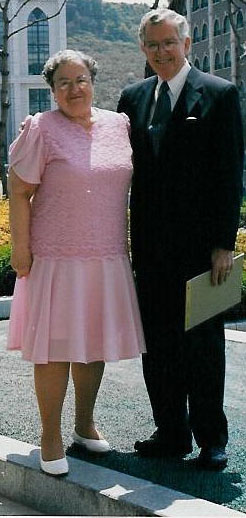
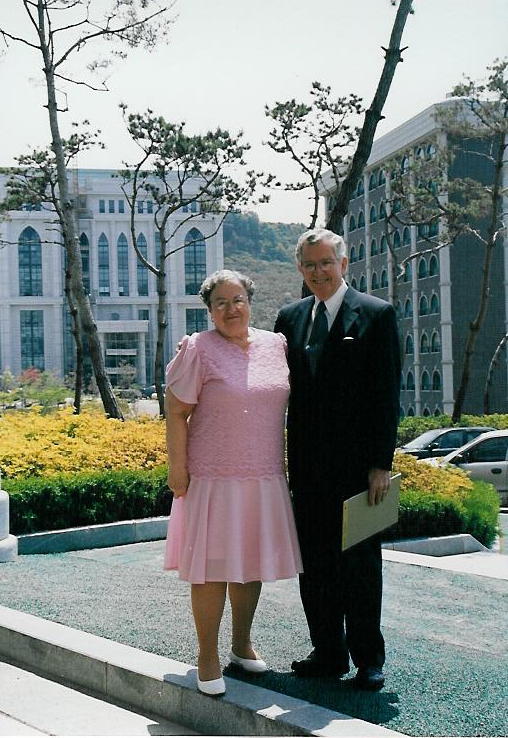
To the right is a photo of the Rev and Mrs. Heater.


Note: The 1930 census lists Earl, Earnest, Dale and Everett as sons living at home with Ord and Effie O. Conrad. Dale may be Edward D., other children have not been identified.

Monday, May 22, 2006

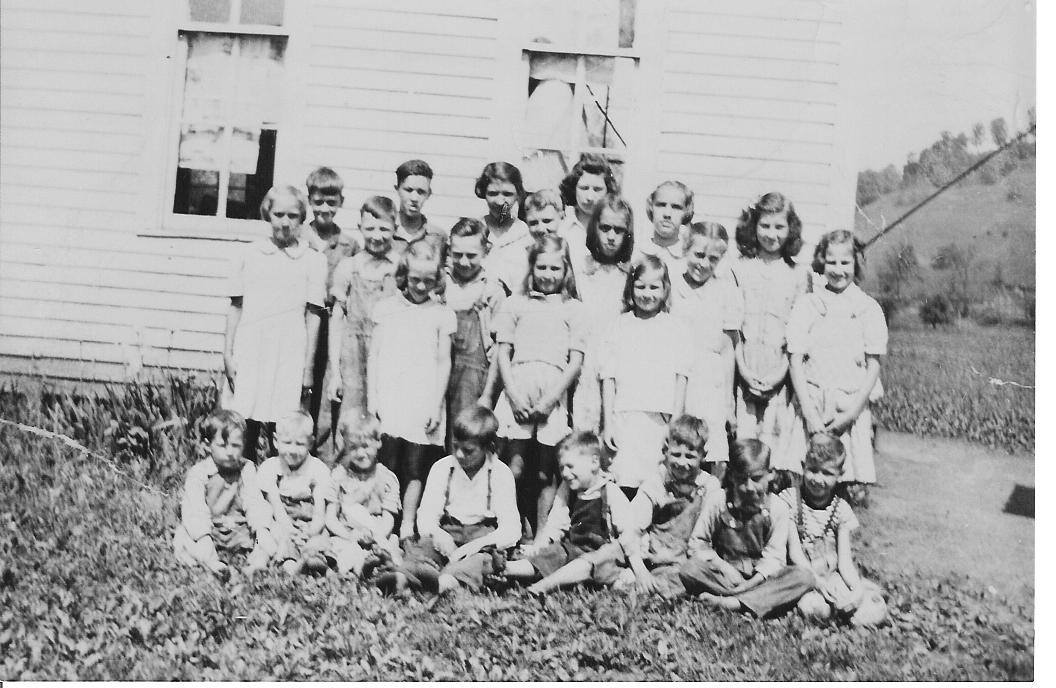
Riffle Run Elementary School

Homer Heater grew up on Riffle Run in the 1940s. Riffle Run is a neighboring community1. but the story he tells is echoed in Orlando, too. His website is rich and warm and true. Check it out at http://geocities.com/hheater2000/mypage.html

This photo of Riffle Run Elemenary School and the following description of his first day at school are from his website.

"I proudly followed my brothers and sisters up the road to the little white building with the U.S. flag hanging by the door and the smell of oil (used to preserve the floor). Students drank water out of their individual cups filled from the little water cooler, which was kept supplied by the janitor. There was a coal stove in the center of the room. Double desks with inkwells flanked each side of the room.
In front of the room were the teacher’s desk and the recitation bench where each class was called in turn to review the lessons they had been reading and to answer questions from the teacher. There were usually about twenty or twenty-five students scattered through the eight grades. Spelling was taught all eight grades from one volume. The beginning class started with the simple words at the front of the book and by the eighth grade, the book was supposed to be finished. There were no pictures, only endless columns of words."

Homer Heater is the President of Washington Bible College and Capital Bible Seminary in Washington D.C. Here is a recent photo of Homer and his bride of 50 years, Pat.

Pictured in the photo "Riffle Run Elementary School Around 1940"
L-R Back Row: Denzil Conrad, Wilfred Conrad, Mary Jean Heater, Alma Grace Sumpter, Lillian Brown, Thelma (Dink) Sumpter
L-R 2d Row: Myrtle Mae Brown, Charles McCauley, Bob Graff, Bill Heater, Pauline Conrad, Betty Graff, Mary McCauley
L-R 3d Row:Patty Graff, Louise Sumpter, Caree McCauleyFront seated: Jim McCauley, George McCauley, Bobby Blake, Winfred Thompson, Don McCauley, Wesley McCauley, Homer Brown, Homer Heater, Jr.


1. Riffle Run drains into the Little Kanawha just upstream from Burnsville while most of Orlando's land drains into Oil Creek, which drains into the LIttle Kanawha at Burnsville. As the crow flies, they are about 10 miles apart.