Showing posts with label Family Thomas. Show all posts

Wednesday, December 21, 2011

Miss Thomas

Virginia Thomas Funkhouser

by David Parmer and Philip Thomas

After I completed my trying third grade experience at Burnsville Grade School in 1951, I thought that the rest of elementary school would be a piece of cake. Miss Georgia Haymond, my venerable third grade teacher, would brook no nonsense or senseless chatter from the roomful of testy students, and had a thick maple paddle to back up her short stature. I came to know the business-end of that well-worn paddle on quite a few occasions, as did most of the boys in her class, and a few of the girls as well.

Needless to say, I was glad to move on to the fourth grade.

I was hoping to be able to sit in the same fourth grade chair that Sue Knight, a cute blonde haired girl on whom I had a secret crush, had sat in. The only problem was- I didn’t know what chair she had sat in. But, being only a fourth grader, a school-boy crush only lasted until the next cute girl passed by. So, in the fall of 1951, I moved on to the fourth grade, only one year to go before I could enter the fifth grade and move to the second floor of the Burnsville school building. What an accomplishment that would be! But first, I had the fourth grade to contend with.

Left: the author David Parmer
Right: Virginia (Thomas) Funkhouser

An Astonishing Sight
She stood military erect beside the teacher’s desk at the front of the room, quietly observing the hordes of bare-footed boys and an equal number of girls who were trying their best to ignore the “smelly” boys. Her hair was coal-black, her lips a bright red, and a lighter shade of red adorned her high cheek bones, a contrast to her olive toned complexion. She wore a dress of a type I had never seen before which must have come from New York or some far-off place. Made of a black silky material, the dress displayed colorful swirls of flowers, almost hypnotic to a fourth grade boy. A wide red leather belt matched her bright red high-heeled shoes. Truly, this fourth grader had never seen a truly chic person, which was of course a word I had never heard of before. The other students appeared to be equally mesmerized by the colorful apparition standing beside the desk in the front of the room. This was my memorable introduction to Miss Thomas, my fourth grade teacher.

The fourth grade room at Burnsville Grade School was a large room, filled with stationary desks, securely fastened to the floor. A large gas burning stove stood in the middle of the room, entirely adequate to heat the room beyond need during the months of winter. Approximately 42 desks surrounded the stove and most all of the desks were filled with urchins, still rambunctious from summer vacation. It took all of about sixty seconds for this wild bunch to be broken, tamed, and put securely in their place, never again to act the rogue, or to test the patience of Miss Thomas. Only once did this writer test her resolve to be the absolute ruler of her domain. A math test containing fifty division problems involving dollars and cents was distributed during the first weeks of class. Since I was a fair math student, I finished the assignment quickly and with the utmost confidence that I had gotten all fifty of the questions correctly answered. I strode to the teacher’s desk, the first to finish the test, and handed it to the unblinking, unimpressed and stoic Miss Thomas. Smugness, you might say, quickly changed to doom when Miss Thomas just as confidently strode to my desk and handed me my test, marked with a big red “O.” No, that was not for “Outstanding” but rather because out of fifty questions, I had gotten zero correct. Her admonition was that if I were dividing dollars and cents, the quotient must include a dollar sign, and, in forgetting this important detail, all of my answers were incorrect. I quickly learned that when Miss Thomas acted, there was to be no reaction other than to express remorse in a silent, non-demonstrative way. I forget just exactly what my ill-timed response was, but I do remember that it was followed by a quick trip to the cloak room and a painful introduction to the fourth grade paddle. After school that day, I sullenly made my way home, thinking about the story I was going to tell my mother about my unjust punishment. After relating to her my tale of woe, much to my surprise, I received another paddling because I had received a paddling at school. Thus, I learned the moral of the story. If you get a paddling at school, don’t say a thing about it at home, because there is always more of that where that came from.

The Rest of the School Year
It’s always good to learn an early lesson, and even better not to repeat the same mistake twice. The expression, “once burned, twice shy” is probably apropos and the remainder of my fourth grade year was uneventful, at least in the sense that I encountered no further tragedies of discipline. I remained enamored of her coal black hair, red lips and red rouged cheeks, and particularly of her dazzling dresses. At the end of that school year, Miss Thomas left Burnsville to teach in northern Virginia. I am sure that when school opened the next school year, the students at her Virginia school were as dazzled as I had been the year before.

A Sequel
A couple of years ago, I called Miss Thomas (now Mrs. Funkhouser) about a story I had been researching about the Henline family of Orlando. She was very pleasant. Her memory was vivid and her recollection of me as her student was very surprising, particularly since her memory of my scholarship was flattering. She never mentioned the math test, or its tragic aftermath. I never raised the subject either. The conversation ended with me having a renewed sense of my worth, particularly since Miss Thomas said it.

Right: Marshal and Virginia (Thomas) Funkhouser at their home in Florida.

Sadly, I was informed a few days ago that Virginia (Thomas) Funkhouser had passed away. Not only had she
been my favorite fourth grade teacher, but she was also my wife’s cousin, so my fealty is owed. Often this writer writes “tongue-in-cheek” and actually as my fourth grade experience evolved from a rocky beginning as the school year ended I was sorry that she would not be my teacher when I climbed the long stairs to the fifth grade classroom to be the student of another icon of Burnsville school history – Mr. Harry Wiant.

A Tribute to Miss Thomas
Philip Thomas, a nephew of Miss Thomas and a former Orlando student who moved to Belington to finish school, forwarded the following biographical tribute to Virginia Thomas Funkhouser which was distributed at her funeral in Alexandria, Virginia.


VIRGINIA KATRINE THOMAS FUNKHOUSER
Virginia Funkhouser was born Virginia Katrine Thomas on March 17, 1917 in Orlando, Braxton County, West Virginia, daughter of Mike and Estelle (Henline) Thomas. Virginia was the youngest of 8 siblings: Harry Gofrey, Sofia Jarvis, Tom

Thomas, Bill Thomas, Owen Thomas, Marie Thomas, and Arden Thomas (all deceased). She had 20 nieces and nephews.

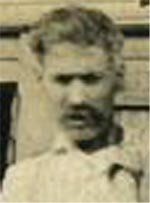
Left: Mike Thomas
Right: Estie Thomas, Margaret Nixon (sisters) and Marie Thomas, Virginia (Thomas) Funkhouser and Sophia Jarvis (daughters of Estie Thomas


Virginia’s father, Mike Thomas, emigrated to the United States from Turkey in 1904. He and his brothers settled in the bus
tling railroad town of Orlando, West Virginia where Mike started out as a pack peddler and later worked in a restaurant. In 1905 he married Estelle Henline, a widow with 2 children. Together they had 6 more children, of which Virginia was the youngest. As a young child, she was known as Kate, short for her middle name, Katrine. During their time in Orlando, her mother was introduced to and joined the Reorganized Church of Jesus Christ of Latter Day Saints. The family later moved to Alton, Upshur County, West Virginia, where Mike opened a pool hall. Mike Thomas died at age 52 in 1925 when Virginia was only 7 years old. During her childhood years, Virginia and her brother, Arden, operated a paper route together. She also had her own AVON route by age 11. The Thomas family moved again to Copen, Braxton County, West Virginia. In her early school years, she walked 4 miles each way along a railroad track from Copen to her school and back. From the first day she went to school and set foot in a classroom, she knew immediately that she wanted to become a school teacher. So at an early age, she set her sights on getting a formal education in order to reach that goal. She graduated from Burnsville High School. Her brothers spent many years working for the Baltimore and Ohio Railroad. At age 16, Virginia was given some fabric by her uncle Lewis Thomas and sewed dresses for herself and for her sister, Marie, both made without a printed pattern.

Since her family was unable to meet college expenses, Virginia found a way to borrow $100 to start her freshman year at Glenville State College in nearby Glenville, WV. She earned enough education credits in her first year to receive an interim teaching certificate. In 1941, she used that certificate to land her first teaching job at Squires School, a one room schoolhouse in Gem, WV where she taught 16 students at multiple grade levels. She taught during the school year and studied at college over several summers to complete her Bachelor of Science degree at Glenville State College, Glenville, WV in 1946. While at college, she also waited tables at a boarding house in exchange for meals. After teaching one year at Squires School, 1941-42, she went on to 2 years at Hutchinson School in Gem, WV (1942-43-44), then 7 years at Burnsville, WV Graded School from 1944 to 1951.

In Copen, she used a horse to carry children across a creek to get to school. She talked to local officials about the need for a bridge across that creek, and was so convincing that crews were there the very next day making plans for the bridge. A bridge soon was built to accommodate both children and adults.

She met her future husband, Marshall Funkhouser, from south central Virginia. They were secretly married on December 28, 1950 at the home of Marshall’s aunt Seville in Fairfax County, VA without her mother’s knowledge. At first, her mother didn’t care for Mr. Funkhouser; however, that changed as he frequently took her out for ice cream and on other errands. Together, Mr. and Mrs. Funkhouser owned several horses which were stabled and groomed as racing horses near the Charles Town, West Virginia Race Track. Virginia went back to her hometown of Orlando, WV where she was baptized and became a member of the Reorganized Church of Jesus Christ of Latter Day Saints. Shortly thereafter, following a professor’s recommendation, she and Marshall moved in 1951 to northern Virginia and resided in southern Fairfax County, VA. They later moved to Alexandria, where in September 1951 she started her 31 year career as an educator with the City of Alexandria school system while her husband continued his career with the Virginia Electric Power Company. They were each other’s constant companions in over 45 years of marriage beforeMr. Funkh ouser passed away in 1996 in Naples, Florida at their second home where they enjoyed the area and spending time with friends.

She was an avid walker, and upon her retirement, she enjoyed walking in her Alexandria neighborhood every day as the weather and her health would allow. She was well known in her neighborhood by those walks and by chatting with passersby as she tended to her property. She loved to garden, and was known to grow some of the best tomatoes and green peppers on Russell Road in Alexandria.

From 1951, Mrs. Funkhouser was an active member of the Reorganized Church of Jesus Christ of Latter Day Saints, now known as the Community of Christ. She was a member of this church in Washington, DC and instrumental in founding a new mission and congregation in Springfield, VA. She wanted the best for the children, and saw to it through her benevolent financing that new carpeting and curtains were installed in all the children’s church school classrooms, and that a wonderful playground was provided for the children to have a safe and fun place to play. She was a strong supporter of a children’s Peace Pavilion, initiated by her church denomination at its International Headquarters in Independence, Missouri.

Virginia was a leader and promoter of a nationwide children’s reading program called Reading Is Fundamental (RIF), for many years headed up by Lynda Johnson Robb, who frequently visited schools in the Alexandria school system. In 1991, Mrs. Funkhouser was awarded the Distinguished National Service Award by the RIF Foundation. In 1981, as principal of the James K. Polk Elementary School, she played a part in the production of a National RIF movie. She served as co-President of RIF for Northern Virginia in 1986-87, and remained active as the chairperson for the Alexandria area RIF program for many more years. Virginia even traveled to the White House to represent the interests of that group/foundation before the President of the United States. The nonprofit RIF program helps more than 13 million children across the nation to read with the assistance of more than 120,000 volunteers. Mrs. Funkhouser was passionate in her desire that all children learn to read. It was her gift to them, one that remains with each person throughout his/her life.

Mrs. Funkhouser always stressed the value of getting a good education. Through the years she became quite fond of her church-sponsored college, Graceland University, located in Lamoni, Iowa, between Kansas City and Des Moines. She and Marshall generously supported Graceland, to the point of establishing a scholarship fund in both her and Marshall’s name, a scholarship which continues even today.

Mrs. Funkhouser’s career as an educator in the City of Alexandria began in 1951 as elementary teacher at Mt. Vernon Elementary School, under the leadership of Principal Beatrice Franklin, a pillar among her elementary school peers. Knowing the value of an advanced degree, while teaching during the school year, she used her summers to complete a Master’s Degree at the George Peabody College for Teachers at Vanderbilt University in Nashville, Tennessee in 1955. After four years at Mt. Vernon as a teacher, upon receiving her Master’s, she was promoted to Assistant Principal. The superintendent of the Alexandria Schools, Mr. T.C. Williams, soon recognized Mrs. Funkhouser’s talents and skills, and made the most of her expertise by shifting her to other schools where a strong, energetic leader was needed.

In 1956, Mrs. Funkhouser became Assistant Principal at MacArthur Elementary School. She moved to Minnie Howard Elementary School as Assistant Principal in 1957-58. She then transferred to Prince Street Elementary School as Principal (1958-Feb 60). From Feb. 1960 to 1967, she was Principal at Robert E. Lee Elementary School on Washington Street, near the Woodrow Wilson Bridge. From there, she went to Charles Barrett Elementary School as Principal for 6 years (1968-1973). And in 1973, she transferred to James K. Polk Elementary School where she was Principal for 9 years from 1973 to 1982. Several of her teachers from the earlier schools transferred to Polk to continue their professional association with Virginia. Each time she moved to a new school, it was at the request of Mr. T.C. Williams because he had such faith and trust in Virginia’s leadership and management skills to get the best results, from both teachers and students. She was noted for being able to “straighten out” some of the problems being experienced at schools around the Alexandria school system. While she was principal she led the school through the period of desegregating schools and bussing. She was always known as a dedicated, hard worker, revered by her staff. She would regularly get to school quite early, and stay late most days. She established an excellent reputation by demonstrating her leadership in elementary education, both in teaching and in principal positions at several schools in Alexandria. She was a hard taskmaster, but she inspired teachers and students alike, gaining recognition as a superior educator for the Alexandria community.

Mrs. Funkhouser was invited to join Delta Kappa Gamma, an international professional honor society of women educators with over 150,000 members that promotes professional and personal growth of its members and excellence in education. She enjoyed participating in, and supporting, its several functions for many years.

She was truly admired by all who knew her. Well after her retirement from Polk Elementary School and the Alexandria school system in 1982 she continued to be in the forefront of organizations promoting excellence in education, and maintained her contact and close friendships with many of her teachers, secretaries, other principals, and even superintendents in the school system. She often invited her friends to visit at her home where she enjoyed preparing lunch for them. Perhaps her most favorite dish was crab cakes, for which she was always a popular cook. She was also known for being a “sharp” dresser. For many years after retiring, she maintained her membership in and attended the meetings of the Alexandria Retired Teachers Association.

Virginia was such a lover of good books. She especially enjoyed good children’s books, and she considered herself quite privileged to be a close personal friend to Cheryl Barnes, another Alexandria resident who is an accomplished author of children’s books, many of which are in Virginia’s home library. Virginia thoroughly enjoyed Cheryl’s books and would often give them as gifts to young children who were very special to her.

Virginia was an avid Washington Redskins Football Team fan, and together with Marshall, for many years they would attend all of the Redskins home games. They took pride in having a pair of those “hard to come by” Season Tickets, which offered an excellent view of the field at the 45 yard line on the home team’s side. They’ve held that pair of tickets for over 50 years! She even became good friends with Joe Theismann, the once-star quarterback for the Redskins, who accepted her invitation to come visit her and her students at Polk Elementary School on more than one occasion. She always cherished the “number 7” autographed jersey which Joe personally gave to her, proudly displaying it on the wall of the family room in her Alexandria home.

Her leadership and support of education gained her many friendships with persons in leadership positions at the city, state, and national levels. Often she received invitations to attend special banquets in both Washington, DC and northern Virginia. For many years she received Christmas cards and letters from U.S. Senators as well as the President of the United States.

Though she claimed to be shy, others would recount that she was never bashful, never hesitating to make her views well known. There was no doubt where she stood on just about any issue that you might want to discuss with her. She had a keen sense of humor. Professionally and personally, she was an inspiration to all. She will long be remembered as a highly respected leader in the Alexandria school system.

Mrs. Funkhouser left a legacy of high principles, and stressed the need for studying hard and doing well in school in order to succeed in life. She was admired, respected, and loved by so many people whose lives she touched along her own pathway of life. Many people have had success and been enriched in their own lives by being touched somewhere along the way by Virginia Funkhouser.

Monday, February 15, 2010

One of Alexander Skinner's Granddaughters

Priscilla Estella (Henline) Godfrey Thomas
by David Parmer

Samantha and Beham's First Child
The vows of marriage were exchanged between Samantha Skinner and Beham Henline on April 5th 1876. According to the entries in Samantha’s well-worn hand-stitched Bible, the young couple was married by the Reverend Gabriel Dennison, a pioneer settler on Clover Fork. The ceremony took place at the home of her older sister and brother-in-law, David Newton and Mary Jane (Skinner) Godfrey, who lived a short way down Oil Creek. (Samantha and Beham's first child would marry one of D.N. and Mary Ann's younger son,s Melitus, who was 6 years old at the time of his aunt and uncle's, and future in-laws', marriage.)

The 23-year-old Samantha and Beham, three years her senior, became parents of their first child on January 24, 1877. The new-born would be named “Priscilla Estella.” (Beham had a sister named Priscilla.) As the child grew and more children came the six syllable name “Priscilla Estella” soon would become shortened to “Estie,” a name which the first born child of Samantha and Beham would carry for the remainder of her life.
.
Left: Beham and Samantha (Skinner) Henline's oldest child, Estie, with her granddaughters Judy and Jetta Thomas.
Right: Samantha (Skinner) and Beham Henline
Left and Right, below: The second Henline home, which replaced the one that burned down.
.
Confluence on Oil Creek
During Estie’s first dozen years she was joined by the birth of five brothers and three sisters. After living on Indian Fork in Gilmer County and later on upper Oil Creek near Bear Run, the Henline family moved to Confluence. The Henline home in Confluence was located on a parcel of approximately 40 acres which had been deeded to Samantha by her father Alexander Skinner. Beham built a simple two-story clapboard home with a shingle shake roof on the south side of Oil Creek, opposite and upstream from the Mt. Zion Methodist Church. He set up a country store in the house which served the sleepy little farming hamlet and farmed his land, as well. The hillside portion of the farm was planted with fruit, nut trees and berries and included large fields which provided grass for the farm animals. The corn field and house garden were located on the lower part of the farm along Oil Creek.

Around 1890, life in Confluence began to change. It had been rumored for some time that the West Virginia and Pittsburgh Railroad was to be located through the Oil Creek Valley and Burnsville with a final destination of Richwood. Soon railroad agents visited Samantha and other landowners along Oil Creek to purchase rights of way for the location of the railroad tracks. As the laying of track along Oil Creek ensued, the Henlines found themselves less than a stone’s throw from the rail tracks and found that smoke from the locomotives which created dirt and an extra washing day. Soon, the unfortunate location of the Henline home too close to the tracks resulted in a roof fire caused by embers from the steam locomotive which burned the house to the ground. Perhaps, just as well. The original location of the home had made it subject to the periodic flooding of Oil Creek. So, when plans were made to rebuild, the new home was built not only farther away from the railroad but also from the waters of Oil Creek.
.
Miletus Godfrey
Miletus, or “Lete,” Godfrey was the son of David Newton Godfrey and Mary Jane (Skinner) Godfrey and was a first cousin to Estie. Neighbors most of their lives, 26-year-old Lete and 20-year-old Estie decided that they knew each other well enough to marry so in 1897 Lete and Estie were married by Reverend J. H. Mossburg at the residence of C. S. Gainer, an early Confluence merchant. During the first five years of their marriage Lete and Estie became parents of a boy named Harry and a girl named Sophia. According to June Nixon Henry, daughter of Margaret (Henline) Nixon, Lete and Estie lived in a small house near the location of the later built St. Michael’s Catholic Church and across Oil Creek from the Henline homestead.

Left:Estelle and Lete's son Harry
Right: Estelle and Lete's daughter Sophia

Typhoid
Typhoid fever was a deadly scourge of early residents of Oil Creek. Not only were the effects of the disease usually fatal, it was also easily communicable. Many promising lives were cut short by the dreaded disease and its victims and survivors suffered long-lasting great physical pain and debilitation. In 1901, typhoid was running rampant along Oil Creek and 32-year-old Lete Godfrey became a victim. At the same time, his ten year-old-sister-in-law Margaret Henline who lived just across Oil Creek also fell ill from the disease. One of the effects of typhoid is a severe inflammation of the bowels and sometimes perforation, which is usually fatal. June (Nixon) Henry recalls that her mother Margaret Henline spoke of her serious childhood illness and that she was very ill for a long time. Young Margaret, after many days of being at death’s door, resisted the hand of death and early one morning rose from her bed recovered, but voraciously hungry. In later years Margaret told her daughter that when she arose that early morning hour she went to the kitchen and found a bowl of creamed tomato dumplings and ate the entire contents of the bowl. After slaking her appetite, Margaret went out on the porch of her home for fresh air. Looking across Oil Creek toward the home of her sister Estie and brother-in-law Lete Godfey, Margaret noticed that the moon in the sky above her sister’s home appeared to be “blood red,” perhaps she thought, an omen of bad things to come.

Right: Margaret, Estie's young sister who survuved Typhoid Fever.

The Hand of Fate, a Red Moon,
a Few Apples and a “Busted Gut”
Lete Godfrey’s condition was serious. During a typhoid illness it is necessary to avoid any physical or mental stress which could aggravate the precarious condition of the ailing patient. Lete had been in his bed for over two weeks, in great pain and with periods of unconsciousness. On one day during a lucid moment, Lete was informed by a visitor that someone had entered his orchard and had stolen apples from his trees. At the turn of the 20th century, a farmer lived by what he raised and could ill-afford any loss of his agricultural efforts. The news of a theft of apples from his orchard infuriated Lete and caused him great emotional stress. Lete’s reaction to this report of crime apparently caused a rupture of his highly inflamed intestines and he immediately took a turn for the worse and died almost immediately, according to the family, of a “busted gut.” Until her dying day, Margaret Henline Nixon remembered the red moon which hung ominously over the home of Lete Godfrey and brought grief to her sister Estie on September 12, 1902.

The Widow Estie and Her Two Children, Harry and Sophia
Godfrey’s infant daughter Sophia was but one year of age. Harry was three. Lete Godfrey had not reached his 32nd birthday as the last shovelful of dirt was cast upon his wooden coffin. Estie was fortunate to have a close-knit and supportive family to rely upon. Grandmother Samantha was still in her late 40’s and Beham was just past his 50th birthday. The Henline clan was a strong farm family and familial duty welcomed the widowed Estie and her children back to the fold.

Mike Thomas
He was swarthy in complexion, his English was fractured, he was taller than average, and his roots were in the mid-East in a country called “Syria.” His handsome appearance did not go unnoticed by the widow Estie as Mike Thomas opened his peddler’s pack to reveal the many enticing contents within. Estie was smitten by more than the thimbles and threads and fancy scissors in his pack, and, in the normal course of things, the widow and the Syrian peddler were married in July 1905.

Entries about Mike Thomas:

Pool Room Entrepreneur
It is difficult to be a pack peddler and a married man with a ready-made family. Young Harry and the toddler Sophia needed a father’s hand and Mike therefore couldn’t be trudging along the railroad tracks in some far-off county looking for a customer for some fine silk fabric tucked in the peddler’s pack. And besides those considerations, Estie was pregnant with Mike’s first child. What better reason to leave the peddler’s life and set down roots. Another consideration was the recent completion of the Coal and Coke Railroad through Confluence, the building of a union depot by the Baltimore and Ohio and the Coal and Coke and the great increase in rail passenger traffic through the Confluence junction. With the encouragement of his bride, Mike closed his peddler’s pack for good and took up the pool room trade.

It is unknown where the Mike Thomas pool room was first located in Orlando when he first picked up the rack and said “Break,” but it is known that his pool room was later located on the first floor of the Wholesale Building beginning around 1908. The pool room was equipped with a state-of-the-art pool table and soon nickels and dimes began changing hands for the privilege to pick up a cue stick and lace the multi-colored ivory balls across the green felt.

And Comes the Children
At about the same time, to provide room for his growing family, Mike built a small house at the lower edge of the Henline orchard which lay on the hill behind the Henline home place. Soon, it seemed, the small house on the hill at the orchard’s edge was full of children: Tom, the first child, was soon followed by Bill, Owen, Marie, Arden, and Virginia. It is family lore that the fifth Thomas child, Arden, was so small at birth that he could easily fit in the palm of a hand and that to keep him warm he was swaddled in a blanket and kept on the open door of the cook stove.

Left: Mike holding Kate, Tom, Owen, Arden, Marie and Bill.
.
Mike and Estie Move to Copen Add Video
While Orlando could be considered as a railroad boom town in the early 1900’s, Copen during the first quarter of the 20th century could be called a coal mining boom town. The nearby towns of Bower and Gilmer also were hosting busy coal mines at this time employing several hundred mners. Coal mining attracted a younger work force, many of whom were single and who, during their days off, enjoyed shooting a game of pool. Mike decided that that Copen should be a better location for the pool room business than Orlando so the Mike and Estie Thomas family bid adieu to Orlando and moved to Copen.
.
Copen
Land was selling at a premium in Copen in the early 1920s. There was precious little flat land that wasn’t already developed for housing or being used for agricultural use. Mike and Estie Thomas were not wealthy and could not pay the premium prices for the best land, consequently they purchased a narrow neck of land along the railroad right of way between the Copen Depot and Bower. Mike built a long and narrow frame house with bedrooms which opened directly onto the porch. These bedrooms could be rented to miners or railroad workers who could come and go as they pleased without disturbing the rest of the household. Mike’s pool room was built at the end of the house toward the Copen Depot. The pool room was not in the most ideal of locations and did not thrive.

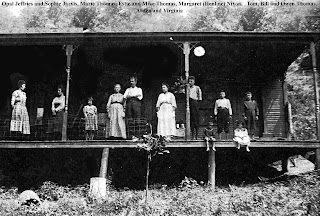
On the porch of the Copen home, Left to right: Opal Jeffries, Sophie (Godfrey) Jarvis, Marie Thomas, Estie and Mike, Margaret (Henline) Nixon, Tom, Bill and Owen, and sitting, Arden and Virginia.

Another important matter which was not thriving was Mike’s health. He was diagnosed with tuberculosis in 1924 and the disease was progressing when Mike decided that the pool room business might better flourish at Alton in Upshur County in another coal mining community.

Alton
Alton is situated about midway between Buckhannon and Pickens. In the 1920’s coal mines were active in Upshur and southern Randolph Counties. Mike rented a small house and pool room in Alton located near the train depot. Unfortunately, Mike miscalculated the business he hoped the pool room would bring in and times were tough. Estie’s granddaughter, Ruby Brooks recalls her grandmother telling her of the lack of business and that the family “nearly starved to death.” Alton also was at a higher elevation than Copen and Orlando and winters were much more severe. Ruby also recalls her grandmother telling her that she had to paste newspaper to the walls to prevent the cold air and snow from blowing into the tiny house. Such conditions surely worsened Mike’s tubercular condition. He took a turn for the worse and died in February 1925. At the age of 48, Estie was a widow for the second time. Mike was laid to rest in the Orlando Cemetery.

Return to Copen

Estie returned to Copen after Mike’s death and lived there the remainder of her life. Her daughters Marie and Virginia, and her sons, Tom, Owen, Bill and Arden, continued to live with her. Her two older children, Harry and Sophia, had married and were living away. In time, all of her sons married and left home. Bill worked at a Clarksburg plant and Tom, Owen, and Arden worked for the railroad. Her daughter Virginia became a school teacher and after teaching for a few years in Braxton County rural schools and Burnsville Grade School, moved to northern Virginia around 1951 to continue her teaching career. Marie, the oldest Thomas daughter, was a long-time storekeeper and postmistress in Copen.

Left: Virginia and Marie Thomas
Right: 3 of tghe 4 Thomas brothers Tom Bill and Owen Thomas
Left: the 4th Thomas brother, Arden

Her Grandchildren Remember Estie

Estie's Dust Cap

Ruby Brooks helps us complete the portrait of her grandmother Estie Thomas. Ruby, now 83 years of age, remembers Estie as very short, “maybe only four and a half feet tall.” “I always looked forward to visiting grandmother at Copen and until I turned eight years old, I was able to get a rail pass free of charge. We would stop at Orlando first and visit there for a couple of days and then go on to Copen.” June (Nixon) Henry also remembers her aunt Estie as a short woman who seemed to have a shoulder blade “out of place” as a permanent condition. Apparently her young grandchildren and nieces never inquired about the curious hump on Estie’s back but just accepted it since it never seemed to bother her. “She always wore a dust bonnet and was never without one,” recalled both her granddaughter Ruby and niece June. Helen Jeffries, a niece-in-law, also recalled Estie’s omnipresent dust cap and recalled that Estie was buried in an elaborately crocheted dust bonnet which had been made for her by a friend. Helen also recalled that Estie, like her sister Clora Henline, always wore an apron and was never without one tied at the waist.

Left: Estie in her dust bonnet.

The Vicious Dog

Granddaughter Ruby also recalls her grandmother as brave and fearless. Ruby recalls on one summer visit with her grandmother at Copen, a large, vicious dog came by Estie’s home and snapped at her toddler brother Franklin. Estie sent word to the dog’s owner about the incident and told the owner to “keep it tied or keep it home.” The following day, the same dog returned to the Thomas home and once again growled and intimidated young Franklin. Ruby remembers vividly that her grandmother went into the house and got her .22 rifle, knelt on one knee, took aim, and shot the threatening dog squarely between the eyes..

The Chamber Pot March
Through the Living Room

Ruby also recalls that her grandmother and Aunt Margaret Nixon were quite the jokesters. It seems Estie was quite protective of her very attractive daughters, Marie and Kate, who had no shortage of suitors. Estie was quite strict with young gentlemen callers and was always ready to discourage the young swains from getting close to her girls. Ruby vividly recalls one visit she and her Aunt Margaret made to Estie’s home. One evening Marie had a gentleman caller with whom she was socializing in the living room. Since the Thomas house had no indoor bathroom, each bedroom was provided with a chamber pot which was kept in an out building during the day. Estie instructed Ruby, her sister Rose, and her cousins, June and Billy Nixon, to go to the out building and bring the chamber pots into the house, not through the doors to the bedrooms, all of which opened onto the front porch, but rather through the living room where Marie and her young friend were holding forth. Doing as they were told, the youngsters retrieved the chamber pots from the out building and conducted a parade of the glorious chamber pots through the living room, marching past a rather uncomfortable and embarrassed Marie and the nose of her guest. Ruby doesn’t recall the name of the young swain but she doesn’t think he ever returned.

Right: Their Aunt Marie with Rose Jarvis and Lawana "Toodlebugs" Jarvis, daughter of Jesse's son by his first and late wife Nora

Bickering Sisters

It is reported that Samantha (Skinner) Henline was not a meek or mild woman but spoke her piece without fear of contradiction. A strict disciplinarian, Samantha ran a matriarchal home and her children, even as adults, were aware of “who was boss.” A strong will seemed to run in the family, particularly among the female children who also spoke their minds. Oft times, the strong wills among the Henline daughters brought about a clash of opinions, but most usually with tongue-in-cheek, although one anonymous observer who weighed in on the quarrelsome sisters felt the usual and common acrimony between them should not be “sugarcoated.”

Left: Three of the four sisters: Lulu, Estie, Clora
Right: Lulu and brother Ernest Roy "Heaterhuck" cutting up

Clora would say, “Now, Estellie!” whenever she disagreed with her sister on some insignificant thing, and Estie would retort, “Now, Clorie!” The sisters’ brother, Heaterhuck Henline, always got a kick out of the bantering that took place between his two older sisters whenever they got together. Indeed, Heaterhuck was very adept at “egging them on” so he could enjoy the fray. No family gathering was complete without Estie and Clora having a set-to, which was more entertaining than Amos and Andy on the radio. It is also reported that two other Henline sisters, Lula (Henline) Mitchell and Margaret (Henline) Nixon, could also hold their own in the bickering department. Age was no modifier to these amusing occurrences or “bantering sessions” until all the sisters had passed away.

Pleasant Visits

Burlen Henline, son of Estie’s brother Frank, and Audry (Reip) Henline, recalls that he and his mother loved visiting his Aunt Estie at Copen and always managed two or three days each time at Aunt Estie’s whenever he visited the Orlando home folks. Burlen recalls that the train passed through Copen and afforded a convenient means of transportation for the visit from his home in Clarksburg and later in West Union. The visits were always pleasant and a good time was always had by all. Burlen lamented the loss of the passenger train service which limited his mother’s ability to visit Estie at her Copen home and the loss of the pleasant visits.

In 1963, at age 86, Estie passed away, in the arms of her younger sister Lula.
She was buried in the Orlando Cemetery in a plot and beside a plot which would soon be occupied by her brother, Heaterhuck.

. . . . .


Note from David Parmer

Estie Thomas’ two children by Lete Godfrey, Harry Godfrey and Sophia Godfrey, grew up in Orlando. Harry worked for many years at the Hazel Atlas Glass plant in Clarksburg. Sophia worked for Dick Skinner in his wagon restaurant and met her future husband, Jesse Jarvis, while she was working there. Jess was employed by the Baldwin-Felts Detective Agency at the time and was involved in protecting the property of coal companies in southern West Virginia during the mine wars of the the late 1910’s and early 1920’s. Jess later worked in coal mines in Barbour County.

Comment by Tom Jeffries
I really enjoyed the story about Aunt Estie. It brought back a lot of memories. The last time I saw her was before I went into the service in 1962. She was very frail and unable to walk very far. Tom and Arden carried her on a chair. It was a great story, especially about the sisters being quarrelsome. I got myself away from them when they were bickering.

Friday, December 29, 2006

Lis Thomas, A Syrian Peddler

Fading tattoos of camels, St. Sophia and minarets adorned the left arm of Louis “Lis” Thomas and captured the rapt attention of five year old Tom Jeffries, as he sat listening to Lis tell his tales so strange and wonderful.

Tom Jeffries with his kid brother. John.

Lis was a stooped, swarthy, thin man of medium height, with a hooked nose with flaring nostrils set in a wide face, smelling of strong tobacco, road dirt and sweat. He was spotted coming up the railroad tracks, hunched under the weight of his sixty pound pack of goods by members of the Henline family who were lounging on the front porch under a majestic elm tree.

Departing the cindery tracks and carefully stepping across the foot bridge over Oil Creek, Lis quickened his steps as he came closer to the inviting shade of the porch and the tall elm tree. It was summer and he had walked a long way that day and he needed the rest and the chance to sell a few goods. The Henline family were the inlaws of his deceased older brother, Mike Thomas, who also came to America as a peddler from his native Syria , and Lis considered them friends.

Lis was an intriguing sight for Tom, who, although half afraid, was anxious to look at the Syrian peddler and listen to his strange voice, full of funny pronunciations of common words. After exchanging greetings and talking awhile with Opal, Clora and Heater, Lis, dragging on his Camel cigarette, talked of the merits of Turkish blended tobacco but wide-eyed young Tom, not interested in this adult matter, was dying for the chance to look into the large pack of goods resting beside the porch.

Lis Thomas was born in that portion of the Middle East known as Syria , but under the rule of the Sultan of Turkey. Today we call this area Lebanon, a land of Maronite Christians, Sunni and Shiite Muslims, and Druze, and full of as much violence as there is religion. The family of Lis Thomas was Maronite Christian, a minority in a mostly Muslim country and the frequent target of deadly violence by the hated Turks and the equally despised Muslims. Violence was not all one-sided in this part of the world, and blood feuds and vendettas were daily occurrences. It was long reported by family members that the murder of a revered uncle of Lis and Mike Thomas had brought them to America on the trail of the knife wielding murderer. Failing in their quest to avenge their uncle’s death because the assailant had returned to Syria while the avengers were on their way to America, the Thomas brothers found the opportunities of America too inviting to risk the return to Syria to exact revenge. But these were things Lis Thomas did not reveal to the ears of young Tom, nor the women, but only to the men folk of the Henline family.

Lis, in his peculiar speech, explained his tattoos to Tom, who was eager to hear the tale of the camels, and about the minarets, and St. Sophias. Those same icons Tom could see on the package of cigarettes Lis twirled in his large fingered hand. Tom thought how exciting it was to have someone this exotic to talk to him, as if he were a grown man. He would dream of camels, of minarets and of St Sophias tonight.


Comments
Comment 1 Donna Gloff
Costumes to the left were worn by Maronite Christians in Lebanon in the late 1800s about the time the Thomas brothers were leaving their homeland.

Tuesday, November 28, 2006

Peddlers and Drummers

Peddlers and drummers were a colorful part of life in the Oil Creek watershed from early settlement to as late as the early 1950s. Drummers are more recent. There were many varieties of men and products and means of transportation involved with these itinerant salesmen.1

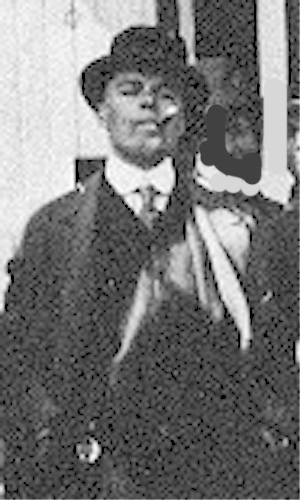
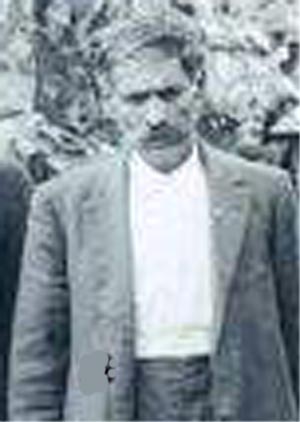
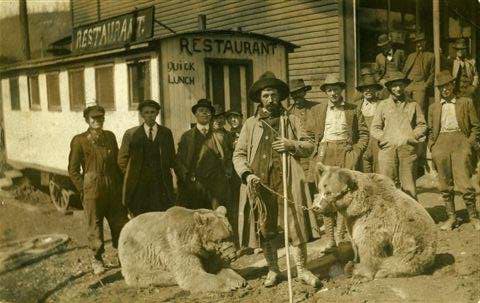
The gentleman to the left is a drummer, from the photo of the traveling bear act that stopped in Orlando. See the entry Oct 6, '06 The Bear Trainer. (Drummers are itinerant salespeople who sell the product and deliver later. They often represent particular manufacturers and they often carry sample cases.)Also in that photo is a former peddler, Mike Thomas. Peddlers, of course, go back to times before record. They carry their goods with them. Pictured here to the right is Mike Thomas a few years after he had left peddling for a more settled life.

David Parmer tells us "Mike and his brother Lis Thomas were brothers who had come to this country in 1902 from the part of Syria that is now Lebanon. They were pack peddlers who sold their wares throughout central West Virginia in the hollows and rural areas inaccessible to country stores.

"In Orlando Mike met a young widow, Esta (Henline) Godfrey, a daughter of Beham and Semantha (Skinner) Henline, whom he wed. Mike and Esta lived in Orlando in a small cottage above the Henline homeplace for a few years."

[For more on Mike and Esta (Henline) Thomas, see the entry dated Nov 19, '06 Mike Thomas' Family]

Mike Thomas belonged to a fascinating time and place in history He and his brother Lewis "Lis" Thomas were Syrian pack peddlers. "When my wife was growing up in the Henline household during the 1940s and 1950s she remembered Lis Thomas stopping by with his pack full of goods. She told me that everyone seemed to look forward to Lis' coming to show his wares. The packs had little pockets for the little things and it was chock full. The pack was also huge in comparison to the man."

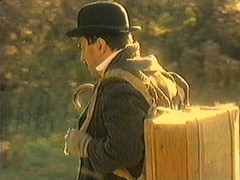
What kinds of things were in the peddler's amazing pack? One source tells us "Their packs were well-equipped mobile stores containing scissors, razors, pins, buttons, ribbons, threads, needles, combs, soap, voile and muslin, lace and crotchet crafts, perfume, scarves, picture frames, pictures of saints, religious notions from the holy land, etc. and of course, whatever the customer needed could be supplied in the next visit.2" Another source adds to that list "small tools, cooking utensils, . . . bed-sheets, and sometimes . . . spices, pepper and seed.3"

As David Parmer suggests, the pack iself was a source of fascination. "As the peddler progressed on his journey, a leather pack could be collapsed to fold into another pack, and the continued trudging became less and less cumbersome. The demonstration of the packs was often a delight to children present at the time.4"

Mike and Lis Thomas were Syrian Christians; their culture and faith dating back to the very beginnings of Christianity. They were part of a large migration of Syrian Christians. Around the turn of the century many Christian Syrians fled to the New World to escape persecution by the Sultan Abdulamid, ruler of the Ottoman Empire which had ruled large parts of the Middle East and Mediteranian since the middle ages. Hundreds of thousands of Christians were massacred in 1895-1896, the Christian villages were burned and whole communities were forced out.5 The grueling work of pack peddling in this foreign land was the route many chose as they began to build new lives.

The photo to the right is taken from the web site The Syrian Peddlers

1. Edward C. Smith, A History of Lewis County West Virginia pg, 207.
Speaking in general of peddlers in Lewis County Smith says, ". . .peddlers who with a greater or less quantity of trinkets on their backs or of store goods in their wagons made their way from one settlement to another. A peddler's license fee was $25 per year, except for clock peddlers who paid $100. William T. Knotts and William M. Grimes were two of the first peddlers in the county who sold at retail "goods of foreign growth and manufacture." The old peddler was a picturesque figure as he made his way over the trails in his light wagon filled with his stock of groceries, notions and dry goods which he exchanged for the products of the farm. His wagon always was full, even at the end of the trip; for the goods which he took in trade were heavier and more bulky in most cases than those he sold. The peddler was always welcomed, for his wagon was the only source from which store goods could be procured by the families that lived in the valleys remote from the older communities, and he retailed not only goods but gossip of the whole region through which he traveled.
2. Dr. Najwa Nasr, Professor of English Linguistics, The Lebanese University Early Lebanese Immigrant Women to the USA
3. G. Bryan McKay, The Syrian Peddlers
4. ibid.
5. ibid.

Monday, November 27, 2006

Mike Thomas' Family

Mike Thomas and two brothers, Charlie and Lewis, came to this country from Syria around 1900.1 Mike and Lis found their way to West Virginia where they made their living doing many kinds of work. Early on, like many of their countrymen, they were pack peddlers. They sold their wares from the packs on their backs throughout central West Virginia in the hollows and rural areas inaccessible to country stores.

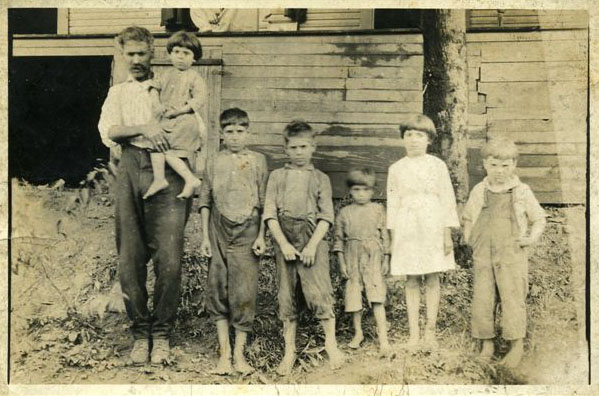
In Orlando Mike met a young widow, Esta (Henline) Godfrey with two small children2 whom he wed. Mike and Esta lived in Orlando in a small cottage above the Henline homeplace for a few years. We know Mike operated a restaurant in Elkins for a while but he is remembered for the pool room he opened in Copen. Mike and Esta had five children, shown above: Mike holding Kate, then Tom, Owen, Arden, Marie and Billie.

Charlie and Lewis both married and settled near Elkins. Lewis' marriage didn't last.

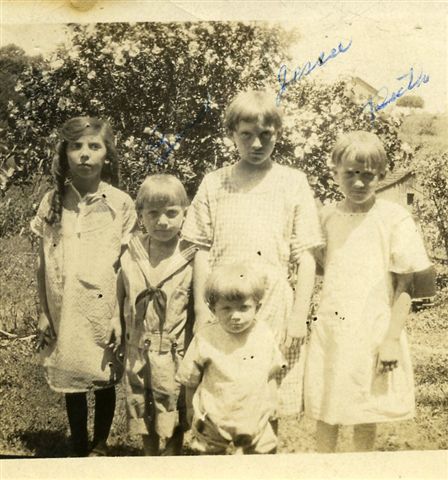
To the left is a photo of Kate and Arden Thomas with their cousins Jessie, Ruth and Bud Henline, children of Pid and Minnie Henline.

Mike and Estie's boys, Tom, Owen, Arden and Billie, all worked for the Baltimore and Ohio Railroad until retirement. Marie operated a store and was postmistress of Copen.

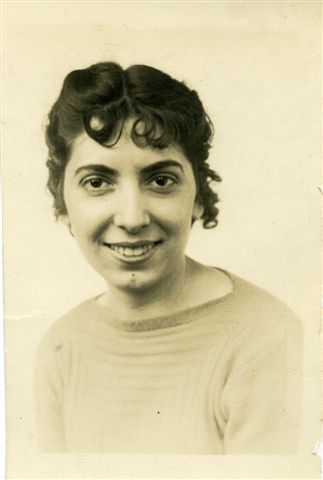
Kate became a teacher and taught school at Burnsville and in northern Virginia. To the right is a high school photo of Virginia "Kate" Thomas and below that is a more recent photo of Kate with her husband.

Tom Thomas, the oldest son of Mike and Esta, was a foreman of track maintenance for the B & O Railroad for many years.

Tom’s son Sam graduated from Burnsville High School in 1960 and obtained a degree in Chemical Engineering from West Virginia University. Sam later became President of Gulf Oil, Asia, and as the oil companies merged eventually became an expert in planning for the Chevron Oil Company in refinery operations. Sam lives in Mobile, Alabama.

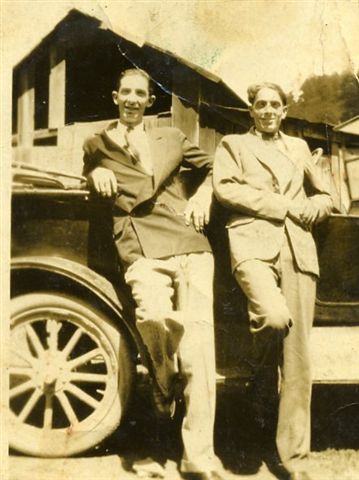
To the left, Tom, the little barefoot boy next to his dad in the photo at the top of this entry, is posing with his Model T and cousin Coleman Jeffries. on an obviously very special occassion.

1. The web page The Syrian Peddler tells the story of the forced migration of Christian Syrians around the turn of the century, and goes on to tell about tradition they established as peddlers throughout North America's isolated communities.

2. Pricilla Esta was a daughter of Beham and Semantha (Skinner) Henline. She first married Melitis Godfrey and they had two children, Harry and Sophia.