Showing posts with label Era Early Settlers. Show all posts

Sunday, May 27, 2012

William O. Skinner Went West

David Parmer shared this story in 2006:
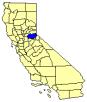
William O. Skinner was was born in 1849 to Alexander & Phoebe (Conrad) Skinner1. He was, to the best of our research to date, the only one of their 14 children to leave central West Virgina. It was shortly after the Civil War that he joined his aunt and uncle, Matthias and Elizabeth (Conrad) Nail, in the migration to California. He lived in ElDorado, California (see map at left) for 20-some years. He married a California girl, Belle Nichols around 1880. They had three daughters and one son, Bertha Barto, Velma Etzenhouser, Arden O. Skinner and Ruth Price.


A blacksmith by trade, he was ordained a priest in the Reorganized Church of Jesus Christ of Latter Day Saints2 in 1887 and ten years later he relocated to Independence, Missouri where the denomination is headquartered. Shortly after that he began making annual trips back to Orlando, where he began a congregation known as "Mission Number 1930." About 1930 the Orlando congregation had a church building near the mouth of Posey Run. The tiny congregation lasted into the early 1960s.

William O. Skinner died in Independence, Missouri in 1923 and was buried in the Mound
Grove Cemetery in Independence.

. . . . .
The following comes from Barbara Diane (Etzenhouser) Edwards:
William Otto Skinner (my maternal grandfather) married Belle Dynan Nichols in Sacramento City in 1880. She was only 16, having been born on August 13, 1863 in Amador, California (in the California gold country). She had been orphaned at about age 11 and along with several of her siblings had been placed in the Christian Women's Orphan Asylum in Sacramento. This orphanage is now called Sacramento Childrens Home. The home still has a card on the Dynan children, giving their names, ages at admission, ages at discharge and to whom discharged.
Left: wedding picture of William and Belle (Dynan Nichols) Skinner

A few years later, she was released to the care of and adoption by a Mrs. Nichols. Family lore is that she had to go to bars to buy buckets of beer for Mrs. Nichols. (A younger brother, Ben, was adopted by a family named Fertig.) I heard somewhere that she married William Skinner because he was religious and she thought he would be good to her. He was a blacksmith. Their first two children, Bertha and Arden, were born in Grizzly Flats, California. Bertha Mabel Skinner was born on November 25, 1882 and died in Independence, Missouri in December 1941. Arden O. Skinner was born on March 11, 1884 and died on March 17th, 1982 in Lombard, Illinois, a suburb of Chicago. Ruth Emma Skinner was born on May 9, 1888 in Roseville, California and died on May 6, 1972 in Independence, Missouri. The youngest child, Velma
Alverta Skinner, was born on March 6, 1899 in Independence, Missouri and died December 21, 1978 in West Chester, Pennsylvania.

My mother, Velma Skinner, married my father, Leonard Raymond Etzenhouser, in about 1926 or 1927. They had both grown up in Independence where William Skinner was a blacksmith. They were both raised in the Reorganized Latter Day Church. Mother worked as a legal secretary in Kansas City while Dad was attending Kansas City Dental College. I believe that William Skinner died July 31, 1923 in Independence. He had left Belle four houses so she was able to live comfortably. By the time she died in about 1941, she had had to sell all of her property. Through the years, members of the younger generation would borrow money from her. My Dad borrowed money from her in order to set up a dental practice in Smithville, now part of Kansas City. Missouri. However, the depression hit, and he was fortunate to be accepted into the United States Public Health Service in which he remained until his retirement. He was transferred frequently and we lived in all parts of the country.

. . . . .

additional information from David Parmer in June, 2012:

Matthias Nail, a Comment by David Parmer

In the late 1960’s or early 1970’s, I visited Margaret (Henline) Nixon who lived in Weston. Mrs. Nixon, who died in January 1981, was the daughter of Beham Henline and Samantha (Skinner) Conrad, the latter of whom was the daughter of Alexander Skinner and Phoebe (Conrad) Skinner of Orlando.

Mrs. Nixon had a number of old photographic images which had belonged to her mother, Samantha (Skinner) Henline, and presumably they had originally belonged to Phoebe Conrad Skinner, grandmother of Mrs. Nixon. Three of the photographic images were tin types, one of Alexander Skinner, one of Phoebe (Conrad) Skinner, and another of Matthias Nail.

Mrs. Nixon graciously allowed me to borrow the tin types for copying. About a dozen copies of each of the tin types were made, and then distributed by me to various descendants of Alexander and Phoebe Skinner. These photographs have been copied and re-copied many times over the years by the original recipients of the first copies and are now very familiar to Skinner genealogists.

The third tin type of Matthias Nail was an interesting image. I inquired of Mrs. Nixon about the relationship of Matthias Nail to the Skinner family. Mrs. Nixon advised me that Mr. Nail’s wife was the sister of Phoebe (Conrad) Skinner. She believed that the Nail family had lived in the Randolph County neighborhood and that shortly before the Civil War, Mr. Nail had contracted “gold fever” and set his sights on going to California in order to find the “cure.” The entire Nail family planned to make this trek across the wild West to California and reinforcements were needed because of the dangers which lay to the west. Mrs. Nixon advised me that according to family lore, Mr. Nail solicited volunteers from the family of his brother-in-law, Alexander Skinner, to join in the expedition. William Skinner, the youngest son of Alexander and Phoebe (Conrad) Skinner, and only around twelve years of age or so, also was struck by the “gold fever wanderlust” and begged his parents to go to the West with his aunt and uncle to California. Permission was granted and William Skinner joined the Nail wagon train for the journey.

Right: Matthias Nail

Mrs. Nixon also recalled that George Nail, a son of Matthias Nail, drowned in the Missouri River during the adventure.

As is well-known to Skinner family genealogists, the Nail Expedition was successful in reaching California. Whether a “cure” for the “gold fever” was found is unknown. The subsequent history of William Skinner is also well-known and needs no repeating in this comment.

On the back-side Matthias Nail tin type, the name of the photographer was stamped. The information given was “William Shew’s Photographic Est., San Francisco, California # 33925.” The address of the photographic studio was given as 115 Kearney Street.


Notes:
1. More about William's parents: Alexander Skinner's will & photo can be found in the April 19, '06 entry and the March 23, '06 entry about Phoebe (Conrad) Skinner contains her photo.
2. a denomination which is a cousin to the Mormans, the LDS. More information on the Reorganized Church of Jesus Christ of Latter Day Saints, now know as The Community of Christ, can be found at http://cofchrist.org/history/intro.asp

Monday, August 17, 2009

Corn


by Donna GloffBold

The virgin forests that the pioneers of Western Virginia set out to tame in the late 1700s and early 1800s did not bend easily to the will of those courageous farmers. They knew the first crop they planted had to be corn, which they called Indian Corn. Their survival depended on it. Corn would grow before the soil was fine enough for European grains like wheat and oats. The corn could be planted in a field that was still a mass of roots and stones. Each year the family would grub out more of those roots and rocks in that field which was producing the corn that sustained them until, after several years, the soil in the field was fine enough to support the wheat for leavened bread and cakes or flax to produce linen or the oats the horses thrived on.


Necessity
How important was corn? Of his childhood memories with his pioneer family in the 1770s in Harrison County Joseph Doddridge wrote, "The Indian meal which my father brought over the mountains was expended six weeks too soon, so for that length of time we had to live without bread. The lean venison and the breast of wild turkey we were taught to call bread. The flesh of the bear was denominated meat. This artifice did not succeed very well. After living this way for some time we became sickly, the stomach seemed always empty and tormented with a sense of hunger." (from Notes on the Settlement and Indian Ward of the Western Parts of Virginia and Pennsylvania from 1763 to 1783 by Joseph Doddridge. 1824, page 101.)


Right, above: a hummingbird in the cornfield
Left: Corn Acrylic on masonite by Theresa Jackson
Right, below: This print of a watercolor of red corn was created by Martha Ames Burgess & Virginia Wade Ames.

Part of Our Heritage
Corn is part of America's heritage, and certainly a part of West Virginia's heritage. Eward C. Smith, in his A History of Lewis County, West Virginia, included the following. "In the fall there were corn huskings which were always occasions of great gaiety. Neighbors came for miles around, particularly young men and women. Preparations had previously been made for the husking by pulling off all the ears of corn from the stalks and hauling them to the appointed place where they were piled in a long row. Husking usually began just after dark by the light of a full moon and the huskers managed to make the job last until nearly morning. Sometimes a contest was arranged in which two good huskers chose sides and divided the pile in half. Then followed a good natured race to see which side could finish first. The work was likely to be interrupted whenever a young man found a red ear, because immemorial custom of the frontier gave him the right to kiss the prettiest girl present." (-pg 121-122)

Corn is certainly woven into the fabric of life on Oil Creek.
~ Many grandchildren remember as Tricia Strader does that there were always beans and cornbread on her grandmother's table.

~ David Parmer reported, "Clarence McCauley’s daughter Sawahana recalls that her father liked to talk about the work on the farm during his boyhood. He was particularly fond of reminiscing about a corn field planted by his father in which it would take a whole day to hoe just one row of corn. Shawn McCauley, Clarence’s youngest son and present owner of the McCauley farm, recalls the corn hoeing a little differently. Shawn estimates that the corn field stretched about 1400 feet from the scale house to the head of a hollow. Shawn who himself hoed a few rows of corn growing up on the McCauley farm recalls that it took one-half day to hoe a row of corn one way and another half day to hoe a second row back. So, in either case, whether one row or two rows of corn were hoed in a day, blisters and tired backs prevailed by the end of the day."
.
~Homer Heater told us:
. . . That wonderful corn bread. Fresh out of the pan and crumbled into a glass of sweet milk or butter milk, it was out of this world. My mouth waters even now thinking about it. We did not have 'light' bread (made from wheat); it was always corn bread or corn pone as some called it."

Homer Heater also remembers hoeing corn on McCauley Run.
"I grew up on Riffle Run and spent a lot of time on McCauley Run. I remember as a little boy hoeing corn on the Taggart farm. (Taggarts were grandparents of Clarence McCauley, mentioned above.) I was so hungry I thought I would surely die, so my father sent me to [Clarence McCauley's grandmother] Mrs. Taggart's house to ask for a sandwich. It was wonderful."
.
~ Grandson John Allman tells of the summer when railroad telegrapher, fisherman and violin player Gav Allman took on a project of unnatural proportions. A corn kernel found its way to a place where corn was not intended to grow. It germinated, sprouted, and grew and grew and grew, on the east side of Bill Conrad's store.

Left: On the east side of Conrad's (Brown's, Burgett's) store, looking west with the depot on the left, An 18 foot corn stalk grown by Gaver Allman. Look closely to see 6 foot 8 inch tall Pate Conrad standing beside the stalk.
Right: United Brethren Preacher Emory Keller with an armload of corn.

~ A sad tale told by David Parmer was set against the every-day backdrop of hoeing corn. Mary Atkinson and her parents Sherd and Fanny (Riffle) Atkinson "were on the hill, perhaps 300 or 400 feet behind and above the Atkinson home, hoeing corn in the corn field. It was a hot day. Mary told her mother that she was going to take a break and sit under a large chestnut tree at the edge of the corn field. Fannie and Sherd Atkinson continued to hoe their rows of corn but shortly were startled by a shotgun blast. Turning, Fannie saw Earl Marsh [who had courted Mary] running down the hill toward the road at the bottom of the hill and saw her daughter Mary, bloodied and lifeless under the chestnut tree."

~ Uncle Zeke often mentioned his neighbors' corn growing in his newspaper column. For example,
July 11, 1916 Lost, somewhere in the weeds, Charley McCord’s cornfield.
June 13, 1929 “It is claimed that while Jack Sam was plowing corn in our town one day last week, Bud Hamilton’s dogs bayed him thinking he was a groundhog.”

Uncle Zeke also penned the following ode to miller Wade Mick and the Orlando mill which ground the corn into meal for the neighbors' tables or chopped it for fodder for the hogs and cows:

Wade Mick’s Mill
By Uncle Zeke

Wade Mick has a good grist mill,
Its equal can’t be found
In grinding out your daily meal
He hustles things around.
.
From morn ‘till night, the wheel turns ‘round
And then from night ‘till morn.
And every time that wheel turns ‘round
It grinds a grain of corn.
.
Now Wade’s a pretty jolly soul,
And jokes he likes to crack.
He takes your grist to pay the toll
And sometimes takes the sack.
.
When Wade gets up with the early bird,
And nothing in his way
I do believe upon my word,
He can grind a peck a day.
.

And when the judgement day comes ‘round,
And Gabriel blows his horn
I think that Wade Mick will be found,
A grinding of the corn.
.

Saturday, May 17, 2008

Omens, Signs and Auguries

by Donna Gloff

"The solitude of the wilderness was productive to mystery. It engaged in the untutored mind of the Indian and the woodsman a belief in the supernatural. That which could not be readily accounted for by natural deduction appealed strongly, and intuitively it was associated with the occult. He was guided by omens, signs and augurys."
author Lucullus McWhorter of Buckhannon Run off Hackers Creek
The Border Settlers of Northwestern Virginia. 1915. Pg 449.
"The Blakes, some of them was very superstitious; believed in witches and ghosts."
lumberman and family historian Lee Washington Blake of Clover Fork
The Blakes and Riffles Back Seven Generations

The following story of the Skinner/Posey family takes place in the later pioneering days of Oil Creek, maybe the 1830s or 1840s. The story repeated by author Lucullus McWhorter was originally told by an old man, about 80 years old, one Isaac Posey of the upper West Fork. (We know nothing about Isaac Posey yet.) He visited his Posey cousins on a hunting trip to Sand Fork, which is just over the ridge from Posey Run. Catherine (Scott) Skinner Posey would have been the aunt. Isaac's hunting partner could have been any of her younger boys: William, Benjamin, John, Alfred, or Thomas.
The Phantom Deer
"When I was about eighteen years of age, I crossed over to one of the upper branches of the Sand Fork to visit friends and hunt where the game was more abundant than nearer to my home. The next morning, with a cousin younger than myself, we started out the hunt. When leaving I told my aunt that we would come back with a deer and would have venison for breakfast. But the old lady shook her head and replied, ‘No Isaac, you will see no deer today.’ Not withstanding the augury, we struck out with glowing anticipation, though we knew the old lady was generally regarded as a witch. Strange to say, though sign was abundant, we tramped all day through the snow without seeing a single deer.
.
"Next morning I determined to go home. My aunt told me it would be best but added, ‘You will see a deer today.’ ‘Well, I replied, if I kill one before I cross the ridge I will come back and we will have our venison yet.’ ‘Never mind coming back, but you will see a deer today and it will be a big one,’ was the answer. I left and on approaching the gap in the ridge a magnificent buck stood before me, not fifty yards distant."
.
"Well, did you get it?" the listener asked as Posey hesitated.
.
"These things make a body feel mighty queer. I just shook all over. I could hardly hold the gun in my hands. For an instant I turned my head away and when I looked again it was gone. I never felt like hunting in them woods any more."
.
This story is on page 449 in The Border Settlers of Northwestern Virginia by Lucullus McWhorter, first published in 1915.

Wednesday, April 16, 2008

Oil Creek Fashion- Dust Caps

by Donna Gloff
A cap made of white linen, gathered or pleated around the edge, maybe with a ribbon, was called dust cap, mob cap, or dust bonnet. Throughout the colonial era they were worn by hard working women. The cap was worn indoors and when a woman went out she put her hat over the cap. The dut cap fell out of general use in the early 1800s but it continued to be commonplace in the Oil Creek area into the mid-1900s.

Estie (Henline) Godfrey Thomas was wearing a dustcap in this still taken from a 1960s home movie by her Forinash descendents. As the other photos show, in the 1870s or '80s Estie's grandmother Fibi (Conrad) Skinner was wore one and so did her Aunt Christina (Murphy) Posey. Pat Rickart remembers at least one grandmotherly woman in 1940s Orlando who a dust cap.
Upper left: Estel "Estie" (Henline) Godfrey Thomas
Upper Right: Fibi (Conrad) Skinner with her husband Alexander. (This picture was costructed from separate photos of the couple.)
Right: Christina (Murphy) Curtis Posey with her husband Alfred Posey
As these pictures show, sisters-in-law Christina (Curtis) Posey and Phoebe (Conrad) Skinner (left) wore dust caps in the 1870s. Pat Reckart remembers Miss Ollie Skinner wore one in the 1940s.

Dust caps fell out of general fashion in the early 1800s. In 1863 Joseph Diss Debar sketched the images of West Virginia's working women seen to the left. He showed a bonnet more like the ones we see on the pioneers heading west in the mid 1800s, but he didn't include the dust cap, as seen on our Orlando forbears.

Still, into the 1940s and even 1960s we can find women of the Oil Creek valley for whom dust caps were part of every-day life.

Sunday, September 23, 2007

Bushwhacking in Braxton County

More than fifty years after the Civil War old Jacob Heater was helped to write his reminiscences of the war. The Braxton Democrat printed his story in 1920. It was reprinted in The Haymond Family Newsletter March 1998. Our thanks to the newletter's editor Billie Jo Runyon of Colleyville, TX for sharing this valuable window into history.

Below, Jacob Heater, who was in his early teens during the Civil War, tells of attacks by Union soldiers on men (and their families) whom they believed were bushwhackers. The attacks occurred on Salt Lick and in Heaters, just a couple miles apart on the Gauley Pike and just over the hill from the Oil Creek valley.

In Heater's report the Union soldiers identified the following men as "bushwhackers," which is an unflattering term for people fighting in the war not as members of the military, but on their own authority.
~ Benjamin Haymond (The author explains why Haymond chose to become a bushwhacker.)
~ Tom Stout (the author says Stout was not guilty in that instance.)
~ John Heater (the author's father)
~ Samuel Singleton (Again, the author explains why Singleton chose to become a bushwhacker.)

The stories also mention
~ Samuel Sanford Skinner (brother of Orlando's Alexander Skinner.)
~ Wyatt and Squires
~ Enoch Heater (Enoch is supposed to have served the Union in Co. A 10th WV.)
~ Mary (Heater) Bragg (the author's sister)
~ Hedding and Sarah (Haymond) Squires (Sarah was bushwhacker Benjamin Haymond's first cousin. We don't yet know if the "Squires" mentioned by the author is Hedding, his father, or another Squires.) )

For an overview of the Civil War in the area see the May '07 entry Oil Creek in the Civil War
. . . . .
"Some Civil War Reminiscences"
by Jacob Heater
the Braxton Democrat, Sutton, WV, dated March 4, 1920.

(Mr. Heater, who served in the Confederate Army, is about 70 years old. The article was written by him for the United Daughters of the Confederacy of Clarksburg, where he now resides, and is published in the Democrat at the request of some of his friends. -- Editor)

No historian will ever recount the many acts of cruelty and suffering among our own people during the Civil War. It is not my intention to kindle the fires again, but to give in a straight forward manner, without any impartiality whatever, the following facts. It may be useful in paralleling these days with those of today in Europe. It was my intention to write this article many years ago, when my physical and mental condition was much stronger than it is today; but never had it put in print, for the reason that I had never been to interview any of the witnesses to the tragedy. And now I learn what was gathered from hearsay does not differ very materially from the story of one who bears the scars today. If any difference, the story from his own lips is more horrible. But these things are facts, and we challenge any person now living to prove anything to the contrary. A wish many can produce a strong argument on any subject, be it right or wrong. We all know there are always two sides to any controversy.

In the early 60's much like today, people talked very little of anything except war, and war we had with all its tragical events. The tongue nor the pen nor the hand of the artist can portray the human mind the realities of war. We who have participated in it are unable to give a very vivid picture of it, but it is indelibly stamped on memory, as if it were only yesterday.

Some time in June, a small force of federal soldiers, under the command of General Tyler, invaded what is now West Virginia. When they reached Braxton and Gilmer counties, they met opposition. On their way from what is now Burnsville, West Virginia, to Sutton they found the road obstructed by felled trees, which was the beginning of hostilities.

Benjamin Haymond’s Story
The man living nearest the obstruction was Benjamin Haymond, a man of more than ordinary intelligence, a kind husband and father, and highly respected by his neighbors. He was a fine singer and violinist. He believed in getting all the pleasure out of life there was in it. His blue-coated visitors placed Mr. Haymond under cover. They took him out in the hot sun and compelled him to wield an axe until his hands were blistered. When he gained his liberty he shouldered his gun and swore vengeance on his persecutors. He and a few of his neighbors armed themselves as best they could and commenced a war on their own "hook."

They neither asked for quarter nor gave any. The first man they killed was a federal cavalryman named Thomas Devolt, who was detailed to guard the mail carrier between Weston and Sutton. The mail carrier made his escape in the direction of the town of Sutton. He met a few soldiers at a farmer's house and when he told his story the farmer jumped to the conclusion that Tom Stout and his sons had killed the guard. The officer said, "Where does Tom Stout live?" The farmer replied, "Down the road, up a holler to the left."

Isaac Stout’s Story
The first house they came to they thought to be the place they were looking for. They raised their guns to shoot the man just entering the door, but he got inside too quickly. They approached the house and asked the man his name. He told them it was Sanford Skinner. "Well," said the officer, "you were lucky to get in the house so quickly. Where is Tom Stout?" Mr. Skinner told the gentleman he lived a short distance down the road, up a small stream to the left. They found Mr. Stout and his two boys at home -- one a young man, the other a boy of fifteen years. They saw the soldiers coming and could easily have made their escape, but as they were innocent of any wrong they never thought of trying to get away. Now we have the words from the lips of a man who was at that time a boy of fifteen years of age -- Mr. Isaac Stout, a wealthy farmer of Gilmer County, and one of the directors of the Burnsville Exchange Bank. Mr. Stout gives a vivid description of what followed. "The officer in charge of the soldiers had a black beard, black eyes, and was the most vicious looking man I have ever seen. He told us to fall in. My father says, 'Are you going to take the boy?' He replied, 'We are going to take all of you.' After crossing Salt Lick Bridge and going to within a short distance of where the cavalryman had been killed, they were told to halt in the middle of the road and prepare to die. Mr. Stout fell on his knees to plead for his life and the lives of his sons. While on his knees they shot him through the heart and then, running bayonets through his body, pushed him over the bank out of the road. The oldest boy started to run. When he jumped over the bank they fired at him and the powder from one of the guns burned his neck. The little boy walked up to one of the soldiers pleading for his life, saying 'Oh, don't kill me.' The soldier drew up his gun and said, 'Don't come near me.' At that he turned to see what was going on behind, when one of the guards fired at his feet with an old army musket loaded with round and three buckshot. The ball just grazed his head and the three buckshot hit him in the face. One entered the lower jaw and took off a piece of the bone and some teeth and out the edge of his tongue. His tongue is crooked today, but the
injury did not affect his speech. The other two buckshot lodged in his cheekbones and the scars are yet plainly visible.

The writer wishes to make this assertion, and there is not a shadow of a doubt about it: Thomas Stout and his sons were innocent of what they were charged with, or of any wrong doing whatever, as the child yet unborn. Mr. Stout says the shock knocked him to the ground, and while suffering terrible from his wounds he could hear the mob shooting at his brother, saying "Hurry up, run." But he made his escape and reached the confederate lines and joined the army, and it may be supposed that he did his duty well in legitimate conflict.

When the war ended the young man returned to his home, or, more properly speaking, what had been his home, for nearly everything had been destroyed. He lived and died near the scene of his boyhood home just what he had always been -- a peaceable, law-abiding citizen loved and respected by all who knew him. His whole life showed the general character of the man. He never raised a hand to resent the cruelty and injustice done his father and brother. Now we will let Mr. Stout finish this little narrative.

"While they were chasing my brother I raised up on my elbows and looked at my father. He moved his head two or three times and died without speaking another word. When the soldiers came back they looked at me and probably thought I was dead. When they left I got up and started through the woods towards Mr. Wyatt's farm. When near the house Mrs. Wyatt saw me and did not know me, although we were neighbors. Then I had to go through a field to another piece of woods. They could have easily tracked me by the blood on the weeds. When I came to the fence I was getting very weak and could hardly get over. But as soon as I crossed the fence I found a small spring of water, with a little hole dug in the ground. I drank some of the water and bathed my face in it until it looked like blood. Then with great difficulty I started up the hill toward Mr. Squires' farm on Salt Lick.

When near the top of the hill I found more water running over a ledge of rock. Here I tried to wash off the blood, but it had little effect. When I got down to Mr. Squires' fence I saw his dog and knew him. The dog came to me. Then I motioned Mr. Squires and Enoch Heater, who were working in the field, to come to me. Mr. Squires said, "I don't know you. Is there somebody killed?" I nodded my head. "Is there any other person hurt? I shook my head. Mr. Squires said, "I don't know you, but come with me to the house and I will dress your wound." When I started to walk Enoch Heater said, "That's Isaac Stout." I nodded my head. He knew me by my walk. We were raised almost in sight of each other.

After my face was washed I picked out a long piece of lead that was lodged in my mouth. It appears that my jaw bone had shaved it off as slick as if out by a knife. It was intended for me to stay in the house and have the dog watch for the soldiers, but they came too soon and found me in the house. I heard one soldier say, "Oh, never mind; he will die anyway." It was the same gang that had done the shooting. Then I went out in the woods and crawled under a big log, and next day mother and sister came down to look for me. I heard mother calling my name, but could not answer her. I somehow managed to get up and go and meet her.

My face and breast were swollen terrible and I had a high fever. Mother took me to a cold spring. She had towels and as soon as one was warm she would put another in its place. Then mother would say, "Do you feel any better?" I would nod my head. It was several days before I could take any nourishment except in liquid form. Then mother had to go to some officer and get a permit to take my father home and give him a decent burial in the orchard close by our once happy home.

Our family are all gone but myself. After the war, I went down to Ben Haymond's and saw a cavalryman's sword and carbine. I said "Where did you get those things?" He said, "I took them off the man you and your father were shot for."

Mrs. Mary E. Bragg, now a resident of Clarksburg, W. Va. and a sister of the writer, who was living with our mother, little sisters and one brother close enough to the scene of this tragedy to hear the guns firing, knew some of the facts of this raid, but they must be omitted because they are unfit for publication. After murdering Mr. Stout they came down to our house. The sight could be equaled only by savages. They appeared to be imbued with the idea they could kill everybody on suspicion. Mother sat down in a chair and commenced to cry. One of the soldiers, with his sleeves rolled up and blood still on his hands and bayonet came up to mother and shook his bloody fist under her nose, saying, "Here is the blood of one dammed sechs and if only I had your husband I would fix him the same way." My sister says they dug a little hole in the ground near the road, dragged Mr. Stout's body into it, covered it with a few leaves and a little dirt, and let it lay there for three or four days before his wife was allowed to remove it. When she came part of his face could be seen through the leaves and dirt. This is No. 1.

Samuel Singleton’s Story
Almost in sight of where this brutal murder was committed was another, which for cruelty and brutality, has scarcely been equaled in ancient or modern times. Whether or not it was done by the same persons we do not know. We only know they wore the uniforms of U.S. soldiers. About the same time there lived at what is now Heaters a well-to-do farmer named Samuel Singleton with his wife and four children. He was a man who believed in staying at home and attending strictly to his own business. And the writer wishes to say that up to the time of the Civil War he was the best friend I ever had except my father and mother. The last words I ever heard him say was when we were starting to join the army. I asked, "Are you going to join the army?" The answer was quick and decisive, "No, I am going to do my fighting at home." It is a well known fact that up to that time he was a man who had never known fear and his arm had never met defeat. But it has been related; and I think from a reliable source, that when the soldiers came into the country he lost his nerve completely. He buried his clothes and money and it has been claimed that the money was never found. He took his horse and rifle and went to the woods. A few days later a bunch of soldiers passing a house saw a small boy start out with something they thought looked suspicious. They placed the boy under guard and frightened him and made him tell where he was going. Then they made him pilot him to where Mr. Singleton was camped.

Here is the boy's story: "When he got in sight of his camp, he was sitting on a log apparently asleep with his hand down and his rifle lying across his lap. Then several of the soldiers fired at him without saying a word. When he fell off the log they rushed up and prodded him with their bayonets. Then they tied his hands and feet together and ran a pole through them and two men at a time would carry him on their shoulders. When they came to John Heater's house they laid him down in the road and went in and asked Mr. Heater, "That is Sam Singleton, my neighbor. He lived in that house right up there." "Well, that is who we thought it was." They took him on, as if he were a hog, to his own house and threw him down in the yard in front of his wife and children, and when they cut the cords off his hands and feet, he opened his eyes and looked at them, turned over and died without speaking a word. A few minutes later General Tyler rode up to the house, got off his horse, called for water and towel, and got down on his knees and washed Mr. Singleton's face and shed tears over the lifeless body of his former friend.

About General Tyler and Bushwhackers
It was the writer's privilege to be personally acquainted with General Tyler before the war, and he was every inch a man; but it appears that he had got into an Old Dog Tray scrape. I think it is safe to say without fear of contradiction that neither General Tyler nor the administration at Washington was to blame for the wrongs done the noncombatants. While there were bush-whackers on both sides, the fact was deplored by law-abiding citizens. It is a well known fact that the day Thomas Stout was murdered he had just returned from a visit to some of his neighbors to plead with them to refrain from unlawful acts, as it was certain to be disastrous for innocent people. Such was the character of Thomas Stout. Of that there is not a shadow of a doubt. Now in my declining years, when the shadows are growing longer and the sun of life is sinking low in the west, I can view these past events with a clearer conception than ever before. It has often been my wish to see some fair-minded historian like Flavious Josephus take up the leaders of both sides, place them in the scales of justice and weigh them impartially and without prejudice. Read the histories of both sides and you find they are conflicting -- written generally with bias enough to confuse man's judgment. Not all the wrongs were done by bush-whackers. Some of them originated at headquarters.

Looking Back

The Hampton Roads conference is a mystery. The order sent from Washington to destroy the Valley of Virginia and the forty mile swath through the state of Georgia with its blackened chimneys when the south was virtually whipped to a frazzle will be blots on the memory of those who engineered it while history endures. When they kindled these fires they started a blaze that will burn forever. But no fair-minded man can blame the whole administration at Washington for all this wanton destruction. If someone should ask me who, in my judgment, were two of the most exalted types of manhood on either side, I would say unhesitatingly, Abraham Lincoln and General Lee. So, if future generations chance to read these lines they may see they were not written in a spirit of revenge. I have several reasons for writing this article. I do not believe there has been heretofore a single line written on these tragedies, and it is my wish to do what I can in my feeble way to vindicate my friends, so that future generations may know the truth. Of the children of these two men, but one of each are today living -- Isaac Stout of Sand Fork, Gilmer County, West Virginia, and Daniel Singleton of Heaters, W. Va.

Those who know anything about these tragedies from personal experience are few, being Hedding Squires and wife, of Shaversville, W. Va., Joseph Taylor of Newville, W. Va., Mary E. Bragg and Mary Wyatt, both of Clarksburg, W. Va. Most of the old people living today were but children when the war between the states was going on and were too young to comprehend the full meaning of it. Few people will ever understand what a sad retrospection it brings to the writer of these lines. But old age mostly thinks backward. I have not the flow of the English language to express correctly the deep sorrow my heart feels for the cruel manner in which my boyhood friends were murdered. To do the subject justice I would need the eloquence of Robert Ingersoll and the pathos of Robert Burns combined.

Monday, August 27, 2007

Phoebe Spun Flax

by Donna Gloff

Information on our "distaff," our mothers' lines is usually hard to come by than information on our fathers' lines. Phoebe (Conrad) Skinner (1816-1886) is no exception. ( See the Mar '06 entry Grandma Phoebe Conrad for more.) We know her grandparents and parents had been early pioneer settlers, so she certainly knew the ways of frontier life, of self-sufficiency. We know her parents were estranged. We don't know when or where she was married to Alexander Skinner, but the two of them set to housekeeping in the late 1820s. She was perhaps very young. (The birth date we have for her would make her 14 when her first son, Calvin, was born.)

We also know that. . .
Phoebe Skinner spun flax and wove linen.

Beyond the general knowledge that frontier women made their own fabric, we have the following three clues that indicate that our pioneer grandmother made linen cloth from flax.

1. In a corner of the hall upstairs at my grandmother's (Edith (Skinner) Stutler, Phoebe's great-grand daughter) was a little spinning wheel. "Really", my mother told me. It was a real spinning wheel that my ancestors actually used, but it was so small I wondered if it might not be a downsized replica of a spinning wheel. In researching the heckel that was part of Alexander's estate, I discovered that the small spinning wheel is used to spin flax into linen yarn and thread.

2. In Alexander Skinner's estate (See Aug '07 Alexander Skinner's Estate) there was a loom which daughter Ann purchased for 25 cents. The fact that it belonged to the widower Alexander seems to indicate that it had belonged to his wife Phoebe, who had died just five years earlier. It is unlikely it would not been used by a man and if it had belonged to a daughter or other family member, it would not have been sold with Alex's estate.

3. There was also a hackle for preparing the flax in Alex's estate, a tool for processing flax, which Ann purchased for 36 cents.


From comments writtten by Union soldiers who were stationed in the area during the Civil War, we know that clothing was generally made from homesmade linsey-woolsey, a particularly sturdy and practical fabric made by weaving linen yarn into wool yarn. Those observant Yankees were not impressed with the quality of fabric our women produced. A Captain Charles Leib spoke of the Sessionist locals wearing "a garb of the coarsest texture of home-spun . . . 'linsey woolsey' "

~ At the top of the page is a field of flax.
~ Grandma Phoebe Skinner is pictured just below it.
~ Below her to the left is an illustration of how a flax wheel differs from a cotton or wool wheel.
~ To the right is a sheet of antique homespun linen, for sale on the internet for $450.00.
~ several samples of linsey-woolsey are below the linen.
~ Immediately below is a flax heckel.


For more information on producing linen, see
www.traditionalfabrics.com/ and
http://www.rootsweb.com/~belghist/Flanders/Pages/flaxLinen.htm

Sunday, August 26, 2007

Alexander Skinner's Estate

Alexander Skinner, sometimes called the patriarch of Orlando, died in 1891 at the age of 83. His wife Phebe had died just five years earlier. His daughter Ann cared for him in his final years.

Alexander made out a short will in 1887, the year after his wife Phoebe died. After he died in 1891, as he requested his estate was liquidated in a public auction. Below is Alexander Skinner's will followed by the results of his estate sale.

An important piece of Alexander Skinner's wealth that is not included in these two documents is the large tracts of land he gave to each of his children. For a little more about this, see the Jan '07 entry Aunt Ann Skinner - Orlando's Real Estate Baroness

Daughter Ann is pictured to the left, Alexander is pictured to the right.


The Will of Alexander Skinner
I Alexander of the County of Lewis and State of West Virginia do make this my last will and testament.

1st I will and bequeath to my Daughter Ann R. [sic] Skinner one clock one spinning wheel and all the kitchen furinture and all the grain and meal that may be on the farm at the time of my death

2nd I will to my grand daughter Allie [Olive, aka Ollie] one bed and bedding.

3rd All the other property that I may have at my death both real and personal I will to be sold and the proceeds divided equally between my children.1
. . . . Calvin S.,

. . . . Granville B.,
. . . . Perry F.,
. . . . Jackson M.
. . . . William O.
. . . . Lucy A.
. . . . Luther M.
. . . . Eliza A. and
. . . . Mary J except that Mary J is to have eighty dollars less than each of the others.

I hereby appoint Benjamin Posey and Francis Skinner my executors to carry out this will.
Alex'r Skinner
signed and acknowledged in our presence this 11th day of October 1887[?]
M. Byrne
J. F. Skinner
=====================================
The State of West Virginia Clerk's Office
County Clerk Lewis County
January 4, 1892
The probate of the foregoing will of Alexander Skinner deceased by the undersigned clerk of the County Court was this day confirmed by said court. The order relative to said probate appear of record in Order Book No. 4, pages 198, 210 and 295.
Attest: E. A. Bennett Clerk


The Estate of Alex Skinner, October 10, 1891
from Inventory Book, page 9, Lewis County, transcribed and edited.

1. Land
Track land @ $11/Acre, said to be 95 acres = $1045.00


2. Notes & Bonds Due
from Fleming & Posey . . . . . . .24.54
from H. D. Mitchell . . . . . . . .237.00
from J. B. Kenedy . . . . . . . . . 30.00
. . . . . . . . . . . . . . . . . . . . . _____
Total notes & bonds . . . . . . . .291.54


3. Items for Auction
. . . . . . . item . . .. . . . . . . . . . . . . . est. value . . . . . rec’d . . . . . purchaser(s)

farm related items
1 . . . . . Bay Horse . . . . . . . . . . . . 60.00 . . . .79.75 . . . J. P. Kennedy
2 . . . . . 3 year old colt . . . . . . . . . 40.00 . . . .57.00 . . . Will Skinner
3 . . . . . Spotted cow . . . . . . . . . . .18.00 . . . .23.00 . . . Ollie Skinner
4 . . . . . 2 horse wagon . . . . . . . . . 60.00 . . . .12.50 . . . Gid Skinner
5 . . . . . Yoke Oxen . . . . . . . . . . . .60.00 . . . .71.00 . . . ?? Fox
6 . . . . . Cane mill . . . . . . . . . . . . . 1.00 . . . . .0.66 . . . Rob Skinner
7 . . . . . Shovel plough . . . . . . . . . . 0.75 . . . . . 0.36 . . . A. K. Skinner
8 . . . . . Grindstone . . . . . . . . . . . . 1.00 . . . . . 0.75 . . . T. A. Riffle
9 . . . . . 2 horse (hillside) plough . . . .5.00 . . . . 4.55 . . . J. P. Kennedy
10 . . . . Harrow. . . . . . . . . . . . . . . .1.00 . . . . 1.50 . . . Perry Posey
11 . . . . Britching. . . . . . . . . . . . . . .0.25 . . . . 0.05 . . . A. Barnett
12 . . . . Horse collar . . . . . . . . . . . . .0.50 . . . . 0.65 . . . A. K. Skinner
13 . . . . Saddle . . . . . . . . . . . . . . . 50.00 . . . . 0.10 . . . A. M. Skinner
14 . . . . Gun . . . . . . . . . . . . . . . . . .7.00 . . . . 8.10 . . . Perry Posey
15 . . . . Corn in field . . . . . . . . ./ bu: .40 . . . . . 0.77 . . . Joe Skinner
. . . . . . . . . . . . . . . . . . . . . . . . . . . . . . . . . . 22.00 . . . Joe Skinner
. . . . . . . . . . . . . . . . . . . . . . . . . . . . . . . . . . .2.88 . . . Gid Skinner
. . . . . . . . . . . . . . . . . . . . . . . . . . . . . . . . . . 32.20 . . . T. A. Riffle

tools
16 . . . . Pair Steel yards. . . . . . . . . . 0.50 . . . . . 0.41 . . . A. K. Skinner
17 . . . . Shovel . . . . . . . . . . . . . . . .0.30 . . . . . 0.40 . . . Thomas Skinner
18 . . . . Post Auger 2 Bands . . . . . . . 0.25 . . . . . 0.06 . . . . J. W. Sands
19 . . . . Rake . . . . . . . . . . . . . . . . 0.25 . . . . . 0.25 . . . James Griffin
20 . . . . Broad Hoe. . . . . . , . . . . . . 0.25 . . . . . 0.20 . . . J. P. Kennedy
21 . . . . Chisel . . . . . . . . . . . . . . . 0.15 . . . . . 0.15 . . . Perry Posey
22 . . . . Auger . . . . . . . . . . . . . . . 0.25 . . . . . 0.25 . . . Phelix Smith
23 . . . . Post auger . . . . . . . . . . . . 0.75 . . . . . 0.90 . . . Charles Ocheltree
24 . . . . Pitch fork . . . . . . . . . . . . .0.25 . . . . . 0.21 . . . J. S. Riffle
25 . . . . Tool chest . . . . . . . . . . . . 0.40 . . . . . 1.21(w/tools) T.W. Brinkley
26 . . . . Hackle . . . . . . . . . . . . . . 0.25 . . . . . .0.36 . . . A. K. Skinner
27. . . . drawing Knife . . . . . . . . . . 0.25 . . . . . 0.30 . . . Benj. Posey
28. . . . .Set of planes . . . . . . . . . 10.00 . . . . . 1.00 . . . .James Griffin
. . . . . . . . . . . . . . . . . . . . . . . .. . . . . . . . . .2.25 . . . Calvin Skinner
. . . . . . . . . . . . . . . . . . . . . . . . . . . . .. . . . .1.80 . . . Pat Cogar
The following tools were sold in different groupings than the inventory list, so the estimated value & the sale price can't be compared.
29 . . . . Scythe stick . . . . . . . . . . .0.10
30 . . . . Finish Saw . . . . . . . . . . . .0.75
31 . . . . Finish saw . . . . . . . . . . . .0.30
32 . . . . File . . . . . . . . . . . . . . . . 0.20
33 . . . . Lot of files .. . . . . . . . . . .0.15
34 . . . . Glass cutter & puncher . . . .0.25
35 . . . . Brace & 2 bits . . . . . . . . . 0.30
36 . . . . Saw . . . . . . . . . . . . . . . .0.40
37. . . . .Square . . . . . . . . . . . . . .0.20
38 . . . . Sickle & small ax . . . . . . . 0.15
39 . . . . Cut saw . . . . . . . . . . . . . 0.50

household items
40 . . . . Loom . . . . . . . . . . . . . . . . . . . . . . . . 0.25 . . . A. K. Skinner
41 . . . . Bench . . . . . . . . . . . . . . . . . . . . . . . . 0.25 . . . James Griffin
42 . . . . Walnut stand . . . . . . . . . .1.00 . . . . . . .0.51 . . . A. K. Skinner
43 . . . . Writing desk . . . . . . . . . . 1.00
44 . . . . Clock . . . . . . . . . . . . . . . 1.00 . . . . . . 0.65 . . . N. B. Foster
45. . . . 11 Books . . . . . . . . . . . . . 2.00 . . . . . . 3.25 . . . John Posey
46 . . . .16 Blankets & quilts. . . . . . 20.00. . . . . . 1.65 . . . N. B. Foster
. . . . . . . . . . . . . . . . . . . . . . . . . . . . . . . . . . 2.80 . . . William Barnett
. . . . . . . . . . . . . . . . . . . . . . . . . . . . . . . . . . 3.78 . . . Perry Posey
. . . . . . . . . . . . . . . . . . . . . . . . . . . . . .. . . . .2.55 . . . Perry Posey
. . . . . . . . . . . . . . . . . . . . . . . . . . . . . . . . . . 3.00 . . . James Griffin
. . . . . . . . . . . . . . . . . . . . . . . . . . . . . . . . . . 0.80 . . . J. P. Kennedy
47. . . . Bed Covers . . . . . . . . . . 24.00 . . . . . . .0.16 . . . James Griffin
. . . . . . . . . . . . . . . . . . . . . . . . . . . . . . . . . . 4.50 . . . Perry Posey
. . . . . . . . . . . . . . . . . . . . . . . . . . . . . . . . . . 2.40 . . . John Moran
48 . . . . . 4 beds . . . . . . . . 5.00 for 1 . . . . . . . . 8.00 . . . Perry Posey
. . . . . . . . . . . . . . . . . . . . . . . . . . . . . . . . . . 6.31 . . . William Skinner
. . . . . . . . . . . . . . . . . . . . . . . . . . . . . . . . . . 9.35 . . . William ?Posey?
. . . . . . . . . . . . . . . . . . . . . . . . . . . . . . . . . . 4.50 . . . Joseph Skinner
49. . . . 2 Feather ticks. . . . . . 5.00 . . . . . . . . . 1.50 . . . Perry Posey
. . . . . . . . . . . . . . . . . . . . . . . . .. . . . . . . . . . .41 . . . A. K. Skinner


Who Were the Buyers?
Alex's brother Benjamin Posey and daughter Ann Skinner were there and made purchases. Benjamin just purchased his brother's drawing knife (see example of a drawing knife above, right). From the nature of the items purchased by A. K. Skinner, it's a good guess that this was Alex's daughter Ann Catherine.

Most of the purchases were by Alexander's grandsons and nephews. Gid, Thomas, A. M., Joseph, Robert, William and Calvin Skinner were grandsons. Perry Posey was a nephew and Russ (T. A.) Riffle was married to a granddaughter.

The neighbors who facilitated the liquidation of the estate also made purchases. William Barnett, Nimrod Brandon Foster and Jas. P. Kennedy had been appraisers of the estate and James Griffin was the executor. Some of the others making purchases are easily tied to those who facilitated. Andrew Barnett was William Barnett's brother. John Moran was James Griffin's brother-in law (and, by the way, Mike Moran's dad). The Griffins and Morans have Kennedys related to them as well, so although Jas. P. Kennedy is unidentified, he his likely distantly related to the executor.

Other purchasers were Charles Ocheltree, ?Fox, John Sands, T. W. Brinkley, Pat Cogar and just a couple others.


Two Young Buyers
We have photos of two of the purchasers. The first is a much later photo of Alexander's 18 year old grand daughter Ollie (Olive) Skinner who had lived with her grandfather and her Aunt Ann. She bought the spotted cow for $23.00. Ollie's parents Luther and Miriam (Walton) Skinner, died when Ollie was young, so her Aunt Ann (pictured at the top of the page) took Ollie and became a mother to her. When she bought the cow Ollie was going to marry Nathan Parmer a couple weeks, on October 26, 1891.

The other is Alex's 20 year old grandson, Gideon C. Skinner. Young Gid purchased for a low price corn that was still in the field. He also went home with a two horse wagon that was an extremely good deal. Gideon is pictured here, maybe 15 years later, with his wife Sarah Bennett and six of their children.


. . . . .

All along the right side are generic pictures of tools like the ones Alexander owned.
From the top:
~
britching: The straps from a packsaddle that go around a pack animal's rump to keep the pack saddle from sliding forward.

~ a draw knife: A knife blade with handles on both ends so that the knife can be pulled by both hands toward the user

~ a grindstone: a revolving stone shaped like a disk; used to grind or sharpen or polish edge tools

~ a steelyard: A balance consisting of a scaled arm suspended off center, a hook at the shorter end on which to hang the object being weighed, and a counterbalance at the longer end that can be moved to find the weight.

~ a heckle also called a hatchel: A comb for separating flax fibers.

~ a scythe stick is the wooden handle to which the metal blade is attached.

Footnotes
1. The children Alexander listed in his will differs from his and Phoebe's children. Here are the discrepancies:
~ Alexander Newton had already died.
~ Francis Marion is not listed, but was probably the Francis Alex appointed as executor, with Francis’ father-in-law, Benjamin Posey.
~ Semantha Elizabeth, married to Beham Henline, was still living, but not listed among his children who were recipients in the will.
~ Luther was listed although he and his wife had died in 1874. (Olive, who lived with Ann & Alex, was Luther’s daughter.)

Following is the list of their children.
1. Calvin S. Skinner b: Oct 1830 m. Nancy Heater
2. Granville B. Skinner b: 1832 m. Martha Walton
3. Luther M. Skinner b: 1833 d Oct 1875 m. Miriam Walton
4. Mary Jane Skinner b: Jun 1837 m. John Knight, m. David Newton Godfrey
5. Perry Scott Skinner b: Mar 1839 m. Flora Thompson
6. Ann Catherine Skinner b: Jan 1841 never married
7. Lucy Almira Skinner b: Feb 1842 m. Perry Scott Posey, m. John Mc Pherson
8. Jackson McWhorter Skinner b: Sep 1843 m. Patience Duvall
9. Francis Marion Skinner b: Jan 1846 m. Lucy Posey, dtr/o Benj. & Cynthia (Robinson) Posey
10. Alexander Newton Skinner b: 1848 d. 1857
11. William Otto Skinner b: 1850 m. Belle Fertig
12. Samantha Elizabeth Skinner b: Jul 1853 m. Beham Henline
13. Elizabeth Ann Skinner b: Dec 1855 m. Samuel Godfrey
Sunday, May 13, 2007

Big John Riffle

"John [William Riffle] died in 1861 during the Civil War
when Federals captured him in Weston
and tied him to the back of their wagon
making him walk as they travelled.
Eventually they shot and killed him and
left him for dead by the side of the road.
His body was moved more than once
before he was finally at rest." -Ron Skinner

From the information above we have long known that John, like his friends and family, was a "secessionist," an active supporter of the Confederate States of America, and that he was killed by Union soldiers while he was their prisoner. Two original documents tell us more about Big John Riffle's story. The first, found by Ohio Civil War researcher Jerry Twohig, is a journal kept by a young soldier from Mahoning County, Ohio, Private Andrew Duncan of Co. E of the Regular Ohio 3rd Brigade. Private Duncan describes some of the circumstances around John's death and two burials. The second, recommended by historian and author Beth Marie Mollohan, is a mention of Riffle's death and a description of him from the Civil War era journal of a young Rutherford B. Hayes, who would serve as President of the U.S. from 1887 to 1891.


Following is the story in brief taken from these two sources. After that there is a little more About John William Riffle. To read the comments by R. B. Hayes, see the online transcription of Hayes' journal. At the bottom of the entry is a transcription of the relevant pages in Duncan's journal.

The Story In Brief

Union soldiers were having a difficult time with a band of guerrillas who were operating along the turnpike in the Bulltown area.
In the days just before John Riffle was shot Private Andrew Duncan began recording in his journal some events around Big John's death. The Private's unit marched with the 10th from Bulltown to Jacksonville on August 8 or 9, 1861. Private Duncan wrote,
.
"They have two prisoners taken near their affray near Bulltown . . . One of them, called 'big John Riffle they especially bear a hatred against and swear [these men] shall never escape. They make [the prisoners] travel out behind, guarded.
.
"It is also reported [the soldiers of the 10th] shot another one last evening who came in to intercede for the prisoners. The Col. gave [to the secessionist who came to intercede] a guard out and fifteen minutes to leave in. I saw some of [the soldiers] loading their guns. [The soldiers] swore they were going to follow after him. Others saw [the soldiers] going over the hills after him and it is reported they shot him and left him lying in the road. –War is the greatest curse that can fall upon a nation."

At the Weston Police Station on Monday, August 12, 1861, "a Capt came in very much frustrated and excited and inquired of us if we could get some shovels and picks as he had a - - - secessionist they had shot about 4 or 5 o’clock that evening. [The Captain] stated he belonged to the 10th Reg and it occurred to me immediately it was the large one [Big John Riffle] I spoke of their having taken prisoner. .

"[The Captain] stated that he [John Riffle] got so obstreperous they had to shoot him – that he was shot about 10 miles back 2 trying to escape. [The Captain] seemed very much alarmed and anxious to have him put out of the way, as soon as possible.

"We went up and brought down some of picks and shovels. . . . They laid him in an old two horse wagon and jolting over the rocks and ditches we wound our way down the river about a quarter of a mile and under the the brow of a steep hill and without a coffin laid him down to sleep till eternity shall begin and end under the same hills that had reared and nurtured him for 50 years."

The next day "a squad . . . was detached to disinter the man buried last night. A box was made and he was interred in the village graveyard in his everyday clothes a white shirt and white pants without shoes."
To the right is a Union wagon train in the town of Weston, Lewis County, WV.

Hayes' comments for April 12, 1861 were: "During Monday night a squad of the Tenth Regiment returned from the Buckhannon road with the body of one of the wild men of the mountains found in this country. He followed their regiment, shooting at them from the hills. They took him in the Bulltown region. He wore neither hat nor shoes, was of gigantic size--weighing two hundred and thirty pounds; had long hooked toes, fitted to climb--a very monster. They probably killed him after taking him prisoner in cold blood--perhaps after a sort of trial. They say he was attempting to escape."

A third piece of information was written on August 20th, 1861, a week and a half after John Riffle was shot. It doesn't mention John Riffle sepcifically, but Major Burke of the 10th Ohio, discussing the probem of dealing with secessionists a in reporting to his superior, reported that "assassins" had been causing trouble. He mentioned the names Alkyier, Imbodin, Snyder and McInna. He went on to declare the only way to stop the attacks was to shoot the secessionists when they were caught and also to burn the homes where the congregated.

More About John William Riffle2
John Wiiliam Riffle (1810-1861) was the son and grandson of pioneers. His grandparents Jacob and Dorothy Riffle, along with Jacob's brother Francis and his family, were original settlers in the Tygart Valley in the 1790s. After one of the last conflicts between the Europeans and Native Americans, in which John's great-uncle Francis was killed, the entire Riffle family moved. This was about the time John was born. Some of the family went to Kentucky, but most moved the short distance to newly opening lands in Braxton and southern Lewis Counties. They were among the very earliest settlers there.
Edward C. Smith notes2 that "John Riffle was on lower Oil Creek by 1827. He established the first mill some time prior to 1853, and he had the honor in that year to kill the last panther seen in Lewis County." 3

John married Polly Plyman. We know of nine children they had. The first, Peter, was born in 1838, when Polly was about 23 and John was about 28. It is probable that John was married before, but we have no information on this.

The 1850 census finds John W. and Mary (Plyman) Riffle living two farms over from Alexander and Phoebe (Conrad) Skinner, in Lewis County, at the heart of what will become Orlando. The census states that Mary can read but John is illiterate. It also shows that the Riffle kids are not being schooled, although some of the neighbor children are.

By the 1860 census, John and Mary (Plyman) Riffle have moved to the Bulltown area. In the 1860 census of the six households immediately around them, five belong to their families: John's father 1. Isaac, John's brother 2. Isaac and two sisters 3. Esther and 4. Catherine and John and Mary's olderst son 5. Peter.

This is the order in which the census has their households listed:
. . . . Isaac Riffle ( John's 70 year old father.)
. . . . Williams and Agnes Cutlip (Not related. Had a mill “about four miles up the Little Kanawha from Burnsville”, which would be in the Bulltown area.)
. . . . George and Esther (Riffle) Plyman (Esther was John William's sister. Mary's relationship to George is unidentified, but they were likely siblings.)
. . . . John William and Mary (Plyman) Riffle
. . . . Peter and Margaret Riffle, (Peter was their son.)
. . . . Jacob and Susannah (Riffle) Heater, (Susan was the sister of John William.)
. . . . Isaac and Catherine Riffle. (Isaac was John’s brother.)

It is unlikely that any Riffle in Orlando is not related to John William Riffle. At least one of John and Mary's children, Mahala, lived and raised her children in Orlando and their other children didn't move far. They certainly have many, many nieces and nephews. For example, John William Riffle is my 3g uncle: Donna (Witzgall) Gloff, Mary (Stutler) Witzgall, Oras Stutler, Ennie (Riffle) Stutler, John Scott Riffle, Jacob Isaac Riffle who was the brother of John William Riffle.

See also the May '07 entry Orlando in the Civil War

Footnotes
1.
"Ten miles back" would have been around Roanoke.

2. There were several John Riffles in the region, but only one who was about 50 years old at the time Big John was killed, and Private Andrew Duncan mentions in his journal that Big John Riffle was buried "under the same hills that had reared and nurtured him for 50 years." John William Riffle, b. 1810, is missing from censuses after 1860. His wife Mary appears in the 1870 census as head of household, with their three youngest children still at home. Also, John and Mary (Plyman) Riffle lived in a hotbed of Confederate partisan activity.

3. Smith, Edward Conrad. A History of Lewis County, West Virginia, published 1920. pgs 204-5

. . . . . . .

The hatred between the North (Yankees) and the South (Rebs or Seseches) is difficult to imagine today. This gristly cartoon, " Some Specimens of "Secesh" Industry," was published in Harper's Weekly June 7, 1862. -


Pages 26 through 33 of the Journal of Andrew Duncan

Private Poland Guards, Co E Reg Ohio 3 Brigade.

The journal is owned by the
William L. Clements Library at the University of Michigan
Schoff Civil War Collection


pg 26
Trip to Sutton & Back
We rested at Bulltown untill the next morning when we took the knapsacks of the 10th and came with them as far as Jacksonville. They have two prisoners taken near their affray near Bulltown. They were found working near those places where they were fired upon and as they ran a very bad name. They suppose they are implicated in it. One of them, Called big John Riffle they especially bear a hatred against and swear they shall never escape. They make them travel out behind guarded. It is also reported that they shot another one last evening who


pg 27

came in to intercede for the prisoners. The Col. gave him a guard out and fifteen minutes to leave in. I saw some of them loading their guns and who swore they were going to follow after him. Others saw them going over the hills after him and it is reported they shot him and left him lying in the road. –War is the greatest curse that can fall upon a nation. We left the 10th at Jacksonville and reached Weston about 8 O’Clock PM Saturday eve.


Sunday, Aug 11th /61
. . . Excused from guard to day but volunteered to guard a prisoner for a short


pg 28
Weston Va
time. His name is Bland [?Blund?] and lives in town. He is a regular ? and seams very much attached to his native state and will link his fortunes with her, and the U.S. may go and do as they please.
Monday, Aug 12th, 1861
Went on Patrole guard to town Found nothing worthy of interest until about 11 O’Clock. I was down at the police station and a Capt came in very much frustrated and excited and inquired of us if we could get some shovels and picks as he had a - - - secessionist they had shot about 4 or 5 O’Clock that evening. He stated he belonged to the ?10th Reg?
And it occurred to me immdediately it was the large one I spoke of their having taken prisoner and stated that he got so obstrepherous they had to shoot him – that he was shot about 10 miles back trying to escape. He seamed very much alarmed and anxious to have him put out of the way, as soon as possible We went up and brought down some of picks and shovels the officer of the day came down also and questioned him about it here. They laid him in and old two horse waggon and jolting over the rocks and ditches we wound our way down the river about a quarter of a mile and under the


pg 30
Weston, WVa
brow of a steep hill and without a coffin laid him down to sleep till eternity shall begin and end under the same hills that had reared and nurtured him for 50 years. Such is the summary penalties of treason and the consequences of war.

There is some mystery enveloped in the above I think that he was sent back here to be delivered up to headquarters and Capt. Himself shot him himself ??? his embarrassment.
Tuesday, Aug 13, 1861
Came up from town before revillie A squad this moring was detached to disenter the man buried last night. A box was made and he was intered in the village graveyard in his everyday clothes a white shirt and white pants witout shoes. I was this moring called upon by Capt. Drake to state a few facts in regard to the affair. The following points I corrobberated stated by ?Ins? Cracraft That he was very much frustrated. That he stated he was a Capt. In the 10th That they were obliged to shoot him as he became “obstrephorous” That he said d- it there was no use in carrying usless Baggage. That it was about 10 miles from Weston. That he tried to escape and was shot and rolled down a very high


pg 32
hill to the bottom. That I asked him if said anything and he said thet aid not give him time to say anything. That the Capt. was very much excited and embarrassed.

It rained nearly all day and our tents became so mudy we were obliged to put a floor in which makes it very comfortable.

Wednesday Aug 12, 1861
The sun is fast dispelling the clouds promising a beautiful day. I received a pass to town with ?Inc? Cracraft We visited the hospital and talked with one of the 10th Who was wounded Also with the Fayette ??9th?? Cavlary company. We


pg 33
had one of their company killed and three or four wounded.
Today ?Inc? Cracraft and I took dinner at the “Bailey House” and enjoyed once more the luxurious civil life. Was informed today of the particular part some of our boys of the 19th took at rich mountain. Emery Stottard was unwell lying in his tent Walls and Luber “dito” Our orderly was sick again tonight.