Somewhere in the vicinity of Riffle Run, the bones of Hugh Ocheltree are slowly dissolving into t
 he soil. Memory of this victim of a senseless, brutal act of murder has faded, and soon, even the moldering bones of the son of Oley H. Ocheltree will no longer mark his final resting place, wherever that may be.
Oley Hays Ocheltree
Oley Hays Ocheltree was born on Riffle Run in 1876 to Charles and Margaret (Hefner) Ocheltree. He devoted most of his working life to the mercantile business, primarily in small country stores. Oley and his wife, the former Ellenora J. King, had six children. Hugh, the oldest son in the family, had three sisters, Edna, Sylvia, and Virginia, and two  brothers, Thomas Edward, known as “Eddie”, and the youngest, Fred.
Oley Hays Ocheltree was a well known resident of Orlando during its heyday. Oley, or O. H. which he was sometimes called, was a quiet and efficient clerk in Charley Knight’s store during the 1920s and early 1930s. He and his family lived in Orlando and rented the former M. A. and Lizzie Rush home, which had been the Rush Hotel in the previous decade. The Rush house was located near St. Michael’s Catholic Church along the right of way of the Coal and Coke Railroad line.
 brothers, Thomas Edward, known as “Eddie”, and the youngest, Fred.
Oley Hays Ocheltree was a well known resident of Orlando during its heyday. Oley, or O. H. which he was sometimes called, was a quiet and efficient clerk in Charley Knight’s store during the 1920s and early 1930s. He and his family lived in Orlando and rented the former M. A. and Lizzie Rush home, which had been the Rush Hotel in the previous decade. The Rush house was located near St. Michael’s Catholic Church along the right of way of the Coal and Coke Railroad line.
.
For a view of the Rush house where the O.H. Ocheltree family lived, see the Nov '07 entry The Dolan Hotel
For more on Charley Knight's store, see the Feb '07 entry Charlie Knight's Store
.
Above to the left is Oley Ocheltree and his sister Effie (who married the veterinarian Ord Conrad).
.
Above to the left is Oley Ocheltree and his sister Effie (who married the veterinarian Ord Conrad).
For more on Effie see the Mar '07 entry Doc Ordy Conrad, Veterinarian and Story Teller
.
Above to the right is Oley Ochetree's mother Margaret (Hefner) Ocheltree.
.
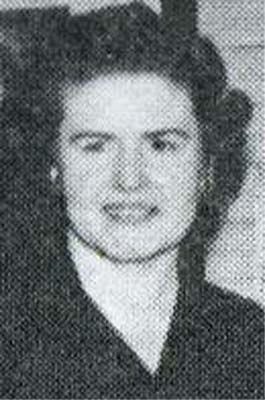
 To the left is Oley and Nora's daughter Virginia Lucille who was about six years old when her mother died of diabetes, and eleven when her brother Hugh was murdered.
.
By 1923, Oley was a member of the Orlando United Brethren Church and had become a trustee of the church. He continued to maintain his close ties with the Riffle Run community which was just over the hill from Orlando. During the summer of 1931, the year of his son’s tragic death, his eldest daughter, Sylvia, who married Guy Riffle, was living in a residence which Oley owned on Riffle Run.
Hugh Ocheltree
Hugh Ocheltree, the victim of this story, was born in 1901 on Riffle Run. He was a bachelor and lived with his parents when he was not working away from home. Like his  father, Hugh was soft-spoken and polite, and not inclined to cause trouble. In July 1931, Hugh was visiting his parents in Orlando and decided to visit his sister, Sylvia (Ocheltree) Riffle, on Riffle Run which was an easy walk from Orlando. There were two usual routes to Riffle Run from Orlando. One route, and probably the most traveled, was to go to the head of Road Run and then go over the hill. Another route was to go up Clover Fork to the first branch coming from the south, go up this branch and over the hill. To visit his sister, Hugh chose the route over the hill at Road Run. After setting out on this walk to Riffle Run, Hugh Ocheltree would not be seen by his family again.
 father, Hugh was soft-spoken and polite, and not inclined to cause trouble. In July 1931, Hugh was visiting his parents in Orlando and decided to visit his sister, Sylvia (Ocheltree) Riffle, on Riffle Run which was an easy walk from Orlando. There were two usual routes to Riffle Run from Orlando. One route, and probably the most traveled, was to go to the head of Road Run and then go over the hill. Another route was to go up Clover Fork to the first branch coming from the south, go up this branch and over the hill. To visit his sister, Hugh chose the route over the hill at Road Run. After setting out on this walk to Riffle Run, Hugh Ocheltree would not be seen by his family again.
 Riffle Run
Riffle Run is a small tributary of the Little Kanawha River. At the mouth of Riffle Run, there was a bend in the Little Kanawha River, as well as in the Burnsville-Napier Road. A United Brethren Church sat in the bend of the river at the mouth of the run. A general store operated by Jim Riffle sat a short distance up Riffle Run from the church at the mouth of the run. Near the store was a two story frame residence of Joe Ocheltree, who was a brother of Oley Ocheltree. This two story house had been the home of John Conrad, and later was a parsonage. Further up Riffle Run from the Joe Ocheltree residence, the creek branches, with a left fork and a right fork. Sylvia (Ocheltree) Riffle and her husband Guy Riffle lived on the right fork of Riffle Run.
.
Click on the map to enlarge it.
.
Click on the map to enlarge it.
On the right, Oley's brother Joe who was the father of Glenn Ocheltree

Rumors
Hugh’s father, Oley Ocheltree, contacted Constable D. W. “Duke” Riddle of Burnsville and reported that his son had not reached his sister Sylvia’s home on Riffle Run and was missing.
.
Shortly after the disappearance of Hugh, rumors began circulating suggesting that he had been murdered. According to newspaper accounts of the day, law enforcement officers Constable Riddle and Sheriff C. N. Rollyson began checking on rumors that Hugh Ocheltree had been the victim of foul play.
.
Rumors continued to be rampant about the disappearance of Hugh Ocheltree and certain names of suspects were repeated over and over. After a search of the Riffle Run neighborhood that turned up no evidence of foul play or the body of Hugh Ocheltree, the search came to a stand-still.
.
Rumors continued to be rampant about the disappearance of Hugh Ocheltree and certain names of suspects were repeated over and over. After a search of the Riffle Run neighborhood that turned up no evidence of foul play or the body of Hugh Ocheltree, the search came to a stand-still.
There is No Corpus Delicti
In 1931, crime detection was in its infancy. Few resources were available to assist law enforcement officers for investigation. For example, there were no DNA tests available to determine whose blood stained the floor of Glenn Ocheltree’s house nor whose body had lain for a short time in the shallow grave which Riley Lipps showed to law enforcement officers. An example of the scarcity of crime investigative resources is also illustrated by the method used by law enforcement to search the Little Kanawha River for the body of Hugh Ocheltree. The search was conducted by thirteen year old Waitman Collins, Denzil McNemar, a high school boy from Burnsville, and Bud Riddle, the brother of Constable D. W. Riddle. These young men, because they were known to be good swimmers, were asked by the investigators to dive into the “swirl hole” near the United Brethren Church to search its depths for a body. Although, according to Collins, the “swirl hole” was about ten or twelve feet deep, the dives and searches were done without the aid of scuba equipment or any other diving apparatus.
.
To prove a crime of murder, it is generally essential to have the body of the alleged murder victim, known as the corpus delicti. Despite the efforts of law enforcement to locate the corpus delicti by a search of the surrounding country and the river, the search came up empty.
.
To prove a crime of murder, it is generally essential to have the body of the alleged murder victim, known as the corpus delicti. Despite the efforts of law enforcement to locate the corpus delicti by a search of the surrounding country and the river, the search came up empty.
.
Riley “Mutt” Lipps – An Unreliable Witness
Riley Lipps was one of the persons who was rumored to have been involved in the death of Hugh Ocheltree. During the investigations of 1931 and 1932, Lipps had been extensively questioned by law enforcement officers about the disappearance of Hugh Ocheltree and he had related details of the murder to the officers. He had taken the police investigators on a number of ‘wild goose chases’ looking for the burial spot of Hugh Ocheltree and had even showed them the spot in the river where the body had allegedly been dumped. Efforts to locate the body of Hugh Ocheltree came to naught. Nothing further was done by the law enforcement officials of Braxton County to pursue justice in this case.
The Game of Leapfrog Leads to Murder
However, in 1933, while Lipps was serving a sentence in the West Virginia State Penitentiary at Moundsville on an unrelated robbery charge, state police investigators visited him there to question him again about the 1931 death of Hugh Ocheltree. Lipps said “his conscience was bothering him’ and he agreed to make a statement. At that time, Lipps gave a voluntary confession to the investigators implicating himself; Glenn Ocheltree, cousin of Hugh; Glenn’s wife, Mrs. Susie (Brown) Ocheltree; William Brown; Miss Bernice Brown; Mack Riffle; Mrs. Nellie Ratliff; and James Morrell. Lipps related that on the day of Ocheltree’s disappearance, there was a party going on at the home of Glenn Ocheltree and that everyone in attendance was intoxicated. According to Lipps, the party-goers observed Hugh Ocheltree walking by and invited him to join in a game of leap-frog. Lipps reported that Hugh declined the invitation which incensed the drunken participants. To show their displeasure, they hurled rocks at him. One of these missiles struck Ocheltree in the head, rendering him unconscious. The rock throwers then carried the unresponsive victim into the Glenn Ocheltree house where they unsuccessfully attempted to revive him. Lipps stated that William Brown for some unknown reason whipped out a pistol and shot the unconscious Ocheltree in the head. Lipps then recounted that the lifeless body was taken into a wooded area near the Glenn Ocheltree house and buried in a shallow grave. Additionally, Lipps claimed that a couple of weeks later, aware that searches for the burial spot were being made on foot by law enforcement officers, the body was dug up, wrapped in two gunny sacks, tied to an iron wagon axle, put in a boat, and dropped into the ‘swirl hole’ of the Little Kanawha River near the United Brethren Church.
The statement given by Lipps, implicating himself and others with the death of Hugh Ocheltree, was essentially the same story that Lipps had told the law enforcement officers in 1931 and 1932. The written confession seemed to be sufficient to prompt the prosecuting attorney to proceed to formal charges of murder against the individuals named in the statement. Mabel (Posey) Henline, who lived in the area of Riffle Run, however, recalls that Riley Lipps had the reputation that “he would say anything, about anybody to get himself out of trouble.”
The statement given by Lipps, implicating himself and others with the death of Hugh Ocheltree, was essentially the same story that Lipps had told the law enforcement officers in 1931 and 1932. The written confession seemed to be sufficient to prompt the prosecuting attorney to proceed to formal charges of murder against the individuals named in the statement. Mabel (Posey) Henline, who lived in the area of Riffle Run, however, recalls that Riley Lipps had the reputation that “he would say anything, about anybody to get himself out of trouble.”
.
Indictments
Indictments
More than two years after the death of Hugh Ocheltree, during the December 1933 term of Court in Braxton County , the prosecuting attorney, James Cutlip, finally presented evidence to the grand jury concerning the 1931 murder of Hugh Ocheltree. After deliberating, the grand jury returned an indictment against Riley Lipps, Glenn Ocheltree, William Brown, and Mack Riffle for first degree murder. The indictment also was returned against Miss Bernice Brown, Mrs. Nellie Ratliff, Mrs. Susie (Brown) Ocheltree and James Morrell for being accessories after the fact. The indictment was based primarily upon the voluntary confession and earlier statements made by Riley Lipps.
The Trial
Although the lack of a corpus delicti presents a problem in the prosecution of a murder case, it is not an absolute necessity. For example, the oral statements and the signed voluntary statement by one of the perpetrators, implicating himself and others for a crime, and indicating a plausible reason for the lack of the body of the victim, amounts to strong circumstantial evidence that the crime was committed. Although this evidence had been within the knowledge of law enforcement officials for nearly a year and a half, nothing had been done to move the matter forward in the circuit court of Braxton County. At this time we do not have a clear explanation for the failure to prosecute the case in a timely manner, but one thing is certain, the failure to prosecute earlier was an advantage to the defense.
.
Another puzzling lapse by the prosecuting attorney is the lack of trial preparation. The prosecuting attorney failed to determine whether the Mack Riffle who was selected for the first trial had an alibi for the time of the murder. After the trial of Riffle for the murder of Hugh Ocheltree had commenced, it was proven by sworn depositions to the satisfaction of the court that the defendant had been working in Akron, Ohio for the Colonial Furniture Upholstery Company at the time the murder supposedly was committed. The prosecuting attorney’s failure to ascertain this crucial fact before setting the trial for Mack Riffle was a critical mistake and doomed the prosecution of all of the persons indicted for the murder of Hugh Ocheltree. It is no surprise that Judge Jake Fisher tossed all of the indictments out of court. No further indictments were returned against any of the persons originally indicted, or against anyone else.
.
Another puzzling lapse by the prosecuting attorney is the lack of trial preparation. The prosecuting attorney failed to determine whether the Mack Riffle who was selected for the first trial had an alibi for the time of the murder. After the trial of Riffle for the murder of Hugh Ocheltree had commenced, it was proven by sworn depositions to the satisfaction of the court that the defendant had been working in Akron, Ohio for the Colonial Furniture Upholstery Company at the time the murder supposedly was committed. The prosecuting attorney’s failure to ascertain this crucial fact before setting the trial for Mack Riffle was a critical mistake and doomed the prosecution of all of the persons indicted for the murder of Hugh Ocheltree. It is no surprise that Judge Jake Fisher tossed all of the indictments out of court. No further indictments were returned against any of the persons originally indicted, or against anyone else.
.
A Re-Visit Twenty Years Later
The notorious failed prosecution of the Hugh Ocheltree murder was re-visited by the Charleston Gazette in a February 17, 1952 article. The newspaper story took a second look at the infamous murder case and attempted to determine what went wrong. Those in the legal profession would most likely agree that when there is a murder of an innocent party which is witnessed by more than a half dozen people, there should be virtually no likelihood that the culprit or culprits would not be convicted at trial. Perhaps the incongruity of such a failed prosecution prompted the Gazette’s re-visit of the murder of Hugh Ocheltree. The news article of 1952 basically re-hashed some of the evidence that a crime had been committed..
. . . . · One theory pursued by this retrospective article suggested that witnesses were intimidated and consequently were frightened to come forward to give evidence. The article reported that in 1931, shortly after the murder, a woman from Burnsville (no name given) had been told an account of the murder by a female witness to the act. The Burnsville woman reported that she had been told that four men were involved in the murder and there were four women who witnessed the event. However, when questioned by law enforcement officers, the Burnsville woman suddenly denied all knowledge of the matter. The newspaper article reported that the woman had been paid a visit by one of the men said to have been involved in the affair. When questioned by law enforcement whether he had paid a visit to this woman, the man acknowledged the visit, but only out of concern “to prevent any harm coming to her.”
.
. . . . · The Gazette article also reported that a
 resident of nearby McCauley Run reported that a resident of Riffle Run
  at the time laughed off the suggestion of murder and said that it was just gossip by women and that Ocheltree had gone to South America and that his papers had been “fixed up by Lafe Mick and Morgan Riffle.” The 1952 newspaper article reported that this theory was followed up by law enforcement officials in 1931 who had interviewed Lafayette ‘Lafe’ Mick, a well respected Burnsville school teacher, and Morgan Riffle, a well-known farmer of Triplett Run, and both denied anything of the sort.
.
On the left is Morgan Riffle, on the right is Lafe Mick.
.
. . . . · The 1952 newspaper article also reported that in early 1932 Glenn Ocheltree had visited Doctor Stanton Trimble in Burnsville to secure sleeping potions because of his inability to sleep. Law enforcement officials had inquired of Doctor Trimble if this were so and he confirmed the visits by Ocheltree and the medicines prescribed. When confronted with this information, Glenn Ocheltree denied seeking medical services from Doctor Trimble.
.
. . . . · The article also quoted Alvin Jake Graff who reportedly had approached Glenn Ocheltree two months after the murder of his cousin and informed him that he (Glenn) was being accused of the murder. Glenn was said to have “turned red in the face and acted as if he were going to faint.” This reaction of Glenn Ocheltree was confirmed by Mack Ratliff of Dutch who overheard the conversation.
.
. . . . · The article also reported that Ollie Blake, a nearby farmer, had reported in 1931 that threats were being made against potential witnesses and that “there would be another separation or someone killed in the neighborhood.” Blake suggested that Hugh Ocheltree had been courting Glenn Ocheltree’s wife.
.
. . . . · Dr. Ord Conrad also was quoted to have remarked that the day after the killing that Eva Riffle had said someone had been killed at the Glenn Ocheltree house and that there “was a lot of blood on the floor.”
.
. . . . · Mr. and Mrs. Ray Kittle of Weston were quoted to have visited a female patient from Riffle Run in a Weston Hospital at about the time of the murder. When the subject of the Ocheltree murder came up in conversation the patient inquired about “what could be done to a person who knew about a murder and wouldn’t tell it?” After being told that the police would arrest such a person, she remarked that “she supposed she would be arrested after she got out of the hospital.”
.
. . . . · Case Brown was quoted concerning a conversation he had had with Troy Wine and Riley “Mutt” Lipps while at a church sing in July 1933. Brown stated that Lipps had been intoxicated and had acknowledged a role in the murder and the disposal of Hugh Ocheltree’s body. Lipps also named the other culprits involved, Brown said.
.
. . . . · The 1952 Gazette article summarized the body of evidence of the crime which was available and concluded that the prosecuting attorney of Braxton County was “cautious” and that he delayed the trial for over a year hoping that additional evidence would be uncovered and that the delay proved fatal to the success of the prosecution.
Afterword
It has been over eighty years since Hugh Ocheltree set out on foot from Orlando to visit his sister on Riffle Run. His death on that day, and the failure of justice, are certain. There is no marker in any cemetery which marks his final resting spot and no death certificate to confirm his death. But somewhere the bones of Hugh Ocheltree are dissolving into nothingness in the tranquil hills of Riffle Run and the “leapfrog” murder remains unsolved.
.
. . . . .
Comment by Bobbi (Ocheltree) Nicholson
David, this is just wonderful. Your thoroughness and attention to detail are much appreciated by family. Thanks to you, we now know more than we’ve ever known about an incident that must surely have affected our family deeply, but which they rarely spoke about. My children and I realize there’s nothing to be done, but having been in the dark for so long about what happened, we’re feeling ….well, sad for the family who lived through it, frustrated by the state of crime detection at the time, and – despite the fact that we didn’t have the opportunity to know him – a little angry at the absence of justice. (The Gazette thought the prosecutor was being “cautious”? That seems charitable, given the circumstances.) Thanks again for your diligence and your interest. Someday, you’ll have to tell me how you tracked us down :-) .
Comment by Ruby Riffle
The first time I heard of the Hugh Ocheltree murder was the day after he disappeared. Audrey Riffle, Eva Riffle and I were walking from the Riffle Run area to Orlando to attend a Sunday School convention. Glenn Ocheltree was supposed to go with us but for some reason he did not go. As we were passing a house on the way over the hill to Road Run, Eva stopped at a house and went inside and talked with a woman. She stayed for a few minutes and then we went on to Orlando. When we came back from Orlando by the same route we heard that Hugh Ocheltree was missing and believed to have been murdered. I recall the law enforcement people dragging the river for Ocheltree’s body. There was a ‘swirl hole’ in the river near the United Brethren Church which was full of brush which had accumulated from floods. It was hard work for the people diving in search of a body.
Comment by Kathleen (Conley) Conrad
I was about seven years old at the time of the disappearance of Hugh Ocheltree. My family lived on Long Run, which was but a short distance from Riffle Run. My family heard that the law was searching the river in the area of the United Brethren Church for a body. My family went to the area where the divers were searching the river and watched the activity.
Comment by Dale Barnett
When I was a small boy, I used to go to the Oley Ocheltree home at Orlando and play with Fred Ocheltree who was the youngest son of Oley Ocheltree. I remember Fred as being tall and slender. Fred was killed during the Battle of the Bulge during World War II. I remember seeing Hugh Ocheltree who was much older than his brother Fred. Hugh seemed to be a quiet, loner type person.
To the right: Fred Ocheltree
Comment by Kathleen Conrad
James Riffle operated a general store at the mouth of Riffle Run at the time of the death of Hugh Ocheltree. At that time, Riffle was somewhat elderly. His wife was Marietta (Ocheltree) Riffle, aunt of both Hugh Ocheltree and Glenn Ocheltree. A few years after the ill-fated murder trial dismissed charges against the alleged perpetrators, James Riffle’s health failed and he lay on his death bed. Concerned that a death-bed statement might be made by Riffle, certain persons alleged to have been involved in the death of Hugh Ocheltree took turns sitting with Riffle in an apparent attempt to thwart any such death-bed statement.
Comment by Mabel Henline
I lived with my mother Ollie (Posey) Blake on Wolf Pen Run, near Riffle Run, in 1931 when Hugh Ocheltree turned up missing. Riley Lipps was known to be an unreliable tattle-teller. Lipps led the law on wild-goose chases all over the Riffle Run country. showing them first one place and then another as to where Hugh Ocheltree was buried or dumped in the river.
Comment by Ruby Riffle
Oley Ocheltree searched for years after the death of his son for someone to come forward and reveal the truth of his son’s disappearance. Close to twenty years after Hugh disappeared, Oley visited the Hub Conley home on Long Run seeking information about his son’s death.
Comment by Sergeant J. W. Jeffries, WVSPD, Retired
When I attended the State Police Academy approximately forty years ago, Captain Harold Ray was an instructor of the state police cadets. Captain Ray was involved in the investigation of the murder of Hugh Ocheltree and spoke of the case. Captain Ray said that there were several suspects and that the suspects conspired with one another to cover up information about the crime. Captain Ray mentioned that he had received information that the body of Hugh Ocheltree was dumped in a well on Clover Fork but a search the well in question turned up empty. Captain Ray further discussed that the suspects worked together to make sure there would be no deathbed confession by any of those involved. If one of the parties became ill and approached death, the other parties would come and sit with the ill person until he passed away. Captain Ray did not name the suspects.
Comment by Lovie (Riffle) Bush
I recall that after Hugh Ocheltree disappeared the law came to every house on Riffle Run seeking information about the missing man. My father, Newton Riffle, and my brother Arthur Riffle, were both summoned to appear in court, as were most every person on Riffle Run.
Comment by Waitman Collins
It was common knowledge that the people involved in the disappearance of Hugh Ocheltree were concerned about ‘death-bed’ confessions. Anyone who might know something about the Hugh Ocheltree matter had ‘visitors’ while they lay on their death beds in order to prevent the conscience of the dying person to make a death-bed confession.
Oley Ocheltree during the mid 1930s worked for my father, J. L. Collins, in his Collins Store in Burnsville. Oley always ate his lunch at my home which was next door to the store when he was working. I remember him as a quiet fellow.
David, this is just wonderful. Your thoroughness and attention to detail are much appreciated by family. Thanks to you, we now know more than we’ve ever known about an incident that must surely have affected our family deeply, but which they rarely spoke about. My children and I realize there’s nothing to be done, but having been in the dark for so long about what happened, we’re feeling ….well, sad for the family who lived through it, frustrated by the state of crime detection at the time, and – despite the fact that we didn’t have the opportunity to know him – a little angry at the absence of justice. (The Gazette thought the prosecutor was being “cautious”? That seems charitable, given the circumstances.) Thanks again for your diligence and your interest. Someday, you’ll have to tell me how you tracked us down :-) .
Comment by Ruby Riffle
The first time I heard of the Hugh Ocheltree murder was the day after he disappeared. Audrey Riffle, Eva Riffle and I were walking from the Riffle Run area to Orlando to attend a Sunday School convention. Glenn Ocheltree was supposed to go with us but for some reason he did not go. As we were passing a house on the way over the hill to Road Run, Eva stopped at a house and went inside and talked with a woman. She stayed for a few minutes and then we went on to Orlando. When we came back from Orlando by the same route we heard that Hugh Ocheltree was missing and believed to have been murdered. I recall the law enforcement people dragging the river for Ocheltree’s body. There was a ‘swirl hole’ in the river near the United Brethren Church which was full of brush which had accumulated from floods. It was hard work for the people diving in search of a body.
Comment by Kathleen (Conley) Conrad
I was about seven years old at the time of the disappearance of Hugh Ocheltree. My family lived on Long Run, which was but a short distance from Riffle Run. My family heard that the law was searching the river in the area of the United Brethren Church for a body. My family went to the area where the divers were searching the river and watched the activity.
Comment by Dale Barnett
When I was a small boy, I used to go to the Oley Ocheltree home at Orlando and play with Fred
 Ocheltree who was the youngest son of Oley Ocheltree. I remember Fred as being tall and slender. Fred was killed during the Battle of the Bulge during World War II. I remember seeing Hugh Ocheltree who was much older than his brother Fred. Hugh seemed to be a quiet, loner type person.
To the right: Fred Ocheltree
Comment by Kathleen Conrad
James Riffle operated a general store at the mouth of Riffle Run at the time of the death of Hugh Ocheltree. At that time, Riffle was somewhat elderly. His wife was Marietta (Ocheltree) Riffle, aunt of both Hugh Ocheltree and Glenn Ocheltree. A few years after the ill-fated murder trial dismissed charges against the alleged perpetrators, James Riffle’s health failed and he lay on his death bed. Concerned that a death-bed statement might be made by Riffle, certain persons alleged to have been involved in the death of Hugh Ocheltree took turns sitting with Riffle in an apparent attempt to thwart any such death-bed statement.
Comment by Mabel Henline
I lived with my mother Ollie (Posey) Blake on Wolf Pen Run, near Riffle Run, in 1931 when Hugh Ocheltree turned up missing. Riley Lipps was known to be an unreliable tattle-teller. Lipps led the law on wild-goose chases all over the Riffle Run country. showing them first one place and then another as to where Hugh Ocheltree was buried or dumped in the river.
Comment by Ruby Riffle
Oley Ocheltree searched for years after the death of his son for someone to come forward and reveal the truth of his son’s disappearance. Close to twenty years after Hugh disappeared, Oley visited the Hub Conley home on Long Run seeking information about his son’s death.
Comment by Sergeant J. W. Jeffries, WVSPD, Retired
When I attended the State Police Academy approximately forty years ago, Captain Harold Ray was an instructor of the state police cadets. Captain Ray was involved in the investigation of the murder of Hugh Ocheltree and spoke of the case. Captain Ray said that there were several suspects and that the suspects conspired with one another to cover up information about the crime. Captain Ray mentioned that he had received information that the body of Hugh Ocheltree was dumped in a well on Clover Fork but a search the well in question turned up empty. Captain Ray further discussed that the suspects worked together to make sure there would be no deathbed confession by any of those involved. If one of the parties became ill and approached death, the other parties would come and sit with the ill person until he passed away. Captain Ray did not name the suspects.
Comment by Lovie (Riffle) Bush
I recall that after Hugh Ocheltree disappeared the law came to every house on Riffle Run seeking information about the missing man. My father, Newton Riffle, and my brother Arthur Riffle, were both summoned to appear in court, as were most every person on Riffle Run.
Comment by Waitman Collins
It was common knowledge that the people involved in the disappearance of Hugh Ocheltree were concerned about ‘death-bed’ confessions. Anyone who might know something about the Hugh Ocheltree matter had ‘visitors’ while they lay on their death beds in order to prevent the conscience of the dying person to make a death-bed confession.
Oley Ocheltree during the mid 1930s worked for my father, J. L. Collins, in his Collins Store in Burnsville. Oley always ate his lunch at my home which was next door to the store when he was working. I remember him as a quiet fellow.
.
Comment by Donna Gloff
Oley was 48 when his wife Norah died of diabetis in 1924. Their older children, Hugh, Sylvia and Edna, were in their 20s, but Virginia was only six and Fred was even younger. Six years later Hugh would be killed.


 Merry Christmas!


.jpg)
.jpg)

.jpg)

.jpg)
.jpg)


.jpg)
.jpg)
