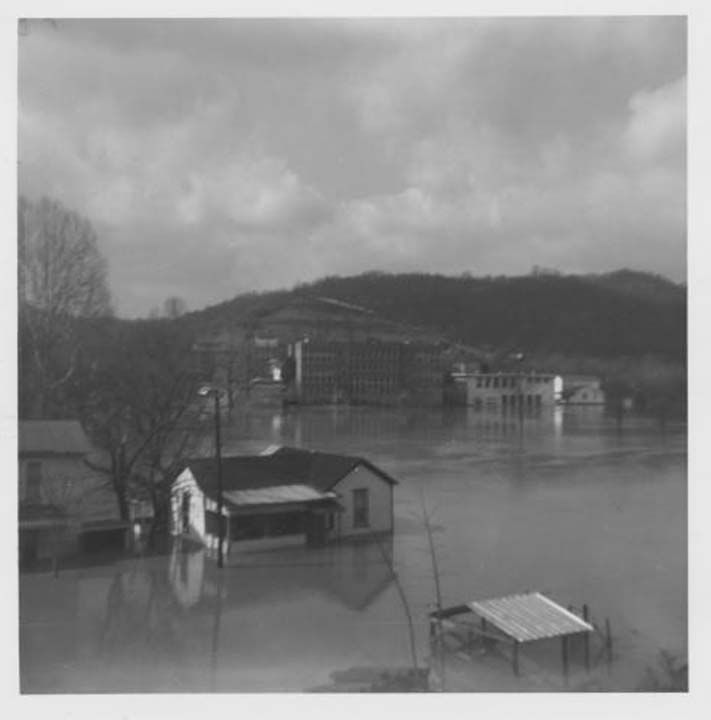
With our traditionally rough terrain and isolated location, transportation has been a huge factor in Orlando's history. The town came to be around 1900 because of a major change in the field of transportation: the railroad. When the railroad ceased stopping for passengers in the early 1940s there was a need for other arrangments.
 For many of the generally cash-poor residents, an auto was not considered a sound investment. Even with a car or truck, before I-79 and the general upgrading of the roads, if you had to go in to Weston you left right after breakfast and unless you planned to eat in town, you hurried to get back for a late dinner [served at we call lunchtime today]. That is, if you owned a car of truck.
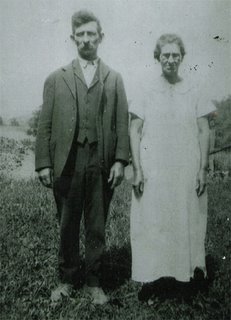
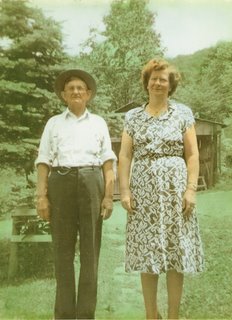
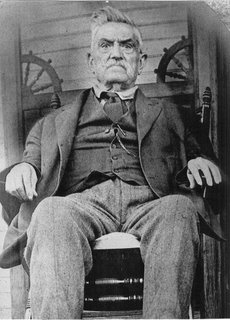
Left: Gid Skinner in the 1950s was still driving his mule and buckboard into Orlando from his place on Clover Fork.
Right: This was taken in the northwest corner of greater Orlando, in Gilmer County, in the 1930s.
by David Parmer
Turn on any television today, in any place, and you can find everything you ever dreamed of on the Home Shopping Network. Pick up your phone and place a call, or go online and place your order and in seven to ten days, you can have that genuine diamond, chain saw, or whatever it was that caught your fancy and you couldn’t live without.
Dial back the clock and leaf back through the calendar to the 1940’s and 1950’s and you can still find an older home shopping network, serving the households of Orlando, Clover Fork, and all up and down Oil Creek and Posey Run. There was no need to go to the store because the store came to you.
Oven Gold Bakery
Once a week during the early 1950’s, a van with Oven Gold Bakery emblazoned on its side made an appearance in Orlando. Not only could you buy a loaf of “store-bought” bread but there were other goodies to delight the sweet tooth waiting inside the door. Donuts, apricot-filled bars, bismarcks, and white cross buns were exotic favorites and were a change from the delicious but ordinary chocolate cakes and apple pies which usually filled the larder.
Weston Laundry and Cleaners
Another truck which made a weekly appearance in Orlando was Weston Laundry and Cleaners. In the days before polyester slacks and jackets, this dry cleaning business located in Weston was quite busy and served Orlando well. The 1950’s Orlando family dressed to go to church, to the funeral parlor, to PTA, to Weston or Burnsville to shop, to a neighbor’s house to visit, or even to Brown’s Store. Even the poorest of families made a point to dress stylishly and presented themselves in properly cleaned clothing. This writer recalls while growing up in Burnsville, the Weston Cleaners made weekly calls to Burnsville homes, as did dry cleaning companies from Glenville and Gassaway. The household which had clothing to be picked up for cleaning displayed a sign which was located in a window and visible to the dry cleaning truck driver.
 W. E. Marple Company
The largest general store in Burnsville during the 1930’s through the 1950’s was the W. E. Marple Company located on Main Street. This store enjoyed a large trade with the outlying communities of Orlando, Copen, Hyre’s Run, and in the Little Kanawha River communities above and below Burnsville. Bill Wiant, grandson of W. E. Marple, advised the writer that, while a student he worked for his grandfather’s store and made deliveries of groceries and farm-related goods to customers in Orlando and on Oil Creek. Orlando residents were on the same telephone line with Burnsville and it was not a long distance call to place an order for groceries with the Burnsville store. In those days, most families were a one-automobile family at best and many wives did not drive. If the family vehicle was being used to get to a place of employment, a grocery store which delivered groceries was a valued service.
 Parmer’s General Store
Another Burnsville store which delivered groceries and farm items to Orlando customers was the Parmer Store at the end of the iron bridge on Depot Street in Burnsville. This store was chock full of kegs of horseshoe nails, cattle and hog feed, salt blocks and enough fly  paper to plaster the earth. Sewing notions of all kinds, such as thread, needles and fabric, were available as was a full line of similarly-appearing brown shoes and clothing preferred by farmers. E. J. Cox, the co-owner of this store, was well-known in Orlando as principal of the Orlando School and the Posey Run School, and was the owner of a farm at the mouth of McCauley Run.
 paper to plaster the earth. Sewing notions of all kinds, such as thread, needles and fabric, were available as was a full line of similarly-appearing brown shoes and clothing preferred by farmers. E. J. Cox, the co-owner of this store, was well-known in Orlando as principal of the Orlando School and the Posey Run School, and was the owner of a farm at the mouth of McCauley Run.
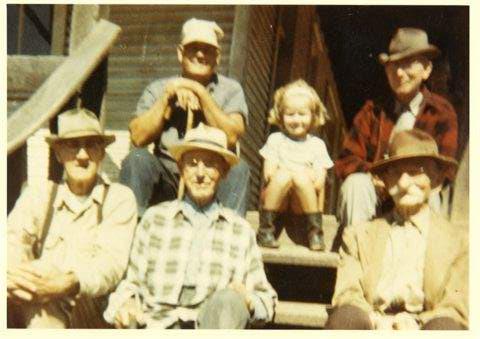
Above left is Parmer's Store, Eolin Cox is to the right.
The Blue Goose Bus Line
If you needed something from a Burnsville or Weston store, Paul Knight of the Blue Goose line was always accommodating. If there was cream to take to market in Weston,  again Paul Knight was your man.
 again Paul Knight was your man.
Catalog Sales
Few today remember the catalog store, National Bellas Hess. Although this national merchandising store went into bankruptcy in the 1970’s, at one time it rivaled Sears & Roebuck, Montgomery Ward, and Spiegel’s as a leader in catalog sales. Shoes, prom dresses, shotguns, musical instruments, watches and whatever else could be ordered and received promptly by the Orlando shopper. According to her granddaughter, Barbara Jeffries Parmer, Bellas Hess was the catalog of choice of Clora Henline who “swore by it.”
Right: a page from the National Bellas Hess 1920 catalog
Below, left and right: Mc Ness products
Local Dealers
McNess Products
In a classified ad in the Braxton Democrat in the August 1st, 1929 issue, under “Male Help Wanted,” the McNess Company of Freeport, Illinois solicited a “reliable man to run the McNess business in
 Braxton County.” Suggesting earnings of $8 to $12 per day, the prospective McNess salesman did not require any “capital investment or experience.” A McNess man frequently made calls in Orlando, mostly during times of good weather, taking orders for all sorts of household goods such as baking pans and Corningware. The last two items were purchased by Helen Jeffries of Oil Creek from Mr. Curry, the McNess salesman in the 1960’s. The McNess line also included pie fillings, Jello puddings and spices.
In a classified ad
 in the Braxton Democrat in the August 1st, 1929 issue, under “Male Help Wanted,” the McNess Company of Freeport, Illinois solicited a “reliable man to run the McNess business in
 Braxton County.” Suggesting earnings of $8 to $12 per day, the prospective McNess salesman did not require any “capital investment or experience.” A McNess man frequently made calls in Orlando, mostly during times of good weather, taking orders for all sorts of household goods such as baking pans and Corningware. The last two items were purchased by Helen Jeffries of Oil Creek from Mr. Curry, the McNess salesman in the 1960’s. The McNess line also included pie fillings, Jello puddings and spices.
 Porter's Pain King Salve
Clora Henline of Orlando was a local salesperson for Pain King salve, a very popular ointment for scrapes, cuts and bruises, during the 1930’s. Clora kept a trunk of Pain King salve for sale for the many residents of Orlando who were regular customers. A story about Pain King salve was posted earlier on this website.
This writer when aged eleven or twelve tried his hand at selling Cloverene salve, a competitior of Pain King. Receiving a shipment in the mail of two dozen tins of the “wonderful elixir,” sales in Burnsville proved brisk and the shipment was soon sold out.
Drummers, Pack Peddlers and Salesmen
 Lis Thomas
Into the early 20th century, pack peddlers scoured the hills and hollows, bringing all sorts of novelties to Orlando housewives, ranging from underclothes to razor blades, dresses and perfumes. Lis Thomas, a Syrian peddler, was perhaps the last such pack peddler who served Orlando customers during the early 1950’s.
Right: a pack peddler
“Would You Like to Own a Victrola?”
Dale Barnett recalls during the pre-Depression days in Orlando that a door to door salesman sold a victrola to his parents, Bill and Marie Barnett. Dale believes that the salesman stayed at the Dolan Hotel while he was visiting the families of Orlando and enticing them with the melodious sounds of Al Jolson. Since the victrolas were hand-cranked, there was no need of electricity to enjoy the music of the day.
Take-Out
While a teenager, this writer was sitting in the Burnsville Taxi Stand when Jimmie Doc Henline of Orlando came into the taxi stand to get a cab home. While the cab waited, Jimmie Doc ordered a half-dozen taxi stand hot dogs to take with him. While Jimmie was waiting on his hot dogs, Charlie Alkire of Clover Fork also came into the taxi stand to get a cab home. Becoming aware that Jimmie was waiting on hot dogs, Charlie also placed a “to-go” order for two 15 cent hotdogs. Since this was the late 1950’s and Chinese food was unheard of, at least to this writer, the taxi stand hot dogs were the next best thing. Jimmie and Charlie probably anticipated the enjoyment of the famous taxi stand hot dogs as they shared a taxi ride up Oil Creek.
 Charlie Alkire of Clover Fork also came into the taxi stand to get a cab home. Becoming aware that Jimmie was waiting on hot dogs, Charlie also placed a “to-go” order for two 15 cent hotdogs. Since this was the late 1950’s and Chinese food was unheard of, at least to this writer, the taxi stand hot dogs were the next best thing. Jimmie and Charlie probably anticipated the enjoyment of the famous taxi stand hot dogs as they shared a taxi ride up Oil Creek.
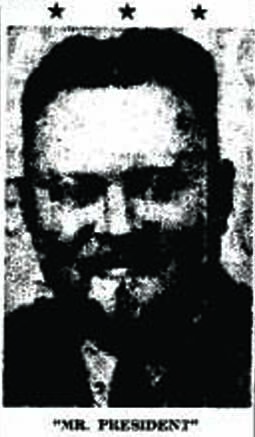
We don't have photo of old Charlie Alkire, but to the left is Jimmie Doc Henline.
Right: As this ad suggests, Grit was a part of rural culture in the first half of the 20th century.
The Grit
 The Grit was a popular newspaper in Orlando in the 1940’s and 1950’s. The classified section of the newspaper offered all sorts of things for sale. Coon hunters could buy the best dog on the continent and fox chasers could buy the fastest runners of the wily fox. Farmers could buy chicks and those in need of fancy shoes could buy patent leather.
Shop at Home and Save Days
are Long Gone
are Long Gone
In the early part of the 20th century, private enterprise was more vigorous and there were many opportunities for the industrious person to make a living going door-to-door selling products. This was a convenience for the Orlando household without the transportation to go to Weston or Burnsville to shop. With the advent of two cars in each household and an interstate a-waiting, it is now easy to shop fifty miles away and be back home for lunch. And, with the smiling girls and smooth talking gents on the home shopping network on the television, the days of the engaging door-to door salesmen are long gone.