Showing posts with label Heirlooms. Show all posts

Monday, August 07, 2006

An Heirloom from Patience Duvall

by Donna Gloff

Patience Duvall was born in 1846 at the Indian House, located at the top of the ridge that separates the Oil Creek watershed from the West Branch of the Monongahela River (that goes up through Weston). Several of her great-great grandparents, including John P. & Martha Duvall, and John & Sarah (Roby) Godfrey were pioneers of this area, during the time of the Indian Wars.
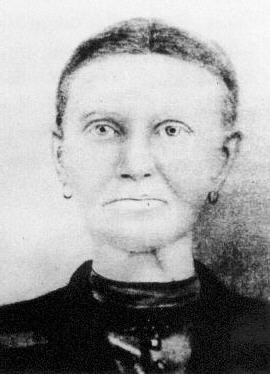
Patience was the oldest of 10 kids. When she was 21 she married one of Alexander and Phoebe Skinner's boys, Jackson McWhorter Skinner. They married on Christmas Eve in 1867, He was a Confederate veteran, wounded in the leg at the Battle New Market in 1864. His wounds never really healed and much of his life he was an invalid. Still, she and Jackson set to farming on Clover Fork and had 12 children.

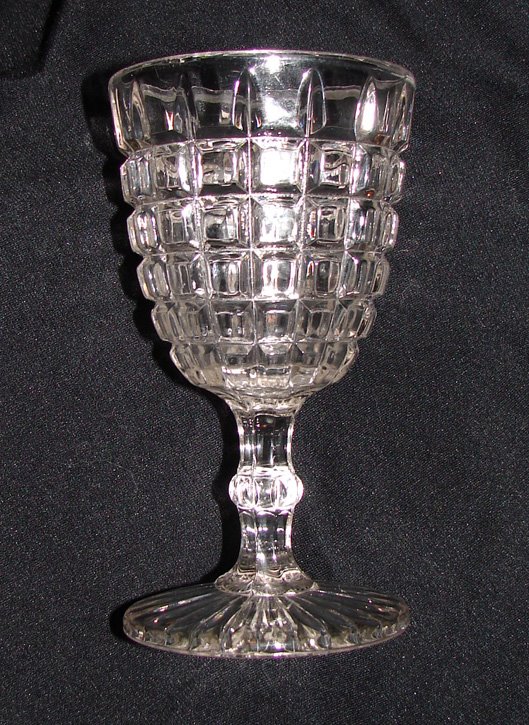
The water goblet above was part of the set Patience had when she "went to keeping house." It is molded glass.

In the 1960s her grandson (my great uncle) Hayward Skinner told me a little about her. He said that because Jackson was Confederate, a traitor, life was very difficult for them. He told me they had a little peek-hole shuttered window in the door to the home. I later learned that in 1869 Jackson was tried & convicted in a kangaroo court of Confederate sympathies.

Uncle Hayward also said that because of Jackson's disability, Patience took care of the farm and raised the family pretty much single handed.

Jackson died in 1891 at the age of 46. Patience, 44 at the time, would live another 40 years. In time their second oldest son, Gideon Columbus, took over the family farm on Clover Fork. Patience and her oldest son, confirmed bachelor Dick (George Delbert) Skinner moved to town and went into the restaurant business. She worked behind the counter, with her grown kids and growing grandkids around her. She and Dick lived just a few steps from the restaurant in the rooms above Charley Knight's store. In her last years she was an invalid and she died in 1931.

For more on Patience, see
Feb 27, '06 Confederate Soldier Jackson Skinner
July 11, '06 William Otto & Clara Onetta Skinner Clara was Patience's daughter

Tuesday, June 13, 2006

Our Grandmothers' Quilts

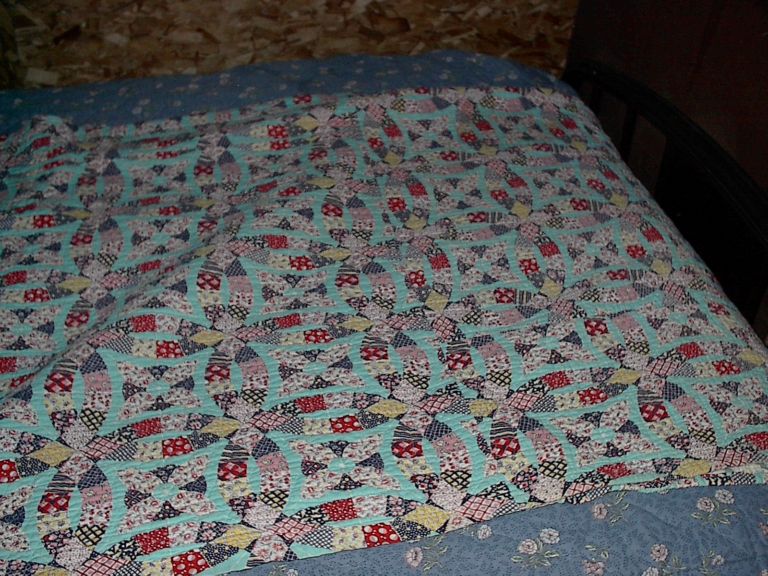
Mae (Posey) Strader who was the great grand daughter of Alfred and Christina (Curtis) Posey1, pieced and made these quilts.
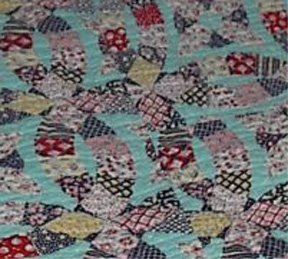
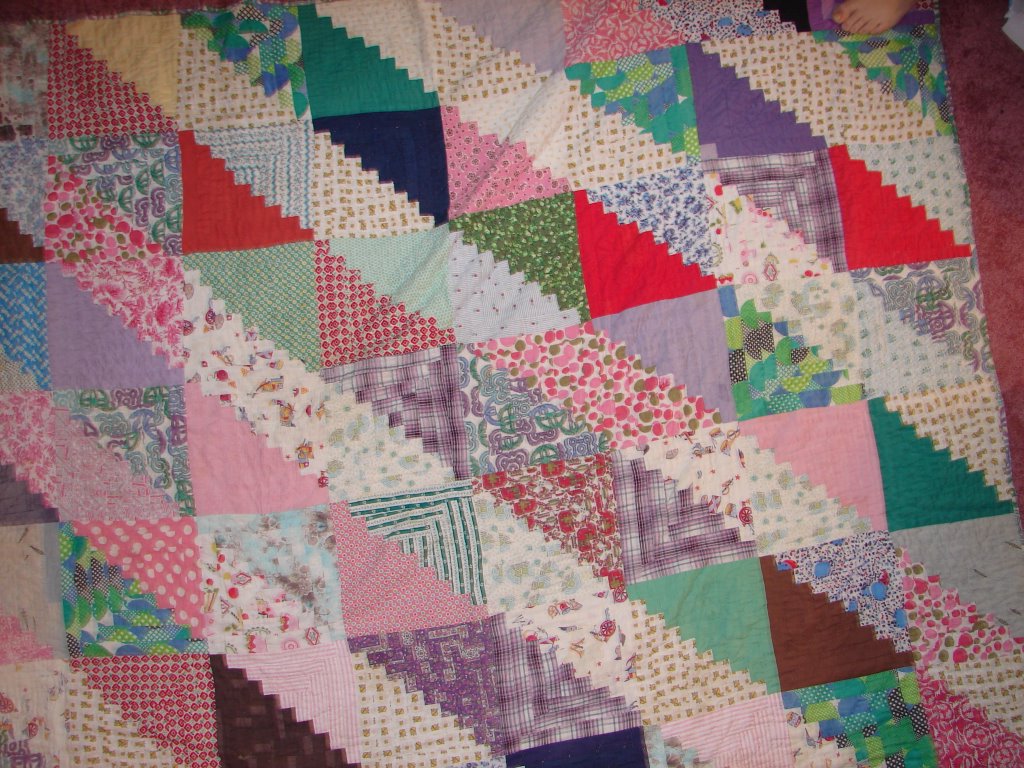
Kathy Jo Strader shares these three of her husband's grandmother's (Mae Strader) quilts: two patchwork and one, I believe, Double Wedding Ring pattern. We now have examples of the quilts of two Orlando women2.
If you have an old quilt made in Orlando, or in another central WV town, I hope you will share a photo of it with us.

1. June 2, '06 Alfred & Christina Posey: More Questions discusses pioneers Catherine & Edward Posey's son Alfred and his wife Christina (Curtis).

2.Feb 16, '06 Orlando Quilts shows quilts by Edith (Skinner) Stutler.

Tuesday, February 28, 2006

Feed Sack Fabric

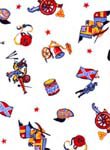
When grandma judged me responsible enough to get the fabric pattern she needed and strong enough to carry the sack, she began sending me to pick up chicken feed for her at the Browns' warehouse. She would show me the fabric pattern she needed to finish her currect project and tell me to be sure to a sack with that pattern. (The Browns' general store was very small, so big things, like watermelons and sack of feed, were kept across the road in the post office/warehouse.)

This first entry on feed sacks shows how much I don't remember.
~ I know it was chicken feed, but I don't know what size bag. It couldn't have been 50 lbs; Grandma would have never sent a girl for that.
~ What were the dimentions of the opened feed sack?
~I remember there was a fixed formula. It was something like
? two sacks made a skirt.
? one for a sleeveles blouse.
? another for short sleeves?
? one sack for a skirt-only apron
? two sacks for a bib apron.
? back of a quilt took how many sacks?
See also the Feb 16 entry about Quilts.

I hope a cousin who remembers will let me know so we can fill in the blanks.

Thursday, February 16, 2006

Orlando Quilts


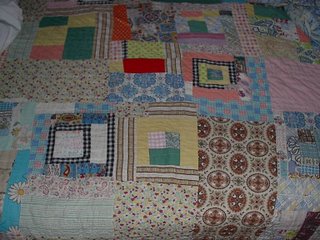
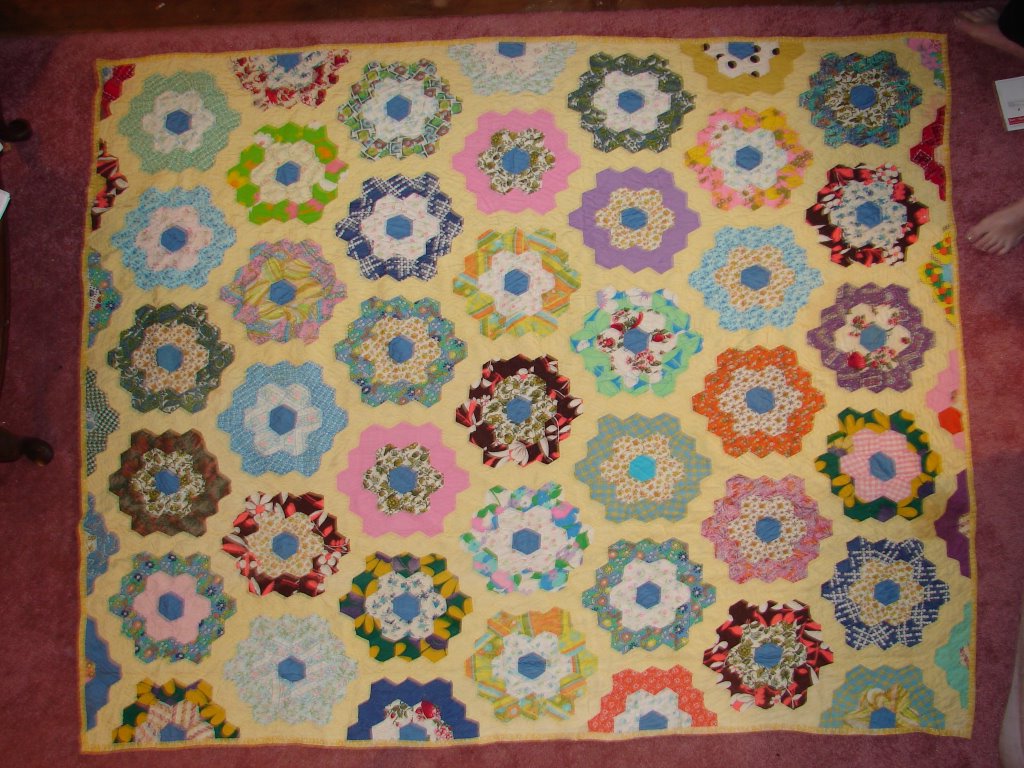
Here are two of the quilts my grandmother Edith (Skinner) Stutler made for her grandchildren. On the right is a Grandma's Flower Garden. One the left is a Log Cabin. I cherish my grandmother's quilts. I trace the the way she joined one fabric tightly to the next, I delight in how the pattern dances across my bed. Even today I can feel against my skin the texture she made as she stiched the feed sack fabric, even as I struggle to remember the texture of her long, heavy, hair pinned up with large combs or how her hands looked as she stringed beans on the front porch.

Grandma used the same fabric and the same patterns as everyone else. I know her quilts have a lot in common with the quilts her sisters and sisters-in-law made and from the quilts of her friends at the Ladies’ Aid Society. But I suspect that Grandma’s quilts are also as different from anyone else's quilts as she was different from anyone else.

If you have a quilt made by an Orlando woman, would you please submit a photo and whatever information you may have about it and her? It would be nice to see different types of quilts from each woman.

Grandma's early quilts (before about 1955, I'd guess) were pieced either entirely from cotton chicken feed sacks (summer quilts) or worn-out woolen clothing, like men’s suits and women’s coats (winter quilts). Later, scraps from store-bought fabric began to appear in Grandma’s quilts. I believe the one pictured above is entirely feed sacks.

Grandma had a limited number of patterns she worked from, including, among others, Pinwheel, Wedding Ring and Log Cabin. She also did some crazy quilts. I remember all the crazy quilts being woolen winter quilts.

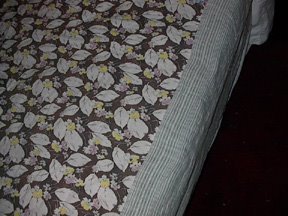
Although I have difficulty understanding her choices, Grandma took great care in chosing the colors and patterns she juxtaposed as she pieced the quilt tops, and also in chosing the fabric for the back of the quilt. She sewed the pieces together on a trundle Singer. That is, a pre-electic sewing machine that was powered by the operator’s feet, working a see-saw device. By hand Grandma quilted together the pieced top, filler and solid bottom.