Showing posts with label Family Duvall. Show all posts

Friday, September 08, 2006

How To Find A Lost Graveyard

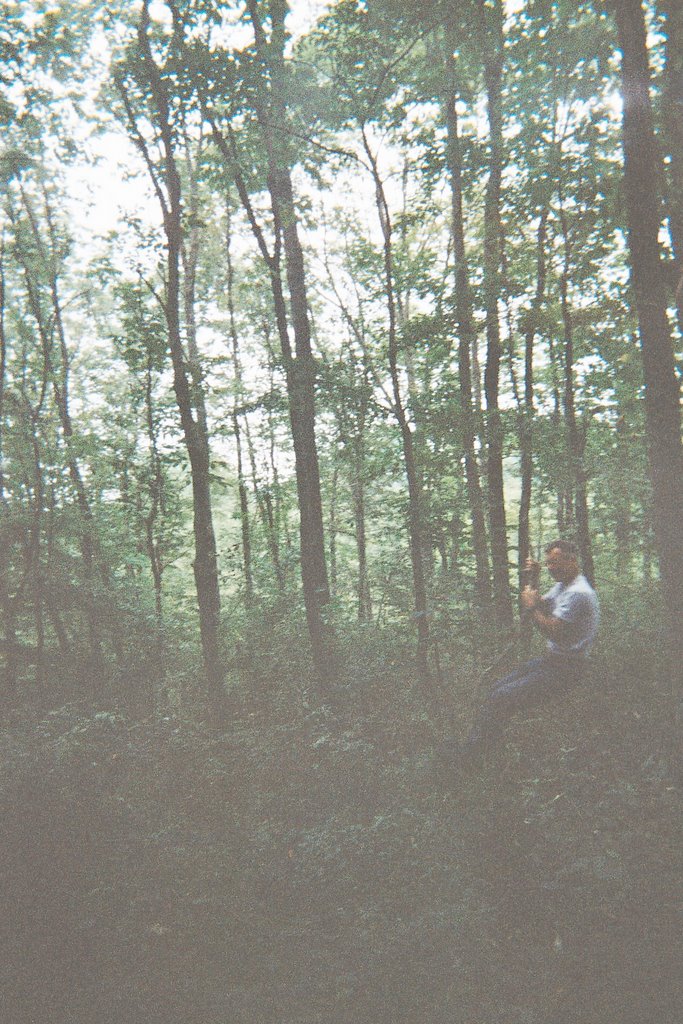
John Burgett (swinging from a grapevine in the DuVall Cemetery at the right side of the photo) volunteers on Memorial Day to honor our veterans by putting flags on their graves. This year, in addition to our family cemetery in Orlando, he was asked to honor vets in a couple cemeteries that no one looks after.

The DuVall Cemetery, off Oil Creek Road, is "on the road side of the hill." He looked down the side of the hill at acres of fully forested land: no clearing, no gravestones in sight.

Then he noticed a line of trees larger than the rest, maybe old growth, certainly older growth, trees. Now, why had no one harvested those trees when they harvested the rest of this hill? A cemetery!

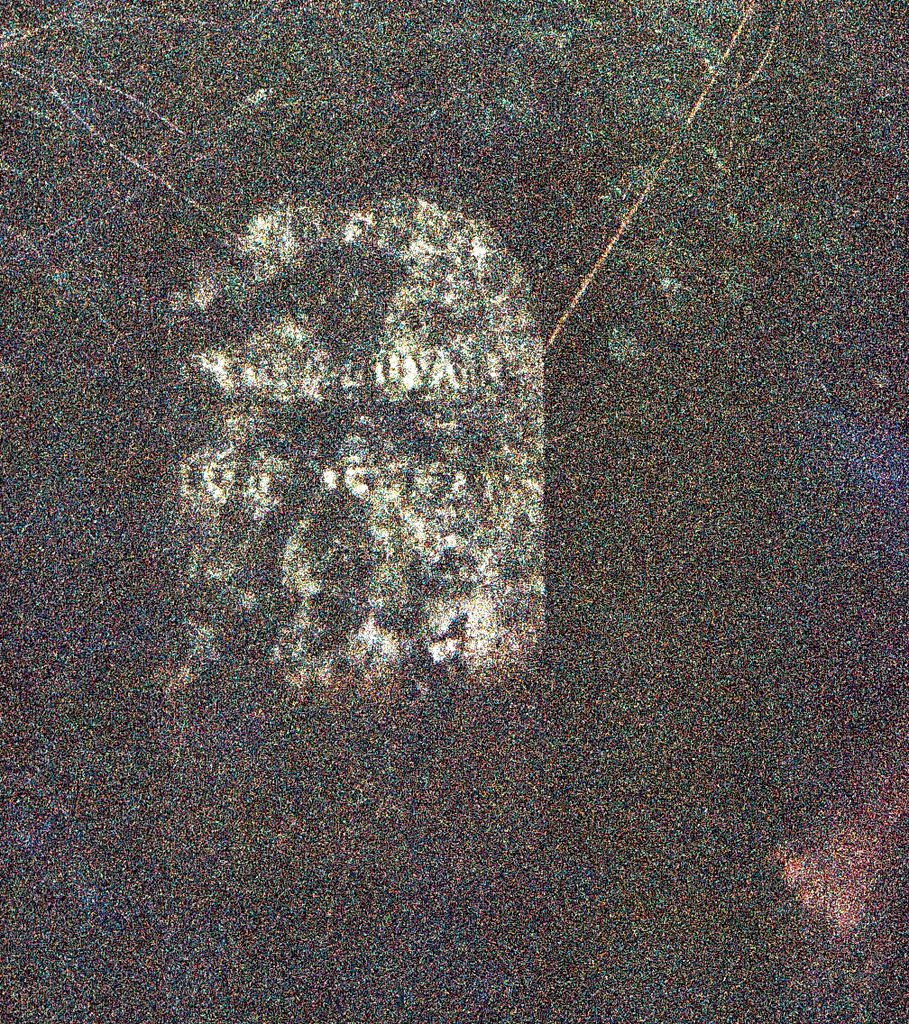
Once he was down with the large trees, he found a few standing, and many, many broken & buried gravestones. Polly (Godfrey) DuVall, mother of Patience (Duvall) Skinner, was one. Later we found her husband, G.T. DuVall. There were also sundry Waldos and a Simms, who had married one of Patience's sisters. We could only find a very few of the gravestones and they were hard to read.

Monday, August 07, 2006

An Heirloom from Patience Duvall

by Donna Gloff

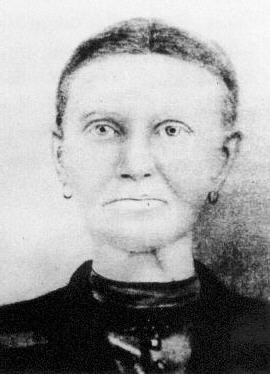
Patience Duvall was born in 1846 at the Indian House, located at the top of the ridge that separates the Oil Creek watershed from the West Branch of the Monongahela River (that goes up through Weston). Several of her great-great grandparents, including John P. & Martha Duvall, and John & Sarah (Roby) Godfrey were pioneers of this area, during the time of the Indian Wars.

Patience was the oldest of 10 kids. When she was 21 she married one of Alexander and Phoebe Skinner's boys, Jackson McWhorter Skinner. They married on Christmas Eve in 1867, He was a Confederate veteran, wounded in the leg at the Battle New Market in 1864. His wounds never really healed and much of his life he was an invalid. Still, she and Jackson set to farming on Clover Fork and had 12 children.

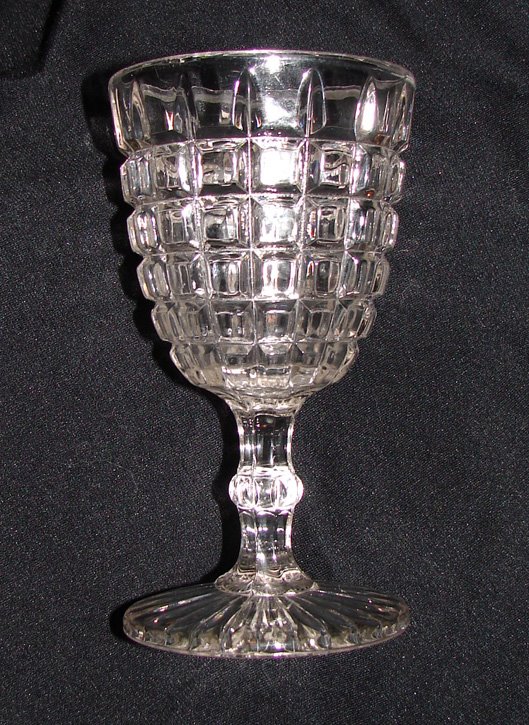
The water goblet above was part of the set Patience had when she "went to keeping house." It is molded glass.

In the 1960s her grandson (my great uncle) Hayward Skinner told me a little about her. He said that because Jackson was Confederate, a traitor, life was very difficult for them. He told me they had a little peek-hole shuttered window in the door to the home. I later learned that in 1869 Jackson was tried & convicted in a kangaroo court of Confederate sympathies.

Uncle Hayward also said that because of Jackson's disability, Patience took care of the farm and raised the family pretty much single handed.

Jackson died in 1891 at the age of 46. Patience, 44 at the time, would live another 40 years. In time their second oldest son, Gideon Columbus, took over the family farm on Clover Fork. Patience and her oldest son, confirmed bachelor Dick (George Delbert) Skinner moved to town and went into the restaurant business. She worked behind the counter, with her grown kids and growing grandkids around her. She and Dick lived just a few steps from the restaurant in the rooms above Charley Knight's store. In her last years she was an invalid and she died in 1931.

For more on Patience, see
Feb 27, '06 Confederate Soldier Jackson Skinner
July 11, '06 William Otto & Clara Onetta Skinner Clara was Patience's daughter

Friday, February 24, 2006

The Indian Campsite

In the 1950s a cousin, Neil Beckner I believe, took me up past his Beckner grandparents' home and the United Brethren Church to see what he assured me was an old Indian campground. The spot was pretty isolated, back in the woods. I could kind of see where someone might think it looked like a campfire site, the way the stones were, but I couldn't see anything to convince me it had been inhabited. Neil couldn't provide any more verification than to tell me folks used to find arrowheads up there. Now, our mothers' cousins and young uncles were forever telling outrageous stories so that even though I could see my cousin believed what he was saying, I couldn't be sure someone wasn't having him on. Still, it was a lovely place, and when I turned my back to the campfire area I was treated to a breathtaking view. Oil Creek Road (and Oil Creek) were a steep drop below us so that the view east looked out over majestic rolling hills.

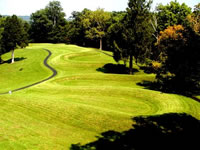
Decades later I visited Serpent Mound at Chillicothe, Ohio. When I finished the walk from the tail to the head of the undulating mound I looked up and saw what seemed to be the exact same, distinctive, view I’d had so long ago from the Indian Campground overlooking Orlando and Oil Creek.

I have no idea what the connection might be between the two sites. As I understand it, the Mound Builders who we believe built the earthworks lived centuries before the Native Americans who would have left arrowheads. Still, the similarity between the two sights was uncanny.

additional note, March 22, 2006:
In 1924 Roy Bird Cook wrote "John P. Duvall . . . secured 1400 acres more embracing the land between Roanoke and Arnold and a large part of Canoe Run. Duvall was a prominent man in frontier days and his "Indian House" was the site of an old Indian village, it seems. The writer has a collection of flint implements secured in this vicinity. John H. Conrad has a similar collection from the lower valley, and for years on the farm of the late George Cook could be discerned a small mound attributed to a race here before the Indians."
from West Virginia Archives & History at http://www.wvculture.org/history/agrext/roanoke.html


Here's an interesting webpage about Native Americans in the area.
http://www.artcom.com/Museums/nv/sz/45660.htm

Above Orlando I saw an arrangement of rocks in the woods that would have made a good campsite. At Chillicothe, OH I saw an earthwork serpent that, by the way, looked like the one to the right. Both sites overlook a similar landscape.