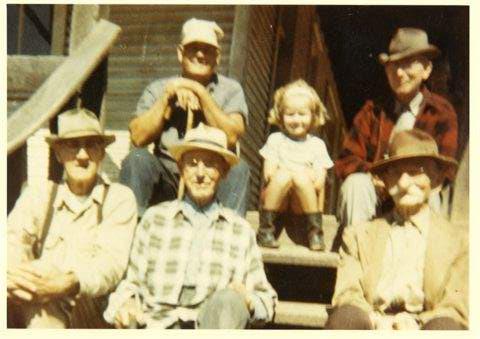
Showing posts with label Family Moran. Show all posts

Tuesday, September 16, 2008

An Irish Wedding


Mary “Mayme” Aloysius (Moran) McDonald

by David Parmer

Spring 1912
The morning of Tuesday, May 28th 1912 promised to be a nice day. Spring breezes wafted the deep earthy smells of freshly plowed gardens across Flint Bluff in Orlando and through the open windows of St. Michael’s Catholic Church. The many orchards cultivated around Orlando added a sweet smell of apple blossoms to the air, providing a perfect aura for the important event about to happen on this perfect day.

Father Thomas Quirk
Father Quirk may have ridden his trusty saddle horse to Orlando on Monday for the nuptials. It was a pleasant ride from Loveberry to Orlando and he enjoyed the countryside and passing through the farms of the men and women who sat in the pews of St. Bridget’s and St. Michael’s. And, there was nothing like a wedding, especially of a lassie from a faithful Irish family such as the Moran family. As he rode along the peaceful hills, perhaps the priest gave thought to the marriage ceremony of another bride, Catherine Moran, sister of the current bride-to-be, who had married James Carney a dozen years before at the old St. Michael’s church on Flesher’s Run. Or perhaps he was thinking that if he met another rider he might accept a challenge to determine whose horse was faster. Whatever his thoughts, they were most likely underscored by the joy of the impending wedding.

St Michael’s
Perched on Flint Bluff overlooking Orlando on a plot of two and one-half acres, St. Michael’s stood majestic; a beautiful situation for a church. It was a handsome church, fifty-six long by thirty wide, well constructed of hardwood frame siding, similarly built like St. Bernard’s at Loveberry. The walls were an impressive fourteen feet high and the roof was constructed of slate. The inside of the church had two rows of pews, each nearly ten feet wide, facing the sanctuary, the area in front where Fr. Quirk celebrated the mass. That sanctuary area was the width of the church and ten feet deep. Father Quirk had contracted for the construction of the sanctuary a half-dozen years before, and recalled its dedication, which was so well attended that the newly-built church could not hold all of the attendees. Because of the overflow crowd, Bishop Donahue moved the dedication outside so everyone could participate in the service.

The wedding of Mayme Moran and Michael McDonald would not draw such an overflowing crowd as the dedication of the church in 1907, but the well-wishers would fill the church to capacity. As Father Quirk was aware, the outside grounds of the church could well hold a wedding party for photographs to preserve the occasion for posterity. Surely on the beautiful day of May 28, 1912, there would be a photographer present.

Guest Arrivals and Well-Wishers
The early train from Burnsville brought Morans, Feeneys, and Griffins. The train from Weston brought McDonalds, and more Morans. Buggies from Clover Fork, Fleshers Run, and Three Lick brought Feeneys, Tulleys, Carneys, Greenes, and other Catholic families and friends. The Dolans and Rushes, and bachelor Mike Moran, brother of the bride-to-be, could walk to the church on the hill.
Stylish Hats a Must
Business was good for Lizzie Tulley, Orlando’s milliner, and sales were also good in Burnsville, the neighboring town to the west, for Ella Griffin, hat maker extraordinaire. This had been the era of extraordinary, huge hats, adorned with imagination, artful creativity and skill. These two skillful fashioners of ladies hats and dress attire had been busy for several days, preparing for the wedding of an Orlando kinswoman, Mayme Moran. The circulation of women’s magazines, such as McCall’s, in rural areas provided information about hat and dress styles of the day and the ladies of Orlando and Burnsville could dress as fashionably as ladies in New York or Chicago. Ladies’ hats were more squat this year, in 1912, and the brims were not quite so wide, and the Braxton County milliners had the “look” down pat.

Flowing White Dresses
In the fashion magazines white was a predominant color at a wedding in 1912. The fashions of the day mandated floor length cotton or light-weight linen skirts, layered beneath with petticoats, and connected by fasteners to boned, long sleeved, high necked bodices. White gloves, umbrellas and high-topped button shoes completed the ensemble.

Ladies in flowing white dresses and wide brimmed, beribboned hats came into Orlando by train and carriage, escorted by fine-hatted and suited gentlemen, and as the festooned wedding party ascended Flint Bluff toward St. Michael’s, the depot hangers-on and the loafers on the Oldaker, Doc Means, and Rachel Kidd store porches were treated to quite a sight. It must have been a pagent to the mostly Protestant community whose marriage ceremonies were typically performed by the preacher in the bride's home, never in the church. And compared to the simple service of the Protestant tradition, to any little boy with enough courage to peek in the church window the Roman Catholic wedding with the celebration of mass must have seemed like an exotic, mysterious ritual being performed in a magic language.

The Wedding
The officiating priest, Father Quirk, had performed many weddings during his tenure as parish priest for St. Michael’s, St. Bridget’s and St. Bernard’s and was well acquainted with the families of the bride and groom. The wedding of twenty-seven-year-old Mary “Mayme” Moran to thirty-six-year-old Michael McDonald was blessed with a beautiful day, the most reverent of priests, and the highest prospects of married life.

The Burnsville Kanawha Banner
The bride-to-be’s family were well known, had many friends, and were successful business owners in Burnsville in 1912. On May 29, 1912, Dr. John W. Kidd, a prominent medical doctor, as well as newspaper publisher in Burnsville, reported the marriage of Mayme and Michael.
“Mr. Michael E. McDonald and Miss Mamie A. Moran, daughter of Mrs. Margaret E. Moran of Orlando, were married Tuesday morning at 10:30 at the St. Michael’s Church at Orlando, Reverend Father Quirk of Sand Fork officiating. A large crowd was present to witness the ceremony. We extend our congratulations to the happy couple and wish them a prosperous journey through life.”

The Bride
Mary Aloysius Moran, or “Mayme”, was the second and last daughter of Margaret Ellen (Griffin) Moran and the late John Moran, who had died three years earlier. She was born in Orlando in 1884, the fifth of twelve children, the first nine of who were born in the family’s original log home on Grass Run. When Mayme was eleven her father and his older sons constructed the ten-room, two-story house which was Mayme’s home until the day of her marriage to Edward McDonald.

Right: Mayme with her brothers and sister and their mom, Margaret Ellen (Griffin) Moran.
Left to right: Jim, Mike, Kate, Mayme, Tom Charley Pete, Bill, Martin and Pat.


Mayme and her older sister, Catherine, and their mother Margaret were the only females of the family. Consequently, Mayme was kept busy with domestic and outside chores when she was growing up on Grass Run. A family of fourteen requires a great deal of feeding and washing and mending, tasks generally undertaken by the females of the household. So, in an energetic family, unacquainted with slothfulness, Mayme knew the value of hard work and did her share in the Moran home. Mayme’s sister Catherine married in 1900 when she was twenty-one. Consequently, for the next twelve years Mayme and her mother were left to perform the household chores for the large Moran family.

Married Life
Before their marriage, Michael McDonald, the son of Michael and Mary (White) McDonald, had a farm on Canoe Run and the newly-weds moved to this residence. Michael and Mayme continued farming until around 1917 when Michael began oil and gas field work, an occupation in which several of Mayme’s brothers were engaged. Michael and Mayme left the farm about that time and moved to a residence in Weston at 231 Olive Street where they made their permanent home. Michael became a successful drilling contractor in the oil and gas industry. John Michael Moran believes that his father, Mike Moran of Orlando, and his uncle Mike McDonald had some joint interests in the oil and gas drilling business.

Mike Moran of Orlando was in his fifties when he married and had been widowed when his four children were in their teenage years and younger. Mike recognized that his children needed a woman’s touch that he couldn’t provide. Consequently, his sister Mayme graciously opened her home to her nephew John Michael Moran of Orlando. John Michael lived with his Aunt Mayme for three years while attending St. Patrick’s High School in Weston.

John Michael recalls his uncle Mike McDonald as a very nice man, easy going and never excited. “Uncle Mike was a very good violin player who could play anything,” John said, and remembers his dad saying that Mike McDonald had “the best bow of any musician he knew.” There was lots of entertaining Irish violin music to listen to when he lived with his aunt and uncle. John Michael recalls that often his uncle Mike would play the violin and would be accompanied by his aunt Mayme on the piano. John Michael was also amazed how much energy his aunt Mayme had, because every Sunday she always had lots of company.

Children
Michael and Mayme were the parents of six children, Michael Edward, born 1914; John Raymond, born 1915; Mary Catherine, born 1917; James Francis, born 1919; Charles Bernard, born 1921; and Robert William, born and died 1923.

The oldest child, Michael Edward, was ordained as a Catholic Priest in 1941, and was affectionately known to his parishioners as “Father Ed.” John Raymond was a long-time employee of the Citizens Bank in Weston and married Agnes Josephine Gissy. Mary Catherine married Matthew Gissy of Weston. James Francis married Wilma Chidester and was a long-time employee of Equitable Gas Company and later with the Commonwealth Gas Company of Richmond, Virginia. Charles Bernard married Alice Prichard of Weston. Charles served as postmaster of Jane Lew.

Requiescat in Pace- Rest in Peace.
Their married life began in Orlando on a lovely morning in the spring of 1912 in St. Michael’s, amidst the bustle of a railroad town and the center of development of oil and gas fields in which Michael would devote the largest part of his life. Mayme devoted her life to her family and to her church. Michael died in 1955 at St. Mary’s Hospital in Clarksburg, and his lovely bride of 1912, Mary “Mayme” Aloysius (Moran) McDonald, passed away in 1960. They were laid to rest in Machpelah Cemetery in Weston.
. . . . .

comment 1 Donna Gloff
In Orlando in the early 1900s, a Roman Catholic wedding was very different from a Methodist Protestant or United Brethren wedding. A protestant wedding would most likely be held in the bride's parents' home, a neighbor's or family member's home, or at the parsonage: the preacher's home. There are even marriage licenses on which the preacher claims he married the couple on the road, in the presence of friends. No photos have surfaced of a Protestant bride in a white gown before the 1950s. While the weddings were not in the church, they were of the church. It is extremely rare to see a wedding performed by a civil official rather than an ordained minister or deacon

Thursday, August 28, 2008

The Moran Club Hall

Left: Mike Moran
Right: Mike's warehouse as it was in the 1960s, when owned by Lila & W.D. Brown
by David Parmer

Orlando's Warehouse was originally a three story structure built for the Orlando Fruit and Produce Company around 1907. It was owned for half a century by Mike Moran. The Warehouse has housed many activites over the decades:
. . . ~ U. S. Post Office,
. . . ~ farm machinery business
. . . ~ Overland auto dealership
. . . ~ restaurant,
. . . ~ mortician's office,
. . . ~ informal gathering place for the community,
. . . ~ warehouse.
And, in the 1910s it also served as a social hall. If those walls could talk!
The Burnsville Enterprise issue of September 11, 1913 reported that
“A large number of our young people attended the dance at Orlando on Saturday night.”

Gertrude Rush, whose family lived up Three Lick and owned the Rush Hotel, remembered the good times so fondly the younger generation remembers to this day her stories about the weekend dances. See the March '08 entry Michael Rush's Family
Right: Gertrude Rush (lt) and her twin Bertha.

Likewise, Bee Heater's grandchildren still laugh about the story of their tipsey grandpa with Mike Moran in the building's elevator on a Saturday night.

We know it was used for more serious matters, too, because the September 27, 1913 issue of the Burnsville Enterprise announced:

"Dr. Harriet will lecture at the Hall at Orlando
on the night of October 1
on Tuberculosis.
All are invited.”

But best of all must have been the all day St Michael's Church Festival that was held at the "Moran Club Hall" on a the 5th of July in 1913. In the June 27, 1913 issue of the Burnsville Enterprise newspaper, the Orlando Catholic community advertised a Festival to the Burnsville area citizenry:
. . . . . . . . . . . . .
. . . . . . . . . . . . .
. . . . . . . . . . . . .
Festival
There will be a Festival held at Orlando, Saturday, July 5th, 1913, for the benefit of St. Michael’s Church. This will take place in the Moran Club Hall, opposite the Union depot. The doors will be thrown open at noon at that day and closed at midnight. During that period dancing will be held on the second floor while all kinds of refreshments are served on the lower floor. Outdoor sports commencing at 3:30 p.m.: One hundred yard dash, boys under sixteen, prize given by M. V. Moran and Company; Climbing the Greasy pole, free for all, prize given by Dolan House; Stand-hop-step and jump, boys under eighteen, prize given by Central Hotel; Sack race, boys under fifteen, prize given by J. B. Dolan and C. F. Moran; Prettiest horse on the grounds, purse made up that day. After the outdoor sports are over, the doors will be thrown open for supper and closed at eight o’clock p.m. All are cordially invited to come early, stay late and help to make this a success.

By Order of the Committee
. . . . . . . . . . . . .
. . . . . . . . . . . . .
. . . . . . . . . . . . .

Comment 1
In 1913, St. Michael’s Catholic Church was located on the bluff (Flint Knob) overlooking Orlando. Built of frame construction in 1907, the church was located well out of the area of flooding that chronically plagued the Oil Creek Valley. Struck by lightning, this original church burned to the ground in 1915. It was re-built, using brick, along the Coal and Coke Railroad right of way, in the lower area of Orlando.


comment 2
In the 1950s and '60s the porch of the post office, in the shade on the west side, was the the old men gathered. Here, one afternoon's group poses for the camera.

Front, l to r: Doc Henline, Earse Posey, and Nathan Parmer. Back, l to r: Ed McNemar, the young girl is Cecil Skinner, daughter of Kate and Cecil Skinner, and Heater Henline.


Friday, April 18, 2008

Patrick Moran – Irish Immigrant, and His Namesake

by David Parmer
The Voyage
The immigrant ship Wyoming of the Philadelphia Cope Line, full of sail, ploughed through troughs of stiff waves and tacked against the prevailing western winds of the north Atlantic in the winter of 1848. Bound for Philadelphia and sailing out of Liverpool, the sailing ship Wyoming was full of Irish immigrants fleeing the potato famine and hopeful that they would find prosperity in a new land. Facing a journey at sea of about a month, the Irish farmers were mostly steerage passengers and were not used to the unsteady footing of a sailing ship and being out of sight of land.
left above: The Jeanie Johnston, a replica of the original four masted barque that brought the Irish to America during the potato famine.

right: Irish immigrants on shipboard, leaving Liverpool, England.

below left: County Roscommon is in gold on the map of Ireland.

Three of the passengers on the Wyoming were natives of the parish Kilbride in County Roscommon, a landlocked central Irish farming county, whose largest body of water was Lough Ree and the Shannon River. Those three sea-faring Irish immigrants were Patrick Moran, a farm laborer, who was twenty five years of age and his wife, the former Catherine Tulley, the daughter of Michael and Sarah Tulley, who was twenty, according to the 1850 census, and their daughter Bridget, who was toddler. The Morans were looking forward to life in America and getting off the ship as soon as possible in Philadelphia. Also, aboard ship were Catherine’s parents, Michael and Sarah Tulley, and sons Michael, Martin and John who were also looking ahead to a life in a new land.

America and the Birth of John Moran
After disembarking from the Wyoming in Philadelphia in December 1848, not much is known about the travels of the Moran family from the Delaware River seaport, until the record of birth of John Moran, the first American born son of Patrick and Catherine (Tulley) Moran, who was born in Cumberland, Maryland on June 17, 1849. John was baptized on June 21, 1848 by Fr. B. Leonard Obermyer of St. Mary’s Roman Catholic Church in Cumberland.
A Time in Maryland
The descendants of Patrick Moran do not have a record of Patrick’s work activities in the western Maryland area. It is known however that many Irish immigrant families had found cheap land and had taken up farming, while other Irish immigrants found work on the Baltimore and Ohio Railroad or with the Chesapeake and Ohio Canal which was in a race with the railroad to complete a connection to Cumberland. A short time before the arrival of the Patrick Moran family in America, the Baltimore and Ohio had won the race with the canal builders, and had stretched its tracks through Cumberland and was laying rails westward from that western Maryland town.

According to the 1850 census of Allegany County, Maryland, the Patrick and Catherine (Tulley) Moran family lived in dwelling 1,771. This dwelling is believed to have been in the Westernport, Maryland area. The members of the household were Patrick, head of household, aged 28, Catherine, aged 20, Bridget, aged 5, all of whom were born in Ireland, and John, aged 1, whom, as reported above, was born in Maryland. Margaret Tulley, aged 16, who was born in Ireland, was also a member of the household. The house closest to the Patrick Moran family, dwelling 1,770, was occupied by Catherine Moran’s parents and brothers: Michael Tulley, aged 61, his wife Sarah Tulley, aged 59, and sons Michael, Martin and John, aged 27, 19, and 11 respectively. All members of this household had been born in Ireland.

Patrick Moran, the Immigrant, Dies
Although no record could be found, it is believed that Patrick Moran died in 1855 at age 32 in Maryland when his wife was pregnant with their fourth child and third son whom Catherine named Patrick. The older three Moran children were Bridget, John, and Michael. John would become the father of Michael V. Moran, the Orlando undertaker; Michael would die at a young age; and Bridget would marry a Durkin from Philadelphia and lose touch with her West Virginia brothers. Catherine (Tulley) Moran was still a young woman when her husband died and her four children were all under the age of ten.
.
Catherine Re-Marries
After the birth of Patrick in 1855, Catherine married Michael
Farrell, a fellow Irish immigrant from Parish Kilgefin in County Roscommon. Kilgefin Parish bordered Catherine’s home parish of Kilbride. It is unknown when or where the marriage took place since the records of Allegany County, Maryland make no note of it. Although it is only speculation, it is possible that Michael Farrell was a widower and that the Farrell and Moran families were acquainted. On record in the book Western Maryland Catholics 1819-1851 by Phyllis Davidson and Richard Koch is a notation that Patrick Moran and Elizabeth Farrell were witnesses for the marriage of William Hussen and Bridget Tulley in February 1851. It is possible that the Elizabeth Farrell referenced may have been the wife of Michael Farrell, and had died, and that the Catherine, widow of Patrick Moran and Michael Farrell, the widower of Elizabeth Farrell, may later have married.

right: On this map of County Roscommon, Ireland, Kilbride Parish is the medium gray area and Kilgofin Parish is the dark gray area.
left: Western Virginia Lunatic Asylum

Construction of the
Western Virginia Lunatic Asylum
In the 1850s, the Commonwealth of Virginia appropriated substantial revenues to build a lunatic asylum in western Virginia at Weston. Since this ambitious plan entailed building the largest hand cut stone building in America, it required many laborers, stone masons and other tradesmen. Many Irishmen, newly immigrated to the United States, found employment in the construction of the asylum. Among those employed in Weston at the time of the 1860 census was Michael Tulley, who along with his wife Bridget, were enumerated by the census taker. Michael and Bridget Tulley show up later in the 1880 census as neighbors of the Michael Farrell and Catherine (Tulley) Moran-Farrell family on Ben’s Run. John and Bridget Tulley were also enumerated in 1860 in the Weston area and later according to the census in 1880 were living in the Three Lick area. The migration of Tulley families to the Lewis County area, as well as the John Farrell family which came to Lewis County in 1857, may well have enticed the Michael Farrell and Catherine (Tulley) Moran-Farrell family of western Maryland to join kinfolk in Lewis County.

Travel
By the late 1840’s, travel from the east had been greatly improved over the former Indian trails of the earlier generation. The Northwestern Turnpike which originated in Winchester, Virginia passed through the Cumberland, Maryland area on its way to Parkersburg and was completed in the 1850’s, although it was constantly in a state of continuing work to improve or repair it. The Staunton and Parkersburg Turnpike which originated in Staunton, Virginia with a destination of Parkersburg, was in the process of construction when the Moran family was living in the Cumberland area. The route of this road included Beverley, in Randolph County, Buckhannon and Weston. Migrating families in the 1850’s therefore had some ease of travel by the time the Moran family decided to re-locate from Maryland to Lewis County.
.
The Orlando Community
Weston land speculators owned large tracts of remote hilly land in southwestern Lewis County and eastern Doddridge County in the mid 1850’s and were enticing Irish immigrants to those counties with favorable terms on the purchase of small farms. It is known that a number of Irish immigrants who first settled in the western Maryland area later came to southern Lewis County because of more favorable farming conditions, owing greatly to a milder climate. Among the Irish immigrants to take advantage of the offers of cheap land that could be paid for on time was the Tulley family, relatives of Catherine (Tulley) Moran, and the John Farrell family, as well as other families of County Roscommon with whom the Tulley, Farrell and Moran families were undoubtedly familiar. .
.
The George Arnold Deed: The Orlando Connection
Adding a little mystery about the connection of the immigrant Patrick Moran to Orlando is the fact that he purchased real estate at the head of Ben’s Run prior to his death and without apparently having lived on the land that he bought.
.
George J. Arnold was one of the real estate speculators of Weston who sold land to Irish immigrants in southern Lewis County and often sold the land on installment purchase. George J. Arnold and Patrick Moran entered into such an agreement for a one hundred acre tract at the head of Ben’s Run for the purchase price of two hundred eighty-seven dollars and fifty cents. The date of this agreement is unknown.
.
As stated elsewhere in this story, it is believed that Patrick Moran, the immigrant, died in Maryland around 1855 when his wife Catherine was pregnant with Patrick, Junior. By a deed dated September 3, 1859 , George J. Arnold conveyed to the heirs of Patrick Moran the one hundred acre tract at the head of Ben’s Run. Based upon the date of the deed and the believed date of death of Patrick Moran, it would appear that the installment purchase price for the land was possibly paid in full over roughly a five year period and after the death of Patrick Moran. Usually when land was purchased on an installment agreement in the mid -1800’s, the deed of conveyance was not prepared until the installment payments were completed. However, it is noted that the deed of conveyance was not notarized until 1869, a period of ten years after the date of the instrument. The date of notarization of the deed can mean one of two things: (1) the purchase installments were not completed until 1869, or (2) the installment payments were completed in 1859 but the grantees were still living in Maryland and not ready to take possession of the Lewis County land until 1869. As noted elsewhere in this story, the first record of the Moran-Farrell family living in Lewis County was the 1870 census enumeration which found the family living on Ben’s Run.
.
Another mystery brought to light by the 1859 deed to the heirs of Patrick Moran, the immigrant, is the fact that the deed was conveyed to Bridget, John, Michael, and Patrick, the known children of Patrick. However, the deed also references a full one-fifth share to “Margaret Moran.” No distinction is made in the deed between the known Moran children and Margaret. It is believed that Margaret Moran was actually Margaret Tulley, who was enumerated in the 1850 census of the Patrick Moran family, and listed as age 16, when they were living in Allegany County, Maryland. It is possible that Patrick had either formally or informally adopted Margaret and that she was considered as one of his children for purposes of the designation of his heirs. Whatever the case might be, Margaret later married George Bales of Philadelphia and lived in that city, as did Bridget Moran who had married William Durkin. Both Margaret and Bridget were living in Philadelphia in 1892.

The Farrell-Moran Family
Moves to Lewis County
The first mention of Michael Farrell and Catherine (Tulley) Moran-Farrell in Lewis County was in the 1870 census when they were recorded as living in the area of Ben’s Run. Close neighbors were the families of John Tulley, aged 50, Michael Tulley, aged 53 and Martin Tulley, aged 38, who are believed to be brothers of Catherine (Tulley) Moran-Farrell, who was aged 43, according to the 1870 census. John Tulley, Junior, aged 30, was living on Grass Run at that time. His near neighbor was Patrick Farrell, whose daughter Elizabeth married Patrick Dolan, patriarch of the Dolan family who operated the Dolan Hotel in Orlando. Patrick Farrell had come to Lewis County in 1857. It is believed that Patrick Farrell was the brother of Michael Farrell, the husband of Catherine (Tulley) Moran-Farrell.
.
Patrick Moran, Junior
The intent of this biographical sketch is to chronicle the story of Patrick Moran, the youngest child of Patrick Moran, the immigrant, and his wife, Catherine (Tulley) Moran. As indicated above, Patrick Moran Junior did not know his father who died a few months before he was born. The father figure in his life was his step-father Michael Farrell. In the 1870 census of Lewis County, Patrick, aged 15, and his brother John, aged 20, were still living with their mother and step-father. Older sister Bridget was no longer living with the family and presumably was married to Mr. Durkin of Philadelphia at the time. John would subsequently marry Margaret Griffin of Flesher’s Run in 1874.
.
In the 1880 census of Lewis County, Patrick who was then aged 23, according to the census taker, was still living with his mother Catherine and his step-father Michael Farrell on Ben’s Run. The census taker listed the family as being engaged in farming.
.
Patrick Gets Married
and Raises a Family
In 1881, Patrick married Mary Ann Murphy, the daughter of John and Anaseth (Woods) Murphy, at St. Bridget’s Church on Goosepen. Father John Tracy officiated at the wedding and subscribing witnesses were Thomas Feeney and Mary Ann Feeney. Patrick and Mary Ann took up residence in the Three Lick area, began farming and raising a family. They were particularly successful at the later pursuit and within a few years were the parents of ten children: Margaret, born in 1882; Bridget, born in 1884; Thomas, born 1886; Patrick, born 1888; John, born 1890; Michael, born 1891; Daniel, born 1894; Charles and his twin, William "Wick", born 1898; and Leo, born 1904.
.
Left, front row, L to R: Leo Moran, Patrick Moran, Mary Ann Murphy Moran Back Row, L to R: William "Wick" Moran, Charles Moran, Dan Moran, Tom Moran, John Vinson Moran, Bridget Irene Moran, Margaret Catherine Moran.

As did most of his neighbors, Patrick Moran carried on the occupation of farming. Hard workers, Patrick and Mary and their family were highly respected in the Orlando community and were successful farmers, which in those days was judged by whether you could feed your family, pay your taxes, and have a little left over to buy commodities which could not be raised on a central West Virginia farm. Patrick and Mary built a new, commodious two story house on Three Lick which served the family well over the next three decades.

Patrick and Mary (Murphy) Moran with Grandchildren
Back Row, L to R Ralph Posey, Gordon Posey, Mary Posey, Edna Posey, Addie McCauley (Dolan) (Cousin), Perry Posey
Front Row, L to R Joe Moran, Myrtle Posey, Mike Posey, Lucy Posey, Patrick Moran (Grandfather), Tommy Posey, Sterling Moran, Mary Murphy Moran (Grandmother), Johnny Moran (on lap), Leo Posey, Harry Posey
right below: Dan Moran in his WW1 uniform

As the children of the Patrick and Mary became older, they left Orlando for employment in other fields. The two older girls, Margaret and Bridget, married into the Posey family of Oil Creek. Margaret married Richard Posey and Bridget married Bruce Posey. The oldest son, Thomas was engaged in the oil and gas drilling business, as were his brothers Patrick, who re-located to Texas, and John, who worked first for the Gowing Veneer Mill in Burnsville and also later worked as a plumber in Burnsville and with the West Virginia Water Company. Daniel, after serving in the American Army during World War I, lived in Allentown, Pennsylvania and worked for the Central Railroad of New Jersey. Charles worked for Hazel-Atlas Glass Company of Clarksburg. His twin brother Wick stayed on in Orlando and worked the family farm but eventually moved to Akron and worked for Firestone Rubber. Leo, the youngest child of Patrick and Mary lived in Fairmont and worked for Hess Transfer. Michael, the third son of Patrick and Mary, died at a young age
.
above left: Bridget (Moran) Posey and Margaret (Moran) Posey
above, right: John Vincent and Myrtle (Knight) Moran
left: Charles Moran, glass worker in Clarksburg, who married Mona Marple
below left: Wick Moran, father of young William who died of appendicitis.

Old timers of Orlando will remember Wick Moran’s son, William, who died of appendicitis as a young boy while a student at the Orlando School, and whose funeral was one of the largest in Orlando’s history. Helen Jeffries, a school classmate of William, recalls that he was always smiling and was such a nice boy. Helen also recalls that the funeral at Mt. Zion Methodist Church "was packed and there wasn’t a dry eye in the place." .

Death Visits
Catherine (Tulley) Moran-Farrell who was known as "Aunt Kitty" to her family and the Orlando neighborhood died on August 25, 1889. She was seventy-three years of age at her passing. Her husband, Michael Farrell died in 1899.
.
Patrick Moran passed away during his sixty-seventh year in 1922 while still living on the Three Lick farm. His widow, Mary, moved into Weston and lived with her son Thomas until her death in 1934. Patrick and Mary were buried in the church cemetery at St. Michael’s on Flesher’s Run. When the Burnsville Dam was built, their graves at St. Michael’s were moved, along with the whole cemetery, to the Little Kanawha Memorial Gardens at Heaters.
.
right: Thomas Moran
left: the grave stone of Patrick and Mary Ann (Murphy) Moran


The gravestone of Patrick and Mary Murphy Moran in the Heaters cemetery is not the only reminder of the time of the Patrick Moran family in Orlando. At the ancestral home of Patrick’s son, John, and his wife Myrtle, in Burnsville, is a natural stone chair which was found by John when he was a boy, on the hill above the Patrick Moran home on Grass Run. The large rock chair was carried off the hill by young John and a brother and was used as a lawn ornament at the Moran home on Grass Run. When the Patrick Moran home on Grass Run was sold, John brought the stone chair to his home in Burnsville where it reposes to this day, over one hundred years from its discovery.

NOTE about Patrick Moran:
Some difficulty is always expected when researching the history of a family using census records. Census takers were sometimes not the most literate of recorders of family history. Too, the families who gave information to the census takers often merely guessed at ages and frequently used nicknames rather than formal given names in identifying members of households. The writer believes there are some factual inconsistencies with regard to names and ages in the census records relied upon for this story and apologizes for any repeated errors.

Some of the information in this story is given by way of family tradition and was passed down over the generations.


comment 1:
According the United States government records, in the year 1848, 173,744 Irish immigrated to the United States . In 1849, 204,771 additional Irish immigrants came to this country. Between the years 1830-1860, approximately two million Irish, over half of Ireland’s population, set sail for America.

comment 2:
On the far right of this detail from a photo of Beham Henline's funeral in 1912 are Perry Posey with his father-in-law Patrick Moran. On the left is a closeup of that detail, showing Perry Posey and Patrick Moran. ( Perry Scott Posey was the son of Benjamin and Cynthia (Robinson) Posey, grandson of pioneers Edward and Catherine (Scott) Posey.

See the complete photo at Beham Henline's Funeral.


Sunday, June 03, 2007

Meet the Carney-Moran Family of Clover Fork

from John Carney

John Carney sends us additional information about the 1921 Carney/ Moran photo of his dad John Vincent Carney, John Vincent's mom Kate (Moran) Carney, and Uncle Mike Moran.

John Carney is a retired phamacist who grew up in Clarksburg. His folks were John Vincent Carney who grew up on Clover Fork and Mary Clare Dolan who grew up in town.

Back Row-Left to Right (1) John Vincent Carney
DOB DOD 01-29-1910
Son of James Francis Carney and Catherine Lorena Moran
Husband of Mary Clare Dolan

(2) Catherine Lorena (Moran) Carney
DOB 03-30-1879
DOD 08-02-1971
Daughter of John Moran and Margaret Ellen Griffin
Wife of James Francis Carney

Even her grandkids called her "Aunt Kate." In her day she was the Best Cook. To the right (will soon be) Kate with two grandsons, John Vincent's boys John and
(3) Margaret Bernadette (Schafer) Moran
DOB 10-28-1881 DOD 12-05-1925
Daughter of Henry Schafer and Catherine Caroline Sanders
Wife (first) of Peter Alfonzo Moran

(4) Mary Evelyn Moran (child being held by (3))
DOB 08-1922 DOD
Daughter of Peter Alfonzo Moran and Margaret Bernadette Schafer
Wife of Harold A. Dewey

(5) Agnes Aloysius (Kilker) Carney
DOB 1887 DOD 10-3-1928
Daughter of John B. Kilker and Mary McCaferty
Wife of Patrick Francis Carney


(6) Robert Emmett (Bobby) Carney (child being held by (5))
DOB 1924 DOD
Son of Patrick Francis Carney and Agnes Aloysius Kilker


(7) Patrick Andrew Carney
DOB 03-13-1906 DOD 01-21-1985
Son of James Francis Carney and Catherine Lorena Moran
Husband of Winifred Frances Arkle

(8) Michael Vincent Moran
DOB 02-21-1877 DOD 09-27-1954
Son of John Moran and Margaret Ellen Griffin

Husband of Marguerite C. Sweeney

. . . . Middle Row-Left to Right
(9) Rosemary Moran
DOB 09-08-1918 DOD 04-22-1990
Daughter of Peter Alfonso Moran and his 1st wife Margaret Bernadette Schafer

(10) Mary Carney, Sr. DeChantal DOB 07-13-1917 DOD 09-13-2003
Daughter of Patrick Francis Carney and Agnes Aloysius Kilker
(11) Justin Vincent Carney
DOB 10-11-1915 DOD 5-23-1969
Son of Patrick Francis Carney and Agnes Aloysius Kilker
Husband of Mary Ellen Hudkins

(12) John Kilker Carney DOB 10-31-1913 DOD
Son of Patrick Francis Carney and Agnes Aloysius Kilker
Husband of Lillian Adelle Wright
"Kilker" grew up on Clover Fork. He is presently retired from the military. He is writing his biography, which includes lots about Clover Fork, and lots about his adventures in the service.

. . . . Front Row-Left to Right (13) Agnes Bernadine Carney DOB 08-04-1920 DOD 12-21-1923
Daughter of Patrick Francis Carney and Agnes Aloysius Kilker

Bernadine dies of thw whopping cough the winter after this photo was taken. Click on the death certificate at the right to enlarge it. Notice it is signed by her Uncle Mike Moran.
(14) James Fabian Carney
DOB 01-17-1922 DOD 10-03-1977
Son of Patrick Francis Carney and Agnes Aloysius Kilker
Husband of Juene Briggs

(15) Margaret Phyllis Moran DOB 03-19-1920 DOD 2-4-2013
Daughter of Peter Alfonso Moran and his 1st wife Margaret Bernadette Schafer
Wife of Thomas Aloysious Killeen


These notes were put together by John Vincent Carney (DOB 06-11-1943) on June 1st 2007, of Bluefield,Va. Email carneyj276@comcast.net

Note: Back Row (1) is my Father John Vincent Carney, next to him (2) is his mother my grandmother Catherine Lorena Moran Carney. To her right on the end is her brother Michael Vincent Moran.

Tuesday, February 13, 2007

Michael Vincent Moran – Gentleman Undertaker

by David Parmer

The certainty of death requires a kind heart, a sympathetic ear, and the steady hand of a good friend when the need arises. In the early days of Orlando, medical care and medicine were still in their primitive forms, if there were any available at all. Death was a frequent visitor to young and old alike in Orlando and death is never a kind visitor. Mike Moran, gentleman undertaker, could not preserve life, but he made death seem a transition to a better life for many Orlando families during his lifetime.

Michael Vincent Moran was born on Grass Run in the Goosepen area near Orlando in 1878. Mike was next to the oldest of the nine sons and two daughters of John Moran and Margaret (Griffin) Moran1. Early in his youth, Mike decided that he would become a cabinet maker and with that in mind secured employment with the John Feeney Furniture Company of Burnsville.

At the top of the page next to his photo is Mike Moran's letterhead. To the right is Mike's mother, Margaret (Griffin) Moran

John Feeney manufactured his own line of fine furniture in a very large building on Main Street in Burnsville and sold his furniture throughout West Virginia. Feeney later added other lines of furniture to his store. Among the types of furniture manufactured by Feeney were several styles of caskets. While in the employment of John Feeney, Mike Moran became an expert casket maker, a skill that would later serve him well in Orlando. Another line of business conducted by John Feeney was the funeral and undertaking business which was primarily the responsibility of John Feeney’s son, Thomas I. Feeney.

Right is the original Feeney Furniture Company, built by John Feeney in the 1880s.

Left: Beham Henline was buried in this casket, made by Mike Moran.

Mike Moran and Tom Feeney were kinsmen, fellow Catholics and good friends. Tom suggested that Mike begin assisting with Feeney’s funeral business. Mike was amenable to the suggestion and began his apprenticeship. In the early 1900s there were few rules regarding the funeral business and no licensing was required. Mike became quite experienced in the embalming process, as he was in casket making. During the period of Mike’s apprenticeship in Burnsville, Orlando was beginning the period of its heyday. More and more people were building houses and starting businesses in Orlando and the population was growing. Mike recognized that Orlando was a promising venue for providing funeral services. He knew its people, had many relatives in the area, and Orlando seemed tailor-made for a resident undertaker. Mike had well learned the manner of conducting funerals, the dignity required, and the right things to say and do to salve the grief of the survivors of the departed. Orlando became the home of Mike Moran and his undertaking skills for the remainder of his life.2

Mike began conducting funerals in the year 1900 according to records of the State Board of Embalmers and Funeral Directors. When Mike Moran returned to Orlando to begin his funeral and undertaking business, the horse and buggy was still the only way to get to where you wanted to go. Below is Mike Moran’s horse drawn hearse during an I O O F funeral at Orlando. The hearse was state-of-the-art of the time, with sidelights, glass windows, and draperies.2 In good weather the horse or horses could take the hearse to the Blake Cemetery on Clover Fork, and could easily pull the hill at St. Bridget’s Cemetery at Goosepen. However, the Skinner Cemetery hill was beyond the ability of a horse or horses to climb with the funeral hearse. Mike kept a sled at his undertaking establishment in the former Wholesale Building to transport the casket to the top of the hill when a burial was required at the Skinner Cemetery. In those days pallbearers were a far greater necessity than they are today because horses simply could not be used to go into a cemetery to a grave site.

Mike Moran provided employment to many residents of Orlando. Among the people who worked in the Moran household, either cooking, cleaning or giving child care, were Jeanette “Tom” Hurst, Myrtle Morrison, Mildred Morrison, Nellie Godfrey, Pat Reckart, Ethel Blake, and Cora Posey.3 Among those who worked for Mike on his farm or in connection with the funeral business were Cecil Skinner, Pate Conrad, George Pumphrey, Dale Barnett, Worthington Hurst Jr, and Dave Bennett, the latter of whom would often drive a team of horses pulling a hearse or sled to the cemetery.

Mike Moran was aware that personal appearance was an important aspect of being an undertaker. Mike’s son, John Michael Moran, tells us that Mike would don a necktie first thing in the morning and take it off at night. This was the dress of the day even if he was going to work on his farm on Goosepen. Pat Reckart, a neighbor of the Morans, recalls that Mike was always dressed ‘prim and proper’ and always wore a ‘nice dress hat.’ Mike’s son Lee Paul recalls that his dad always wore “starched collars.” Joe Eddie Moran recalls his father always impeccably dressed and always in shirt and tie.

Extended family photo to the right: 1.unkown 2. John Vincent Carney 3. Winifred Frances (Arkle) Carney 4. Mike Moran 5. Margaret Catherine Carney 6. Joe Eddie Moran 7. Mike Carney 8. Jim Carney 9. Pat Carney 10. Catherine (Moran) Carney, Mike's sister 11. John Carney (the donor of this photo) 12. Patrick Lee Arkle Carney 13. Rose Angela Moran 14. Ann Dolan For more on Mike Moran's heitage See the May '06 entry The Irish Immigration

A story well remembered by the older natives of Orlando which involved Mike Moran also involved a lady by the name of Phebe Riffle.4 Phebe, who lived on Clover Fork, had come to town one day and picked up her mail. Among the mail Phebe received that day was a letter from her husband, Short Riffle, who was away during World War II and who had not written for a while. Phebe starting reading the letter as she walked up the railroad tracks to her home on Clover Fork. Engrossed in the letter she was reading, Phebe did not hear the train coming behind her. Unfortunately, the train struck Phebe and ripped an arm off of her body. The injury was grievous and was believed to be fatal. Phebe was rushed to the hospital but there was little hope that she would survive. Phebe’s arm was taken to Mike Moran who was expected to bury the arm with Phebe when she died from her wounds. Miraculously, Phebe survived her brush with death. Phebe’s arm was still in the Moran funeral parlor, and curiosity seekers started coming to ask Mike to “look at Phebe’s arm.” Many of the local citizenry did view Phebe’s arm in solemn repose until Mike buried it in the orchard on the above his house under an apple tree.


Mother Margaret (Griffen) Moran is seated with all her children behind her. lt to right, Jim, Mike, Kate, Mame, Tom, Charlie, Pete, Bill, Martin, and Pat.

Not long after returning to Orlando, Mike began buying real estate which came up for sale and shortly he became one of the major owners of real estate in Orlando. He was one of the incorporators of the Orlando Produce and Commission Company which opened a wholesale farm produce company in Orlando in 1907. After that business failed to produce a profit for the company it ceased operations and the building was sold in 1912 to Mike for $2100. He established his funeral and undertaking business in this building where it remained for over forty years. In addition to being the location of the funeral home, this building also housed his International Harvester equipment store. Mike’s son, John Michael, remembers that one of the best sellers in farming merchandise was cream separators. In addition Mike sold hay rakes, mowing machines, and other assorted farm equipment and parts.6 Mike also had a line of household furniture for sale. Mike’s son, Lee Paul, who lives in Ravenswood has a dining room table which Mike originally sold to John and Celia Brice of Goosepen.
At one time Mike’s place of business was one story higher than it is today. Dale Barnett recalls that in the early 1930s the first floor of the building had become unsafe so Mike had the building jacked up and the first floor removed. The building was then lowered so that the former second floor then became the first floor. The Orlando Post Office also was located in the Wholesale Building until a new post office was built in the present location.

To the left is the warehouse in 1924 with young Fred McCord out front.

As modern times came to Orlando, Mike phased out the use of his horse drawn hearse in favor of a 1930 Nash hearse2. As we know, although a motorized vehicle has its advantages, they don’t last as long as a good horse, so in 1936 Mike replaced his Nash for a 1936 Pontiac hearse. However, this Pontiac must have been almost as good as a horse because it was the last hearse Mike used for the remainder of his career.

An example of a 1930 Nash hearse is left. To the left below is a 1935 Hudson Terraplane like the Moran model which spent the night hanging on the side of the 45 foot high cliff. To the right is Mike's later model Ford , with son Lee Paul in the driver's seat.

In addition to an International pickup truck for personal use, Mike also owned a 1935 Hudson Terraplane which was involved in an interesting story. Mike kept the Hudson in a garage at the top of the hill in the Rusmisell/Fury Addition overlooking downtown Orlando. One day Mike and his sons decided they would examine the large Hudson and found that it had a dead battery. They pushed it out of the garage, and although they put chucks behind the back wheels, the heavy Hudson jumped the chucks, went down the driveway, across the road toward the Catholic Church and just as it started down over the hill toward the railroad tracks the Hudson hit a large stump or rock and ended up hanging precariously on the nape of the hill.

In the 1930s and 1940s few people in Orlando had automobiles. Whenever residents without transportation needed to go to Weston, Burnsville or Sutton for a doctor’s visit, to pay taxes, or to fulfill jury duty they would often call on Mike to take them. He willingly obliged his friends and neighbors with transportation.

Mike Moran was a self educated man.5 Because he grew up during the late 1880s in the Orlando area there was little opportunity for formal education. Children were mostly given the rudiments of education at home. As an adult Mike strove to make up for this lack of formal training. Joe Eddie Moran, Mike’s son, tells us that each day when his Dad would go into his office in the wholesale building he would take five words from the dictionary he kept there, write out the words, their definitions and would memorize them. In this way Mike acquired the reputation of a “learned” man, even though he had no more formal education than most others who grew up in the Orlando area.

For many years, Orlando knew Mike Moran as a confirmed bachelor who never sought the company of a wife. Mike however surprised the entire community when at age 54 he married Marguerite Sweeney who was 24 years of age, the daughter of John and Mary Sweeney of Leopold, Doddridge County, and brought her to Orlando in 1931. So, late in his life, Mike and his wife had four children, John Michael, Lee Paul, Joe Eddy, and Rose Angela.

Left is Mike and Marguerite Moran with their first child, John Michael. To the right are Lee Eddy and Joe Paul with their dad. Below left is Rose Angela with Major in front of their Orlando home.

The Moran home in Orlando was a two story home on Orlando Hill, overlooking the Oil Creek valley. This spacious house also had an attached building consisting of two rooms and a basement which had once been the office of Dr. Trimble and later of Dr. Peck, both of whom subsequently relocated to Burnsville.

The Mike Moran family was the first in Orlando to have electricity which was furnished by a natural gas driven generator. John Michael Moran recalls that all of the electric power in the house was turned on by a switch in his parent’s bedroom. Mike also electrified the attached doctor’s office , his garage at the foot of the hill by the Oil Creek bridge and his office in the Wholesale Building by running wiring from the house to those auxiliary buildings. The Morans were also the first to have indoor plumbing in Orlando. The indoor plumbing was made possible by a water line which ran from a cistern on Mike’s hillside property below the E.U.B. Church to the house. This cistern system furnished water to the kitchen and bathroom. Rose Angela Moran recalls that the Moran family had lots of company who enjoyed and were fascinated by the indoor plumbing.

Mike and Marguerite Moran were very community minded and participated fully in local activities. Helen Jeffries recalls that Marguerite was always involved in school functions and social affairs and was friendly, helpful and a leader. She also recalls Marguerite coming to see her when she gave birth to her son, John. “She was such a nice person, “ said Helen. Mildred McNemar recalls that Marguerite would often call on the sick and infirm, and families that death had visited and provide what comfort she could give. “ Marguerite came to the house when my baby brother was stillborn, and she washed and cleaned the dead child,” said Mildred. Opal Blake Hall who lived near Mike’s Goosepen farm remembers Mike as a “good man” who would always speak to a passerby regardless of age. Dale Barnett recalls the reverence of Mike Moran who, when walking or driving past the Catholic Church, never failed to doff his hat and cross himself. It is clear that Mike and Marguerite were well respected and admired in the Orlando community.

Note that Mike is wearing a suit and tie and, not doubt, a starched collar, on this trip to the family farm. Below are Joe Eddy, Mike, Lee Paul and Major at the farm.

A biographical sketch about Mike Moran would not be complete without mention of the collie dog “Major” which was acquired when Rose Angela was a young girl. Major was a great companion to the Moran children as well as an outstanding working dog. If Mike wanted the milk cows brought in for milking, Joe Eddie recalls that his Dad would say to Major, “Major, milk cows”, and off Major would go to bring the cows. Major would not bring in the beef cattle or any livestock other than what he was instructed to bring in. Major would not rush the milk cows but would simply walk them off the hill so as not to impair their milk flow. The Moran sons were ever grateful to Major for all of his work because it saved them from herding the cows off the hill for milking.

It was a sad day in October 1946 for the entire community when at a Halloween play at the Orlando School, Marguerite, on stage during the program, was stricken with a cerebral hemorrhage. She was transported to a Weston hospital where she passed away at 39 years of age. Her children were all still in grade school and her youngest Rose Angela was but 6 years of age. Rosemary (Riffle) Crutchfield remembers Marguerite as a “beautiful woman”. Rosemary also recalls that all of the school children of Orlando were taken to the Moran Funeral Home in the wholesale building to view Marguerite as she lay in state.

Click on the clipping, right, to read Margurite's obituary.

As sometimes happens when a couple marries late in life, has children, and the mother passes away prematurely, the father is unable to provide the necessary care for the children. Recognizing the problem, Mike, who was aged 68, arranged for his youngest child, Rose Angela, to be cared for by his sister Kate Carney in Clarksburg. Mike’s nephew, Father Edward McDonald, was a Catholic priest in Wheeling. Fr. McDonald arranged for the two youngest sons, Lee Paul and Joe Eddie to be taken to St. John’s Orphanage in Elm Grove, near Wheeling, where they lived until they graduated from Wheeling Central High School. The oldest son, John Michael, remained with his father and completed his freshman year of high school at Burnsville. John Michael completed his sophomore year at Boys Town in Nebraska, and finished high school at Weston St. Patricks. in 1951. While attending St Patrick’s High School John Michael lived with his aunt Mary McDonald in Weston.

In his later years, Mike had heart problems which he knew would be his end. Mike was stricken with a heart attack in 1954 and was taken to City Hospital in Weston where he passed away in July 1954 at age 76.7 When Mike was in the City Hospital in Weston, Mildred McNemar , an Orlando native, was in the same hospital for surgery. Mildred noticed a lot of activity near her room and the coming and going of several Catholic priests. Mildred knew that someone important had to be at the center of the turmoil and learned to her distress that her neighbor Michael V. Moran was critically ill.

Marguerite and Michael V. Moran were laid to rest in the St Michael/Griffin/Greene Cemetery at St. Michael’s Church on Fleshers Run. 8


Comments
Comment 1 Marilyn (Cole) Posey

My mother told me how Margareite Moran had died. She told me that her mother (Alta Blake Bee), my grandmother was good friends with Mrs. Moran. Matter of fact, my grandmother made most of Mrs. Moran's clothes. My mother remembers all the Moran children, as they played together all the time. My mother also told me that when her father died (James Adam Bee), my grandfather, that Mr. Moran let my mother go into the funeral parlor or whatever they called it then and watch him work on her dad. She was12 years old at the time. She had nothing but good and kind things to say about the entire Moran family. Her words were...."those were decent people". Just thought I'd let you know how the Moran's were viewed through the eyes of a child back in 1947. Alta {Blake} Bee is at the right.

Footnotes
1. Mike Moran's father John Moran was a stonecutter as well as a farmer. An example of his stonework can still be seen today in the Moran homeplace on Goosepen Road which was later the residence of John and Celia Brice. The Moran homeplace was about one and a quarter miles from downtown Orlando. Grass Run is located off the Goosepen Road.
Also, note that Michael Vincent Moran, the Orlando undertaker, was the son of John and Margaret (Griffin) Moran. This John Moran is not to be confused with John V. Moran of Burnsville. John V. Moran of Burnsville was the son of Patrick and Mary (Murphy) Moran. Patrick and John the father of Mike were brothers; John V. Moran in Burnsville and Mike Moran in Orlando were first cousins.

2. After Mike phased out the horse drawn hearse and started using automobiles for hearses, Mike removed the undercarriage from his horse drawn hearse and converted the casket compartment into a playhouse for his daughter Rose Angela. The hearse had set outside Mike’s house for a number of years prior to its conversion to a playhouse for Angela. Neighborhood kids used to play in the hearse.

3. Cora Posey was the daughter of Patrick and Mary (Murphy) Moran and was a first cousin of Mike Moran.

4. Phebe Riffle was the daughter of Bill Posey. She died in 1986. Her husband George “Short” Riffle died in 1984. Phebe’s brother-in-law Warren McCauley, an employee of the B & O Railroad, was killed in a work related accident in 1947 near the site of the accident which took Phebe’s arm. (See blog on this site)

5. Despite Mike’s on- the- job experience obtained in the art of embalming, when licensing requirements were instituted by the State of West Virginia many years after Mike began the undertaking trade, Mike did not apply for licensure. Mike utilized the services of Alkire Funeral Home in the town of Ireland to do his embalming when the need arose. The embalming fee charged by Alkire was $25.

6. A cream separator is a machine for separating and removing cream from whole milk. Its operation is based on the fact that skim milk is heavier than cream. The separator consists of a centrifuge in the form of a rapidly revolving bowl containing a set of disks. The bowl is mounted on a spindle situated underneath the milk supply tank. As the milk enters the bowl at the top, cream is separately mechanically from the whole milk by centrifugal force. Encyclopedia Brittannica, Cream Separators.

7. After his death, the old buildings Mike had owned at the foot of the Orlando hill became the place for adventure for the neighborhood boys, with bottles of mysterious fluids, equipment that boggled the young imagination and a casket to hide in, or even to lock an unsuspecting playmate in. To the relief of parents, and the disappointment of the boys, Oras Stutler tore down the old buildings in the early 1950s.


8. When the Burnsville Dam was built in the early 1970s the cemetery at St Michaels Catholic Church was moved to Kanawha Memorial Gardens at Heaters. The church building was moved to Bulltown.

Below are Rose Angela, Joe Eddy, John Michael and Lee Paul.