Friday, February 23, 2007

Dick Skinner's Restaurant

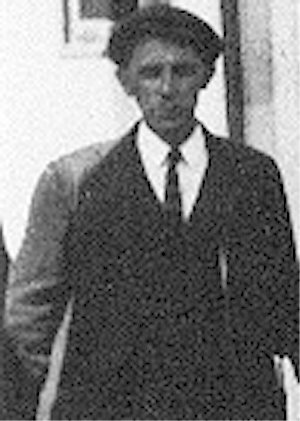
Everyone who has spent any time in Orlando and joined in conversations about Orlando’s heyday has heard of the Dick Skinner Restaurant. And, when you speak of the Dick Skinner Restaurant you are really talking about George Delbert "Dick" Skinner and his mother Patience Skinner who were the owners and proprietors of the restaurant for many years. 1

The Dick Skinner Restaurant forms a background for the well known “Bear Trainer” photo published on this website. Dick Skinner is shown in this photo with coat, tie and cap standing on the left in the group of men.

As is shown in the bear trainer photo Dick’s restaurant was actually a large wagon. This wagon was originally located in Burnsville and had been operated as a restaurant by William Sleeth on Depot Street near the Baltimore and Ohio Railroad Depot. Mr. Sleeth sold the wagon restaurant to Dick Skinner around 1913 who had the wagon brought to Orlando. The restaurant wagon was sited on the western side of the Oldaker Mercantile Company store building which later would become Charlie Knight's Store . The wagon restaurant was approximately 6 to 8 feet from the adjoining store building and for a long time was recognized as an independent standing building. Sometime later a shed roof attached to the adjoining store building was built over the wagon. The porch of the Charlie Knight store building was extended across the front of the restaurant. To many, the restaurant then appeared to be a part of the larger adjoining store building.


Pictured are Dick and hs mother Patience.

The significance of the crossing of the Coal and Coke with the Baltimore & Ohio railroads in Orlando cannot be overstated. The Baltimore and Ohio Railroad had many connections from the north and east and west but its southern terminus in West Virginia was Richwood. If a B & O train passenger wanted to go to Charleston, it would be necessary to transfer to the Coal & Coke line in Orlando. The transfer would not have been feasible in Burnsville because the distance between the B & O depot and the Coal and Coke depot was nearly a mile. Therefore Orlando was an important station for both railroads whose trains in those days were generally full of passengers, the number of which could be in the hundreds daily. Because of the time it took to unload luggage and entrain passengers the Orlando stop was close to an hour long. Thus the need for restaurants was clear. Consequently the Orlando restaurants were busy with railroad passengers, especially the trains coming into the station around lunch time.

Dick Skinner, perhaps the earliest entrepreneur in the restaurant trade in Orlando, had an efficient and convenient location. Dick’s restaurant building was narrow with a long counter and stools. The kitchen was in the rear of the restaurant toward Oil Creek in a small addition to the trailer. Dick served the standard fare of food of the day; nothing fancy, but quick. Coleman Jeffries, an old time resident of Orlando, was interviewed for the pictorial history of Lewis County by the author Joy Gilchrest. Jeffries related that Dick Skinner “liked to ask customers who ordered pie what kind they wanted when all he ever had was apple.”

Early on, Dick’s mother Patience helped in the restaurant, working behind the counter and his brother Marcellus Earl worked with him, too. Marcellus moved to West on to go into business for himself, Patience slowed down, and others came to work at the restaurant. including sister Lelah Skinner and niece Edith (daughter of Dick's brother Gideon C.). Of course with the large number of patrons all coming at once for food, service was quite hectic. Other known employees of Dick Skinner’s restaurant were Vada Henline, Nellie Foster and Ethel Blake.

Dick and his mother Patience lived in rooms over Charlie Knight's store untill Patience died in 1931. By the mid 1930s Dick had retired from the restaurant trade and moved to a shack up Three Lick. He died there in 1961 at the age of 92.

Railroad technology brought a good trade to Orlando but automobile technology brought an end to it. With the completion of U. S. Route 19 to Charleston in the early 1930s rail passenger traffic began dwindling as more and more people bought automobiles and began driving north and south instead of taking the train. Polar Henline and his wife Vada reopened the restaurant but were unable to make it successful. The restaurant closed for good in the late 1930s.

1. Patience Skinner’s maiden name was Duvall. She was a daughter of William and Frankie Jane (Mathews) Duvall who lived on upper Oil Creek. Patience was born in 1846. She married Jackson Skinner, son of Alexander and Phebe (Conrad) Skinner. One of the children of Jackson and Patience (Duvall) Skinner was George Delbert Skinner who was born in 1868 and, who, all his life was known as “Dick.”
For more on Patience see the Aug '06 entry An Heirloom from Patience Duvall
For more on Dick see the Sept. '06 entry It Was The Eggs That Killed Uncle Dick

Comments
comment 1. David Parmer
On a cold day in March 1932, Estaline (Posey) Riffle of Clover Fork dropped into Dick Skinner’s Restaurant to warm up a bit. Estaline went over to the gas stove and stood near it to take the chill off. As was the fashion of the day Estaline was wearing a long woolen dress. Standing a little too long next to the fire, Estaline’s dress caught afire. The only person present to help Estaline was Lelah Skinner, who was operating the restaurant during the absence of her brother, the proprietor Dick Skinner. The two ladies were not successful in putting out the blaze before it inflicted grievous burns on Estaline. Estaline was rushed to the City Hospital in Weston where she died the following day. She was buried in the Wooddell Cemetery on Clover Fork.

Estaline was christened Mary Estaline and was the daughter of Isaac and Amanda (Blake) Posey. She was the wife of Abe Riffle. She was aged 67 at the time of her death.
Click on the thumbnail to the right to see her death certificate.

comment 2 Donna Gloff
When I was growing up in the 1950s and '6s in Detroit, my father would ask Ma a couple times a week, "What kind of apple pie you got for desert?" Now I know Pop was remembering Uncle Dick's place in Orlando where apple pie was the only desert that was ever on the menu.

Comment 3. Donna Gloff
Pappy's granddaughter Barbara Skinner Joseph, says Earl/Pappy went on to open his own establishment, Brunswick Pool Room, in Weston in 1921. Another of Patience's boys, Edmund (might she have meant Edwin Glen?), was with him for the first couple years. In the years that followed, Pappy's son Lawrence, and then Lawrence's son Larry, worked in the business. The poolroom was a fixture in Weston for 40 years. In 1961 father and son closed the poolroom and son, with Pappy's support, opened Skinner's Grill, which is still in operation operated by Pappy's grandson Larry with the support of his dad Lawrence.2 To the left is a recent picture of their restaurant in Weston.

Comment 4. Donna Gloff
My grandmother, Edith Skinner, who later married Oras Stutler worked at Uncle Dick's in the 19-teens. That's where she fell in love for the first time. When I was in my teens grandma told me how she had been head-over-heels crazy about a fellow, but Uncle Dick and some of the others broke them up by telling her something awful about her beau. Grandma never told me her suitor's name, or what her family had against him.

Thursday, February 22, 2007

Eli Riffle, Blacksmith On Clover Fork

Eli Riffle was a blacksmith and a man with an eye to the future. We've had two stories handed down to us about Eli and his love affair with the gas powered engine.
1. The first is from the Bard of Buzzardtown, Uncle Zeke. He wrote the following:

Bill Dolan told
Reuben Blake
that Jack Sam told him
that Alva Barnett said
that he heard Dick Skinner say
that he overheard Russ Riffle
tell Luther Conrad
that Eli Riffle
was goin’ to
put wings to his cane mill.

And Jim Skinner said
that “Mooch” Riffle told him
that Tom Wymer said
that he heard Jack Skinner
tell “Chub” Kidd
that Bunk Blake said
that it was all a lie,
that Eli was goin’to run his molasses makin’ machine this year with gas.

For more of Uncle Zeke see Oct '06 entry Uncle Zeke From Buzzard Town


2. In the second, Dale Barnett tells us that Eli and his brother-in-law, the wheelwright Charlie Blake went into business together. They set up a small gristmill. They bought a set of used burrs and used an Overland auto for power. Eli told Charley “We are rich!” but Charlie said, “No we are just well to do”

At the top are two examples of cane mills borrowed from the internet. When the sorghum canes are fed between the rollers the juice that is forced out flows into a trough below. The juice is then evaporated and sugar crystalizes leaving sorhum syrup or molasses.

Below is an example of a burr stone, again, borrowed from the internet. This one has a 12 inch diameter. It's easy to see how a blacksmith could hook the rod in the stone to the back axel of an old car and make it spin!

1. Eli Riffle was the son of Jacob Isaac Jr. and Matilda (Conrad) Riffle, born in 1875. He married Esta Ann Blake about 1899, they had 11 kids and when he died in 1953 he was buried at the Clover Fork Cemetery.

Note: More about sorhgum on the farm from March '07 Flukey Posey – Baritone, Sheep Shearer & More: "Flukey and Mina Posey on the Road Run . . . always raised a crop of sorghum. After the sorghum was harvested, the heads of the canes would be dried in the loft of the barn and would be used to feed the poultry crops. Wesley recalls that the flocks of birds loved the seed from the cane heads."

Comments
comment 1: Donna Gloff
Eli Riffle wasn't the only one looking to the new technology with a creative eye. David Parmer tells us "Dr. Trimble was also an inventor of sorts, having invented a tool to remove clincher tires from clincher rims on early automobiles. This invention became obsolete with the invention of the balloon tires for automobiles."
To the right is Stanton Trimble posing with his invention.

Wednesday, February 21, 2007

Schools & Teachers in the Oil Creek Watershed

This entry provides a little information about the McCauley Run, Petersons Siding, Dumpling Run and Posey Run elementary schools. Other public elementary schools that we know of in the Oil Creek watershed are the Lewis County school that overlooked downtown Orlando, Clover Fork Elementary and the Walnut Grove Elementary School at Peterson's Siding. There were probably others. We have only sketchy information on the schools. We welcome additional info, photos, stories.

To the right, 1935 Peterson Siding School photo, teacher Thomas Groves.

McCauley Run School
1921-1922 E. J. Cox pictured to the right.
1922-1926 no records yet.
1926-1927 C. A. Wade.
1927-1934 no records yet.
1935-1936 Edith Crutchfield.
1936-1938 Stanton Trimble.
1938-1943 Beulah McPherson Gibson.
1943-1945 Madge Moore.
1945-1946 No records yet.
1946-1947 Golda McNemar.
1947-1948 Clara Teter
1948-1953 Beulah McPherson Gibson Fridley
1953-1954 Beulah Conrad.
1954-1958 Hazel Hardman.
1959-1960 Sandra Heater. This was last year of school. Final enrollment: 14.


Dumpling Run School
1921-1922 Mary McPherson
1923-1926 no records yet.
1926-1927 Ernestine Hyre
1927-1935 no records yet.
1935-1936 Cleve Mick
1936-1938 Freeda Mick pictured to the right.
1938-1940 A. W. McNemar This was last year of school. Final enrollment:13

Clover Fork
Virginia (McCoy) Skinner
pictured to the right.

Orlando School
See the Feb, '07 entry Orlando School which discusses the Orlando School in the The Rusmisell & Fury Addition in Braxton County.

Posey Run School
See the Apr '07 The Posey Run School


Teacher Biographies
Eolin J. Cox and his sister Jessie Cox
Eolin J. Cox taught school at the old Burnsville Academy, and later at various schools in Braxton County, including the school at Orlando. He taught school for over fifty years. During the summers when school was not in session he was a salesman for the Burnsville Wholesale Grocery and the Crescent Wholesale Grocery in Burnsville.

Ms. Jessie Cox, also taught a few terms at the Orlando school in the early days. Jessie Cox also taught school for nearly fifty years, in Braxton and Gilmer Counties, and ended her teaching career in Fairmont.

Virginia (McCoy) Skinner
Virginia Skinner taught at Clover Fork Elementary. She also taught at Walnut Grove School at Peterson Siding.
See the Sept '06 entry Virginia McCoy Was a School Teacher at Clover Fork


Ernestine Hyre
Ernestine Hyre Tulley taught at Dumpling Run, Posey, Orlando Walnut Grove at Peterson Siding.


Information provided by David Parmer.

Tuesday, February 20, 2007

Death Rides the Rails

from David Parmer

The Story of Wayne Skinner & Roscoe McNemar

Roscoe McNemar and Wayne Skinner were first cousins and grew up together in Orlando. Where you would find one of the boys you generally would find the other. The two boys had something else in common as well: they both were enchanted with the railroads which crossed in their hometown.

Before the days of airplanes and video games many youth of our country were fascinated by trains. As a boy growing up in Burnsville I idled a great deal of time watching the trains clank through Burnsville, counting the number of cars and looking for the unusual logos on the cars such as “Lake Erie and Pittsburgh”, or perhaps the “Nickel Plate Road”. A cereal company in the 1950s put railroad logos in their boxes of breakfast cereals as an inducement for parents to buy that particular brand for their railroad crazy children. I eagerly opened each box. Boys would also walk the tracks, heads down, looking for the strips of lead, left over from the torpedo flares, which were the line sinkers of choice for many a Burnsville boy who decided to go ‘a-fishin’.

There were other fascinating sights on the railroad line. There were steam engines, and later the diesels, water tanks, signal lights, switches, trestles, hand cars, freight cars, flat cars, depots, passenger cars, box cars, refrigerator cars, coal cars, engineers looking very important high in their perches, conductors hanging on the rear of the cabooses, track gangs laboring in the sun and many other aspects of the rail industry to fascinate youthful fancies.

Some youths carried their fancies a little too far and sought adventure by riding the rails and hopping freight cars. These ‘Huck Finns’ of the rails often started just by looking into empty cars or sitting on flat cars that were stopped at the depot or at a water tower. Sometimes the game was carried even further by riding short distances on the cars as they were starting to move and then jumping off. Emboldened by minor successes in the game some boys took the next step and fancied themselves as ‘hobos’ of the rails by taking ticket-less trips on the train to the next town. Such adventures often led to tragedy. Such was the fate of Wayne Skinner and Roscoe McNemar.

Wayne's father Charles Skinner, born in 1867, was a farmer, miller and a storekeeper, the son of Perry S. Skinner and Emily Posey Skinner. Charles was a grandson of Alexander and Phebe (Conrad) Skinner. Charles married Margaret “Maggie” Cosner. Maggie's folks were Abraham and Mary Elizabeth (Roby) Cosner, who came from Hardy County to settle in Lewis County.

The Charles and Maggie (Cosner) Skinner family of Orlando was the typical Orlando family of the early 1900s. There were five boys in the Skinner family. The oldest boy, George Wesley, born in 1890, had died in California in a motorcycle accident in 1913.

Right: Lee, Ethel (in front), a friend (unknown), another friend (unknown), Charles Skinner, Necie, Wes (standing behind), Burt and Frank on Maggie's lap. Wayne and Nora were not born yet when this photo was taken.

Alfred Lee, known as “Lee”,1 was born in 1892, Clarence who went by “Burt” was born in 1896, Sylvester Frank, who understandably went by his middle name of “Frank”, was the fourth son and was born in 1902, and the youngest boy of the family, Wayne, was born in 1907. The three girls of Charles and Maggie Skinner were Necie who was born in 1893, Ethel born in 1895 and the youngest child of the family, Nora, was born in 1911.

Mary Skinner, a sister of Charles Skinner, was 27 when she married David McNemar, almost 30 years her senior, when they wed around 1900. Mary and David were the parents of three children, a daughter Vergie, and two sons Alpha “Ed” and Roscoe, the latter of whom was the youngest, born in 1907.


Roscoe's mom, Mary (Skinner) McNemar is on the left .

Roscoe McNemar and Wayne Skinner were first cousins and grew up together in Orlando. Where you would find one of the boys you generally would find the other. The two boys had something else in common as well: they both were enchanted with the railroads which crossed in their hometown. As all the older citizens of Orlando will recall, it was difficult to get to other places in the early 1900s. There were no automobiles, roads were little more than cow paths, and there was too much work to do to even think about going somewhere other than church on Sunday. But then the railroads came to Orlando. Now there was a bustling depot, several trains a day crossing in Orlando going north to Buckhannon and Weston and south to Burnsville, Richwood and Charleston. And riding a train was much more comfortable than riding a horse if you had one, and, if you were clever and a risk taker, you could ride for free on the trains by simply hopping a freight and staying out of sight of the conductor. The two boys had previously been warned by the railroads of their freight hopping.

In the summer of 1923, Roscoe McNemar and Wayne Skinner were both 16, and full of vinegar and wanderlust. After a July day of cutting “filth”, the cousins decided a little recreation and adventure would be a cure-all for the aches left over from the day’s labor.

In a re-creation of the day’s events reported in the newspaper of the day, it appears that Roscoe and Wayne hopped a south-bound freight on an early Tuesday evening. The whereabouts of the two boys after hopping the freight was a mystery. No witnesses were found who saw them after leaving Orlando.

Early the next morning at Gilmer Station, a busy little coal tipple town on the Coal and Coke Railroad, about four miles west of Burnsville, a track walker came upon the grisly scene of two mangled and completely severed corpses near a water tank. The authorities of Gilmer County were called to the scene. Sheriff J. H. Hall and Prosecuting Attorney B. W. Craddock secured identification of the two bodies and determined that Roscoe McNemar and Wayne Skinner had met their untimely and terrible fate by riding the rails. The official report determined that it appeared that McNemar and Skinner had been waiting on a north bound freight to stop at the Gilmer Station water tank and were intending to board a freight back to Orlando. The official report surmised that the two boys had gone to sleep on the rail tracks waiting on the 1:15 a.m. north bound freight. The engineer of the freight did not see the boys sleeping on the tracks and was unaware that the train had run over them.

Lee Skinner, older brother of Wayne Skinner, went to Gilmer Station and made the official identification of his sixteen year old brother. It is reported that the bodies were so mangled that it was difficult to reconstruct the body parts which were scattered along the railroad right of way. The severed head of Wayne Skinner was awaiting identification in a five gallon bucket. Lee later related that he reached into the bucket and lifted his brother’s head by the hair to make the identification.

Horrible deaths that occur sometimes cause speculation about the cause of death. Some members of the two families surmised that the two boys had been murdered by persons unknown and that their bodies had been placed on the tracks to be run over by the train in order to cover up the crime. Contrary to that theory, the authorities attributed the deaths as accidental and as the result of two unfortunate youths seeking a thrill by riding the rails.

The grief stricken families buried their sons in the Skinner Cemetery in Orlando.

1 For more on Wayne's brother Lee see the entry in Jan '07, Lee Skinner Rode His Bicycle

Comments
comment 1 from Marilyn (Cole) Posey
My great grandfather William Rufus Blake died on January 22, 1937 from fractured ribs, chest and skull. His daughter (my grandmother) Alta (Blake) Bee, always told me they found her dad on the railroad tracks. She said he had kind of retired from the railroad and was given some kind of gold watch in honor of his retirement. When they found him on the tracks, the only thing missing was the watch. It was never found and she as well as others in that area felt he was murdered simply to have that gold watch. Since he had worked on the railroad they felt it highly unlikely that he would walk on the tracks, lay down etc. as he knew what time the trains came through daily since he had retired from there.

Picture of the railroad retirement pocketwatch is from ebay.

A Family Torn by the Civil War

by Marilyn (Cole Posey and Donna Gloff

The Cole family came to Orlando when Henry H. and Mary Jane (Heater) Cole bought a farm on Three Lick around 1900. Today Henry & Mary's great-grandchildren own the Cole homestead where Three Lick and Grass Run meet.

Their portraits are to the left.

Orlando is known for its straight southern sympathies, so the story Henry brought with him of his family's dramatic and ambivalent role in the Civil War is not like the Orlando stories. Henry Harrison Cole's father William H. served the Union in the war and his grandfather Henry Kuhl was hanged because of his Confederate actions. Henry's dad William H. changed his family's name from "Kuhl" to "Cole" because of his father's disgrace.

Early in the Civil War, not long after the first Federal troops had marched through Gilmer county, a boy, his name was Casper Prislor, stopped at the Kuhl homestead on Steer Creek. Henry Kuhl, his son Conrad Kuhl and two hired hands, John Conrad and Hamilton Windon, were in the fields cutting hay and weeds with a scythe. Only Henry's wife, Betsy (Skidmore) Kuhl, about 35 years old and pregnant, was home.

The boy told Betsy that he had lost his regiment and was trying to get to them (they were at Bulltown) to rejoin them. Actually, he was an orphan who had been shining shoes, getting water etc. for the soldiers. When a soldier had died, they had given him the coat to wear as it was cold then. When the Union troops were called to Bulltown, he wanted to go but the Captain said no, because he was so young. After they left, he tried to follow them and got lost.

When the troops, with Casper, had come through the area earlier some of the Kuhls' property had been stolen. The neighborhood as a whole was keeping an eye out for the "Yankees."

The boy asked Betsy for something to eat. While he was eating, she went out the back door to the hillside field (see the photo below) and told Henry ”that damn Yankee is back.” Henry and all present felt sure that the boy had been sent to spy so they could come later and rob them again. So Henry told her to send the boy his way after he ate. Just to be on the safe side, Henry sent his son Conrad and the hired hand John Conrad to see what was keeping the boy. They met him on their way back to the house. Conrad Kuhl and John Conrad pointed him in the direction of Henry and Hamilton Windon. Henry and Hamilton killed Casper Prislor, cut his head off with a scythe. They laid him neatly in a small ravine and placed his head under his body and covered him with rocks.

These photos of the former Kuhl farm where the event unfolded were provided by Marilyn (Cole) Posey. Identified are

1. where the house stood

2. where the boy was killed

3. the stone grave

They might have gotten away with it, but several days later Windon hinted about the killing to a drinking buddy, who went to the authorities and reported the killing.

Henry pled guilty to the local authorities and they chose not to prosecute, possibly in light of charges of trespassing and attempted theft of food, guns and horses. However, the Adjutant General for the military commission, a man named Fremont, took a dim view of what he called “lawlessness and anarchy” and ordered a full-scale and much publicized military court-martial in Charleston to make an example of these “undominated civilians.”

Here fortune separated the five who conspired to kill the boy. When he heard the Kuhls had been arrested John Conrad fled. The three Kuhls and Hamilton Windon were arrested and taken to Charleston, West Virginia to be tried. Betsy was pregnant with their child Mariah and because of her delicate condition, she was simply fined (I believe it was $100.00) and allowed to return home to the Kuhl farm. A court martial commission consisting of 9 Colonels and a Captain sentenced Henry Kuhl and Hamilton Windon to be hanged. Conrad Kuhl was sentenced to prison.

Henry Kuhl and Hamilton Windon were taken to Braxton County and hung on May 9, 1862. Their bodies were buried on Town Hill. One of the streets passes over their remains.

We know what happened to Conrad Kuhl from Thomas Bland Camden, author of My Recollections and Experiences of the Civil War.2 He was arrested as a Southern sympathizer and confined at Camp Chase in Ohio. He wrote “a prisoner by the name of Kuhl from Steer Creek, Braxton County, who was suspected of being implicated in the murder of a Federal soldier was also at Camp Chase who had a ball and chain attached to his ankle. He could slip it off and on as he pleased, as the guards came and went. He was adept at ring making and inlaying with silver. He made one with TBC in silver letters which I have yet today” His recollections and experiences were published in 1927. After Camp Chase, records show that Conrad Kuhl was sent to Fort Delaware.

And the hired hand John Conrad who had fled when he heard the others had been arrested? Henry Kuhl's ggg-granddaughter Marilyn (Cole) Posey tells us, "I traced him to Pendleton County where he eventually married and when the war was over he returned to the area. The deed was done, two of the guilty hung, and one sentenced to Camp Chase and then to Fort Delaware for the duration of the war, but John Conrad was not punished in any way. The war was over and everyone forgot about him."


Two of Henry Kuhl's sons, John and Christian, were already serving in the Confederate Army when the killing took place. John was wounded at the Battle of McDowell and died from those wounds in Staunton, Virginia. Christian Kuhl wrote a fascinating and enlightening paper, the Memoirs of Christian Kuhl, about his service in the Confederate Army.

After the trial two other sons, William Harrison Kuhl and Henry Kuhl, volunteered to serve in the Union Army and served through the war in the Tenth West Virginia Infantry. Later in life, as a result of their father's actions and demise, both men changed their family's name to "Cole." To the right is veteran of the Union Army Wiliam Harrison Kuhl/Cole with his wife Mary (Hefner). 3 These were the parents of Henry H. Cole of Three Lick.

See also the entry about Henry Harrison Cole's life and death which was posted Jan '07, titled Henry Cole Was a Hero.

Thanks to Marilyn (Cole) Posey for the information and photos.

1. Henry Kuhl was born in Germany in 1802 and married Catharine Yeagle there. Catharine was born in Germany March 9, 1804. Three sons were born in Germany. The family arrived at Baltimore, Maryland in September 1839. They moved to Lewis County VA (WV), where three children were born from 1841 to 1849. Catharine died in Braxton County February 5, 1854. Henry married Elizabeth "Betsy" Skidmore in Braxton County May 16, 1855. Betsy, a daughter of Levi and Nancy (Belknap) Skidmore, was born in 1829 and died in 1907. Betsy brought 2 children from a previous marriage, Reuben and Wesley Ellyson. Henry and Betsy had four more children, Ellisana, Alice, George and Mariah.

2. From Don Norman's tree published by the Hacker's Creek Pioneer Descendants.

3. William Kuhl /Cole married Mary Hefner from Pendleton County on Jan. 8, 1860 in Gilmer County. William and Mary set up housekeeping in the Blackburn community of Gilmer County.They are both buried in the Blackburn cemetery.

Monday, February 19, 2007

Orlando General Store in the 1970s

by Sandy (Burgett) Conrad

In 1971 my parents Lee and Juanita (Stutler) Burgett bought the Orlando General Store from Ford and Bee Brown. They carried a little of everything starting with pop, candy, ice cream, canned goods, cigarettes and Prince Albert in a can. Lunch meat was sold by the pound, which they sliced. They carried the best long horn and hot pepper cheese I ever ate. They also had old-fashioned loaf, bologna and chopped ham. In addition to food they sold hardware, nails sold by the pound, screws, hinges, etc. were also sold. An assortment of material was sold to make dresses and curtains, knives, watches. 8 track tapes, all sorts of household items like soap, tissue and shampoos. They even sold medicines such as toothache kits, Ramon’s Pink Pills, Castor oil, iodine, Merthiolate and Doan’s Kidney Pills. In the second room clothing was sold. They sold dresses, jeans, overalls, tops, shorts, shoes and Wolverine boots. They lived upstairs.

Top left is the store about the time the Burgetts bought it. Top right is the inside of the store when the Burgetts ran it. The products ran from the very new, like the 8-track tapes to the right to the staples frome another era, like the Prince Alobert and Velvet tobaccos and the toothache remedy to the right and Ramon pills at the bottom left. Click on the photos to see them in greaer detail.

Over in the warehouse they kept feed for hogs and chickens. They also kept roofing, stove pipe, shovels, rakes, scythes and many other things in the warehouse.

The Orlando post office was also located in the warehouse. Pete Henline was the Postmaster. A bench my grandfather (Oras Stutler) made sat outside the post office door where many people would sit and talk.

Some of my fondest memories were around Christmas time, when they would get get big boxes of chocolate drops, orange slices, gum drops and hard tack candy. This was sold by the pound. They would also get a barrel of salt fish each winter. This was sold by the pound.

In the spring they would get seed in for planting. Yes this store had just about everything. They even sold gas, oil and kerosene. At the end of the year they would get the Ramon Brownie Calendar in and everyone loved it, for it had a weather chart, planting signs and zodiac on it. I never knew just how much I would miss the people coming into the store, sitting on the counter and talking for hours.

These were good times.

For more on the history of this store see the May '06 entry The Browns' General Store

Orlando Floods

Click on the photos to enlarge them.

Orlando, at the junction of the two arms of Oil Creek, the left branch and Clover Fork, floods maybe twice a year. It isn't the life threatening deluges that towns further down the waterways knew before the dams were built, (See the entry in Oct '06, Burnsville Floods.) The biggest problem these days is that the roads become impassable. If you know the area, you can usually find another way to get where you're going, but it might take you 20 miles or so out of your way. Still, nature shows its force, crops and property can be lost, and you've got a mess to clean up, especially if your buildings are not above the high water line.

Two floods are shown here. Neither was a record breaker for Orlando and neither resulted in loss of life, although the cleanup is never fun.

The top two photos, left and right, are from the flood of November, 1985. Both are taken from the The Rusmisell & Fury Addition on the hill looking down on Oil Creek near the red brick church. About where the white house is situated in the photo to the left, the Rush Hotel stood when Tom Jeffries was a boy. In a Feb '07 entry, Childhood in Orlando, Tom Jeffries remembers "going to the old [Rush] hotel building after the flood of 1950 with my mother and my Aunt Opal (Jeffries) McCrobie to clean up the lower floors. There was about an inch of mud on the floors. It was quite a nasty job."

The three photos at the bottom here are from a flood in February 2004 which was not nearly as high. The upper left photo below is looking east, up Clover Fork, from in front of the store. The lower left photo turns around and faces west, showing the warehouse on the left. Notice that the cement foundation of the store is built far above this high-water line and the pilings the warehouse is built on hold the wooden floor above the damages of this, and most, Orlando floods. On the right you are looking on the other side of the bridge across Oil Creek, looking west toward Oil Creek Road, coming in from Burnsville. The top of the creekbed is well below the water line. Even the rail road tracks and the road are well below water, as are the floors of the homes that sit next to Oil Creek.

Thanks to Sandy (Burgett) Conrad for both sets of photos.

Sunday, February 18, 2007

‘I Hear The Train A Comin’ It's Rollin’ ‘Round the Bend. . . Childhood Reminiscence of Trains in Orlando

By Tom Jeffries

My first memories of my early years in Orlando involve the sights, sounds and smells of the B & O Railroad whose tracks and trains passed through the town of Orlando.

To the left is a steam locomotive coming into Orlando.

I recall lying in bed on a foggy night in our home on the hill in Orlando when the sound would travel well and hearing the sound of a coal freight train lead by three large steam engines, whistles sounding, for each of the five road crossings between Burnsville and Orlando. At the crossing at the Rush Hotel the engine whistle would repeat its two longs and a short warning. I could smell the coal fumes as the engines huffed and puffed their way on the upgrade run to Frenchton.

The roar of the exhaust from the stack and the hiss of steam along with the clack-ity-clack of the rail joints was somewhat scary and yet somewhat comforting as the train made its way through town. Soon I would hear the huffing and puffing of the three drag engines as they pushed against their heavy load of coal cars. As soon as they passed by, I could hear the clicking of the rails joints fade away and see in my young mind’s eye the green and red lights of the caboose fade into the distance.

To me, a four year old, they seemed like monsters that were alive. Fierce, scary, but somewhat inviting as they came from somewhere I knew not and were going to somewhere I knew not, I just wanted to go along!

As I looked from our house which stood on the hill above the home of my grandmother, I had a good view of every passing train. Most of the trains were laden with coal from mines in Webster, Braxton and Gilmer Counties, but occasionally there would be logs and sawed lumber, boxcars containing who knows what, and once I remember, army tanks! I have yet to understand how they appeared on a dead end branch line. I never missed an opportunity to watch the train and see what cars it was pulling.

Sometimes, as with machinery, there were accidents and derailments. While I don’t personally remember any of them happening in Orlando, I was told one crash that happened in the early 1960s was so severe the concussion knocked down the old red garage in which Mike Moran kept his funeral car.

About once a day a “local” mixed freight would run, and sometimes stop at the short siding next to the wholesale building to set off a boxcar of feed or to set off a flatcar for some of the local sawmill operators to stack crossties for shipment.

At noon the passenger train would arrive. Most of the time it would stop to discharge passengers and mail. Usually there was a mailcar and a passenger car pulled by a smaller but faster locomotive. The engineer seemed to always be in a hurry because he would invariably spin the wheels on the engine as he pulled out of the station.. I loved to see the sparks fly off the drive wheels. One of the engineers was Mr. Groves from Gassaway who had the nickname of “Rounder”. Years later I learned that he was the father of Dr. Blaine Groves of Martinsburg.

I don’t recall when the last passenger train ran through Orlando but it had to be in the mid 1950s. I do remember that some of the older men were somewhat upset at the passing of that era.

There was a fairly long passing sidetrack which began just north of the railroad bridge over Oil Creek and ended just north of the home of Homer Mitchell on Clover Fork which was about a mile and a half from downtown Orlando. This sidetrack was removed in the mid 1950s.

I used to walk the old B & O railroad grade that was removed in the early 1940s to downtown Orlando from my grandmother’s home to get the mail. I remember that some of the ties were still present and the path was not level because of the imprint of the ties in the ballast. I suspect that rails were removed and the old ties were left when the Company abandoned the track. Over the course of years thereafter many of the ties were removed for fence posts and firewood. The pilings from the old abandoned railroad bridge over Clover Fork were still present in the early 1950s. John Gibson who lived on the hill, or perhaps someone else, had built a walkway across them for foot traffic.

Several people in Orlando worked for the railroad including many of the people mentioned in the Orlando website. Most of them were trackmen including my father, Coleman Jeffries. The section gang had a shed and garage for their motorcar located just south of the Fred Bee residence. At one time a water tower was also there. It was torn down in the 1950s. I can still remember the trackmen starting the motorcar and its strange singing noise as it made its way down the rails.

Arden Thomas was a brakeman or fireman, I’m not sure which. He often worked the “local” between Burnsville and Grafton. I can remember at least once the train stopped in front of the Matthews house so that Arden’s wife could bring his lunch down the hill to him.

My mother Helen and my dad Coleman did not share my interest in the railroad. To mom it meant a lot of soot and dirt that she had to clean. She complained about not being able to keep the family laundry clean as it was drying on the clothes line.. She was glad to see the coming of the diesels. To dad, who worked for the B & O, the railroad was just a dangerous place, a lot of hard work when he worked, and layoffs when times were slow.

All too soon the steam engines were replaced by General Motors diesels. Slowly the breathing monsters of the rails wee replaced by FA7’s, GP7’s and GP9’s. I think that by 1959 or 1960 all the steam was gone. I still enjoy watching the new diesels push their way up the hill from Burnsville to Frenchton and Buckhannon, but it is just not the same!

Today, I and many others travel long distances, such as to Colorado and New Mexico, to ride and experience once again the sights, sounds and smells or the steam engines as they demonstrate what was so commonplace in my childhood and in my hometown of Orlando . Perhaps we are trying to recapture a time when life was much safer and simpler. I take my grandchildren to explain to and to show them a little bit of history that passed in my lifetime so they might also experience the thrill and scariness of a steam locomotive.

Once in the early 1970s the B & O Railroad ran an excursion passenger train from Grafton to Cowen. I did not become aware of the event in time to join the passengers in this once-in-a-lifetime experience and I was so disappointed. I hope in my lifetime another excursion takes place so that I can ride the train through my hometown of Orlando and I can look out the window to the place on the hill where my love of railroads began.


The title of this entry includes a line from the song Folsom Prison Blues by Johnny Cash

Saturday, February 17, 2007

Childhood in Orlando: Early Remembrances of Hauling Lumber

by Tom Jeffries

The first home that I can remember growing up in Orlando was a small house that stood on the hill above the Samantha Henline homeplace on the western side of Oil Creek The house belonged to my great uncle “Polar” Henline who had moved to Parkersburg.

I can remember the house having a coal stove in the living room and a gas heater in the dining room. Of course, the kitchen had a wood stove on which my mother cooked. Later, the wood stove was replaced by a gas stove bought at the Earse Posey sale. There was no heat in the bedrooms.

In the mid 1940s my father, Coleman Jeffries, bought a farm on Oil Creek from my great aunt Margaret Nixon. My dad also owned the land on which the old Rush Hotel building sat which was formerly the residence of Charlie Knight. I can remember going to the old hotel building after the flood of 1950 with my mother and my Aunt Opal (Jeffries) McCrobie to clean up the lower floors. There was about an inch of mud on the floors. It was quite a nasty job. I think I was more in the way than a help.

About 1951 my father decided to tear down the Rush Hotel building and salvage the building materials to build a new home on the Oil Creek farm which he had bought from his aunt Margaret Nixon. It was located about two miles up Oil Creek from Orlando. Of course, not only would the old hotel have to be torn down but also the building materials would have to be moved two miles to the new home site.
At the top is Tom Jeffries with his younger brother John.
Below that is the Rush Hotel.
To the right is the ford at the Semantha Henline homeplace where Oil Creek could be crossed by wagon. (Click of the photo of the Henline house to enlarge it.) See this house in the 1912 photo in an Oct '06 entry, Beham Henline's Funeral

My father did not own a truck but he did have a team of horses. He also owned a somewhat serviceable, but long obsolete, horse-drawn freight wagon. The wagon was much in need of repairs and, after a particularly difficult repair on the front axle the wagon, was ready to haul.

On many Saturday mornings, Dad, my brother John, aged six, and I, aged seven, loaded the bed of the wagon with 2x8s, 2x10s, and 2x12s salvaged from the demolition and started on the trip to the farm. I’m not sure how long the trip took in the slow moving wagon, but it seemed like an awfully long time to sit on the hard seat of the wagon. Dad wouldn’t let us walk if we got tired of sitting. He must have been afraid we would have been hit by a speeding car! As everyone will remember, the Oil Creek road was always in disrepair and hardly fit for automobiles.

The road which passed through our new farm from the Three Lick Bridge on toward Roanoke was just in the process of being built along the old B & O right of way. I recall being curious about all of the construction equipment and the earthmoving that was taking place.

In due time we would arrive at the farm, unload the lumber, allow the horses to feed and water, and return to Orlando. We would then eat lunch, load another stack of lumber, and repeat the trip. As I recall, we could make about two trips per day.

Dad often had trouble with wheels of the old freight wagon. The wheels tended to shrink in the summer heat allowing the steel tires to become loose on the wooden wheels. I remember on one trip about halfway to the farm one of the rear wheels came off. Dad had to unhook the horses, jack up the wagon, replace the tire and secure it to the wheel with wire. We made it to the farm moving very slowly. Before returning to Orlando, Dad allowed the wagon to soak its wheels in Oil Creek for a couple of hours to expand the wood. I can remember him doing this often. Sometimes he would roll the wagon into the deep water at the ford in front of the Henline house in Orlando and allow the wheels to soak overnight.

Above right is Coleman Jeffries with his horse team and June and Billy Nixon. Click on this photo to enlarge it.
To the left is a freight wagon.
Below right is Uncle Heater.

Another problem Dad encountered with the wagon was a loosening problem with the metal hub which fitted over the wooden part of the front axle. Normally a fitting like this is a shrink fit. In other words the metal is heated until it is red hot and then is driven onto the wooden axle. When cooled, it would shrink to a tight fit. However, on our wagon the wooden axle was worn and undersized so the normal remedy of a shrink fit would not work. My dad consulted his Uncle Heaterhuck Henline about the problem and as usual Uncle Heaterhuck had an answer. He told dad to soak burlap in tar and wrap the axle with the soaked burlap and then do the shrink fit process. It worked like a charm. Dad was very impressed with Uncle Heaterhuck’s common sense and mechanical knowledge.
See a Dec '06 entry, My Great-Uncle Heater Henline

After Dad bought a 1951 Chevrolet truck in 1954, and renewed his expired driver’s license, we could make many more trips a day. Still, the building activity went slowly. It was not until the fall of 1955 that we moved into our new home on Oil Creek. My father and mother lived in that small but comfortable home until 1993. Our family has many fond memories of growing up on the farm that we cherish to this day. The farm was sold and the house we built was torn down and replaced by a modern log home.

Above is the is that small but comfortable home on Oil Creek that Coleman Jeffries built.

As a side bar, the freight wagon used to haul the lumber up the Oil Creek Road was retired and stored in Uncle Homer Mitchell’s barn on Clover Fork. The wagon bed was stored under Uncle Homer’s grainery. When Uncle Homer died and his estate auction sale took place, Dad sold the wagon at the sale.


Comments
Comment 1
David Parmer was asked, "I didn't know Oil Creek could be forded anywhere in Orlando, certainly not downstream from downtown."
His response: "Yes, there was a ford in Oil Creek behind the Catholic Church which went to the south side of Oil Creek. There were deeper holes of water just above and just below the ford."

Pres Bragg's Retirement Party

From Bonnie (Brown) Neal
Presley (Pres) Bragg was for many years the mail carrier for one of the two Orlando RFD routes. My dad, Solomon Brown, was a substitute carrier for him.
Here is the picture taken at Pres Bragg's retirement dinner. Note the mailbox-shaped cake in front of him. These were the Orlando mail carriers and all of them are deceased except my Dad. I teased my Dad and told him that he was the only one without a suit and tie, that he was the only one living.
Back Row: Pete Henline, Pete Bennett, Jack Riffle, Solomon Brown, Claud Mick
Front Row: Charley Tully, Presley Bragg, Alva Barnett
See also an entry in Feb '07 Mail Delivery In The Early 1900s
See also an entry in Dec '06 Postmasters

The Teachers at Orlando's 3-Room School

E.J. Cox, Ernestine Hyre, H.W. Auvil, Ralph Queen, Ruby Thompson, Beulah McPherson


Nathan Arnold, Freeda Mick, June Amos, Helen Hall, John Brown, , Edith Mayse


Marmel Brown, Ruth Morrison, Richard Parmer, Robert Blake, Inez (Liggett) Cosner, Mary Reynolds McNemar


Working from records, David Parmer compiled a list, below left, of the teachers at the Orlando school. Some records for the early years are missing or incomplete.1 He has also provided, above, photos of many of the teachers listed. The photos of classes, below right, are described t the bottom of the page.

For teachers at other Oil Creek watershed schools see February '07 entry Schools & Teachers in the Oil Creek Watershed


1921-1922
John J. Singleton, Prin.
Azul Queen
Blyss Skidmore


1925-1926
Dewey Demison
J. Wesley Kidd
Laura McCoy
Inez Canfield

1928-1929
Lawrence D. Wetzel, Prin.

1929-1930 E.
J. Cox, Prin.

1930-1931
Lawrence D. Wetzel, Prin.

1935-1936
H. W. Auvil, Prin.
Virginia Marshall
Ernestine Hyre

1936-1938
Ralph Queen, Prin
Ruby Thompson
Beulah McPherson


1938-1940
Nathan D. Arnold, Prin.
Ida Moyers
Freeda Mick

1940-1941
Nathan D. Arnold, Prin.
Freeda Mick
June Amos

1941-1942
Nathan D. Arnold, Prin.
June Amos
Virginia M. Singleton


1942-1943
Nathan D. Arnold, Prin.
June Amos
Helen Hall


1943-1944
Nathan D. Arnold, Prin.
June Amos
Maerea Chidester


1944-1945
John W. Brown, Prin.
Edith B. Mayse
Marmel R. Brown


1945-1946
John W. Brown, Prin.
Edith B. Mayse
Mary R. McNemar

1946-1947
John W. Brown, Prin.
Ruth P. Morrison
Marmel Brown

1947-1949
John W. Brown, Prin.
Marmel Brown
Edith B. Mayse

1949-1951
John Brown, Prin.
Marmel Brown

1951-1952
John Brown, Prin.
Ruth P. Morrison

1952-1954
Robert Blake, Prin.
Inez Leggett

1954-1955
A. W. McNemar, Prin.
Beulah Conrad

1955-1959
Richard Parmer, Prin.
Inez Cosner

1959-1961
Hazel B.Hardman, Prin.
Inez Cosner

1961-1963
Lawrence Berry, Prin
Inez Cosner

1963-19666
Inez Cosner

Above on the right photos from the 3 room Orlando school over the years
First Lee Mick's class from the 1910s. back: Opal Jeffries, teacher Lee Mick. front: Leta Skinner, Bertha Rush, Myrtle Morrison, Gertrude Rush, Marie Rush, Lovie Bee

Second 8th grade, 1940/41 front: J. C. Foster, Althea Posey, Ruth Mick, Pauline Bennett, Kathleen Sharp, Jack Riffle. back: unknown, Claude “Clutch” Riffle, Claude “Bud” Mick, Jr, Worthington Hurst, Jr.

Third: Eight grade class from 1954.

Fourth: All classes in front of the school in 1954.

1. Per David Parmer, "My grandfather E. J. Cox was Principal at Orlando in 1929-1930. The Superintendent's Report failed to include the names of the other teachers who also were at Orlando that year. I know anecdotally that he also taught at Orlando on other years but the records just don't seem to be there. My grandfather's sister, Jessie Cox, also taught at Orlando but I couldn't find a record. She was one of my father-in-law Coleman Jeffries' teachers."